Birds of Prey
Bald Eagle
Haliaeetus leucocephalus
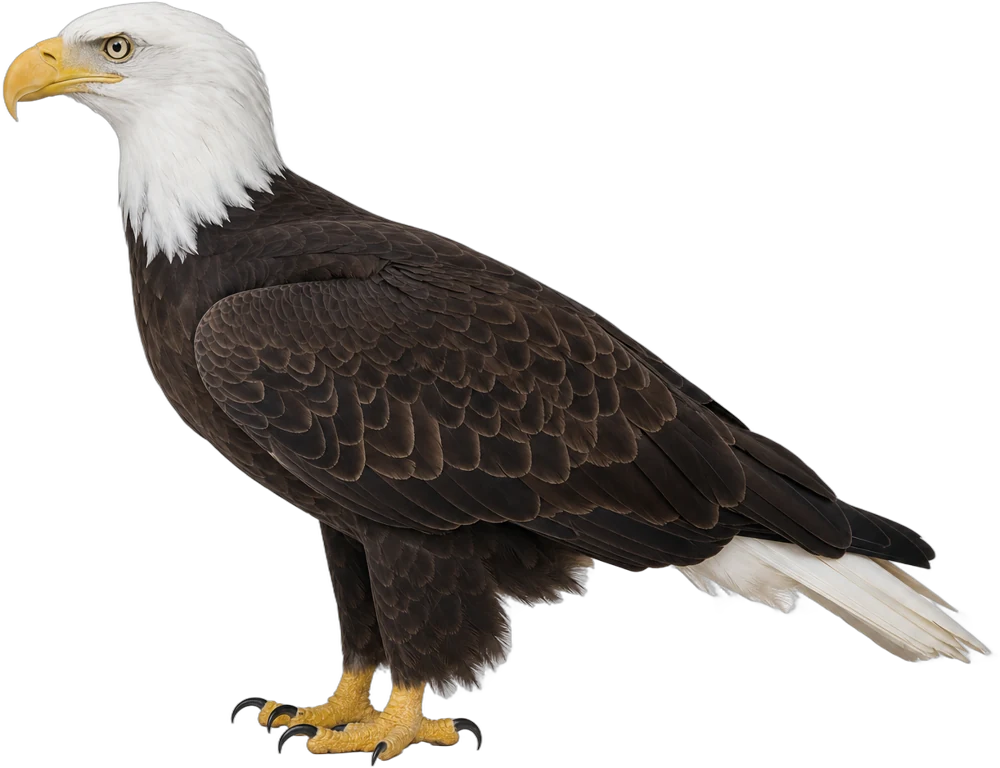
The national bird of the United States. Once endangered, Bald Eagles have recovered strongly and are now seen along rivers, lakes and coasts across the country.
How to identify it
- Adult: white head and tail, dark brown body
- Massive yellow hooked bill and yellow feet
- Young birds: mottled brown and white for about 4–5 years
- Soars on flat, plank-like wings
- Surprisingly weak, high-pitched chittering call
SizeAbout the size of a Canada Goose
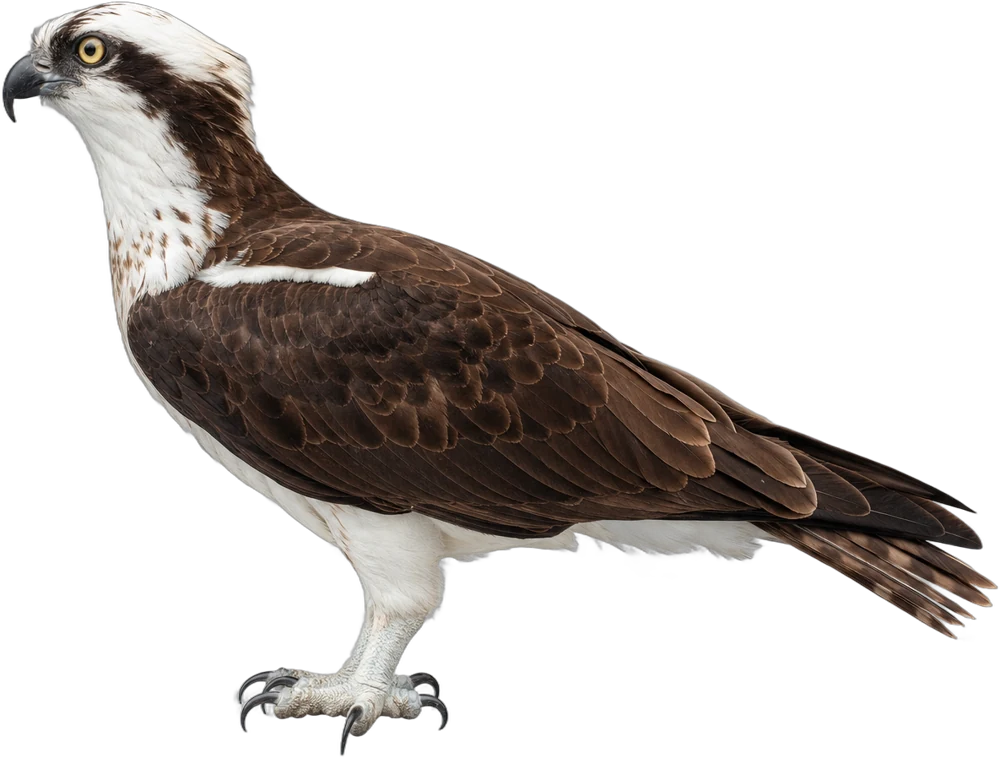
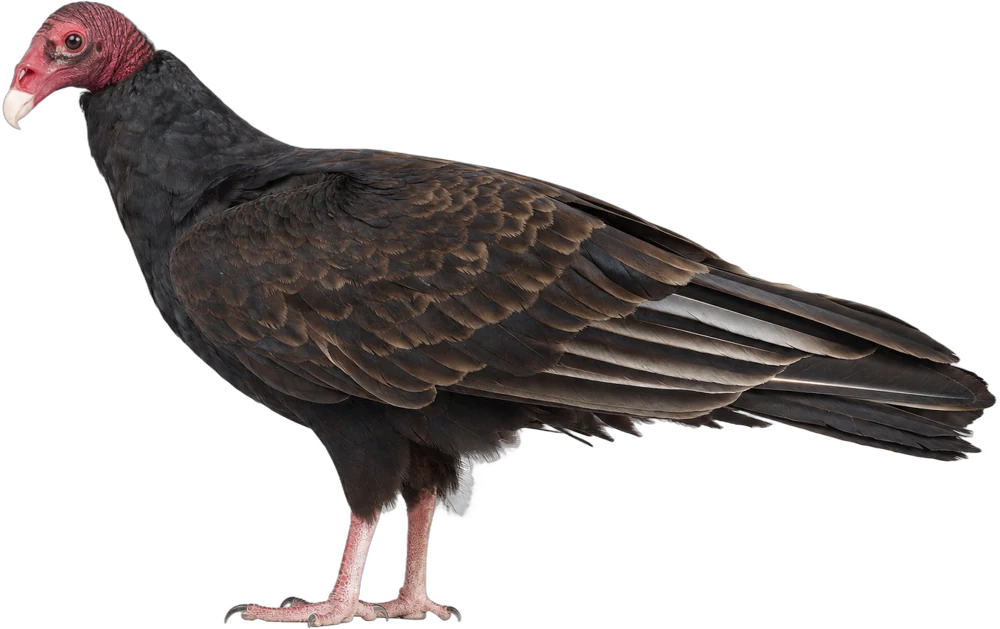
American Crow19 in
Bald Eagle33 in
Canada Goose37 in
Great Blue Heron46 in
6 inAverage length, bill to tail
Details
- Size
- 28–38 in long; wingspan 71–89 in
- Weight
- 6.6–13.9 lb
- Habitat
- Lakes, rivers, reservoirs, marshes and coasts with tall trees
- When to see it
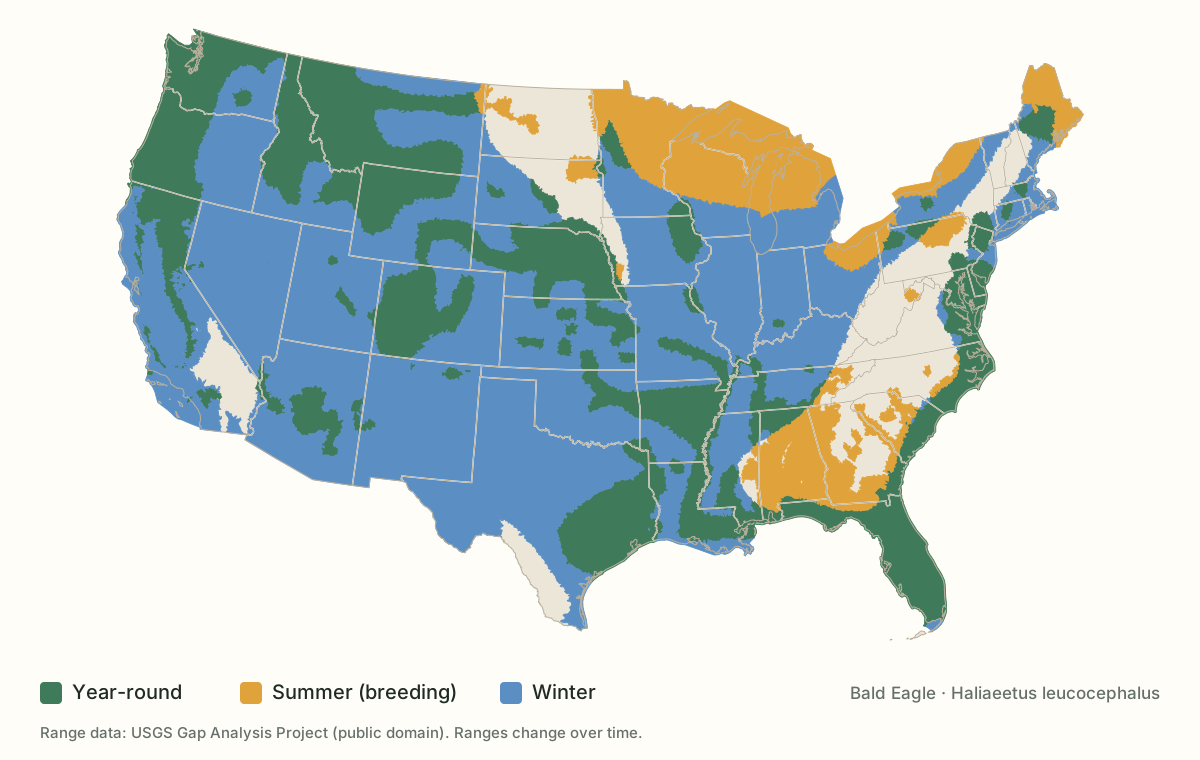
- Year-round across much of the US; more widespread in winter
- Diet
- Fish, waterbirds, carrion
Range in the United States
Life history
Food
Mostly fish, caught at the surface or stolen from Ospreys; also waterbirds, small mammals and carrion.
Nesting
A massive platform of sticks high in a tall tree near water, reused and added to each year.
- Clutch
- 1–3 eggs
- Incubation
- 34–36 days
- Young
- Fledge at about 10–12 weeks
- Broods
- 1 per year
Behavior
Pairs usually mate for life. In winter, eagles gather by the dozens or hundreds where fish are easy to catch.
Conservation
Endangered by DDT and shooting, it recovered and was removed from the endangered list in 2007.
Cool facts
- Nests can weigh over a ton and measure 10 feet deep.
- It often steals fish from Ospreys in midair.
- Young eagles don't get white heads and tails until about age five.
Songs & calls
▶Bird sounds video coming soon
Watch the Bald Eagle
▶Video coming soon