Backyard & Woodland Songbirds
Carolina Wren
Thryothorus ludovicianus
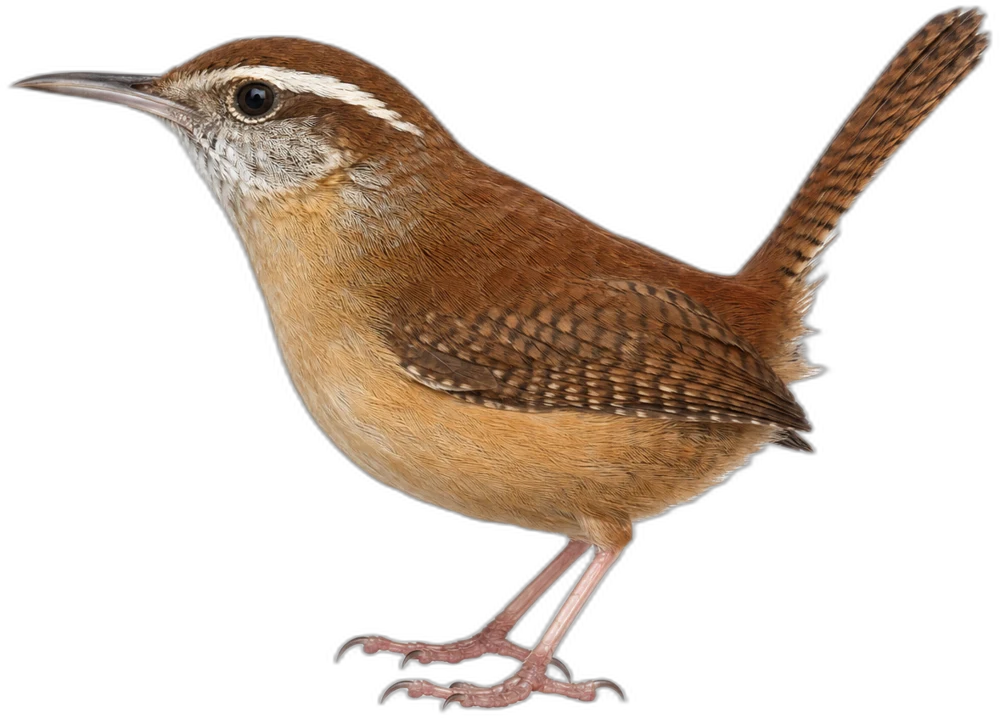
A small, energetic wren with a song that seems far too loud for its size. It is the state bird of South Carolina and often nests in odd places like flowerpots and mailboxes.
How to identify it
- Rich rusty-brown upperparts and warm buff underparts
- Long white eyebrow stripe
- Long, slightly curved bill
- Tail often cocked upward
- Loud "teakettle-teakettle-teakettle" song
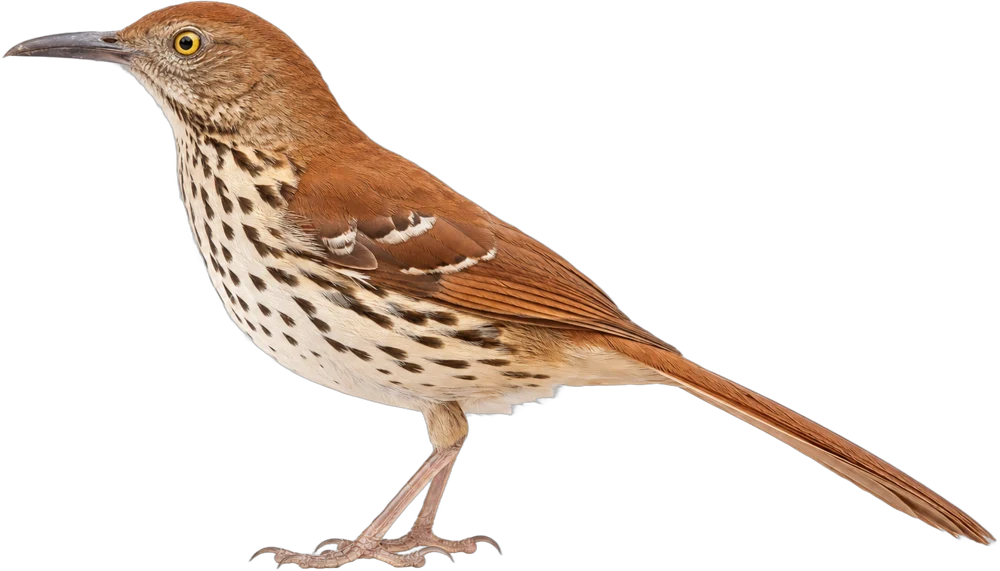
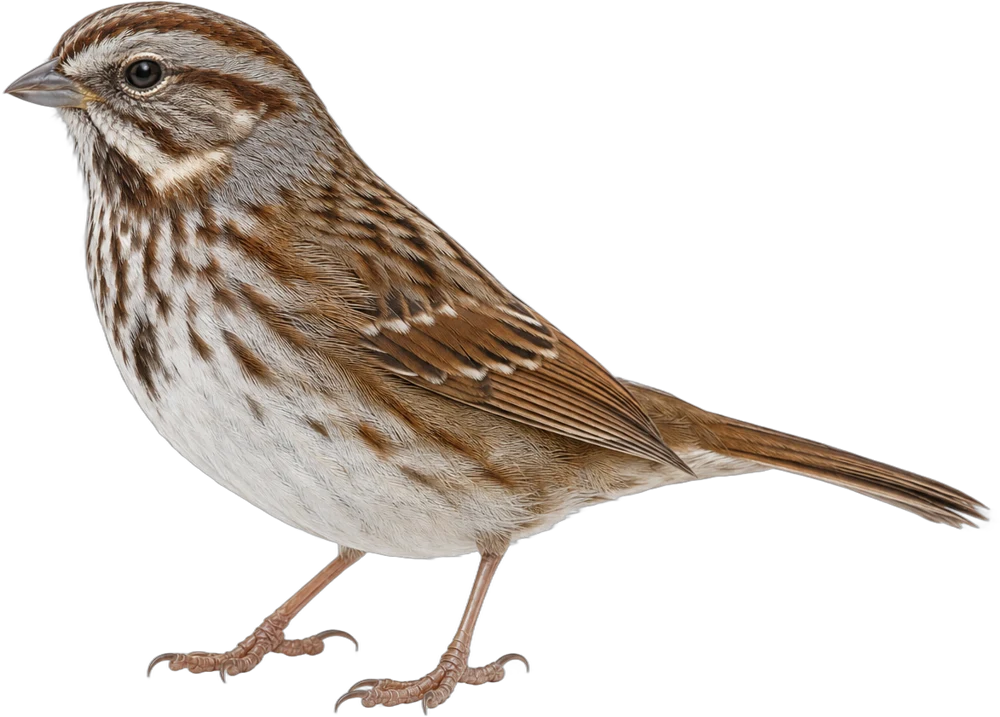
SizeAbout the size of a Song Sparrow
Carolina Chickadee4 in
Carolina Wren5 in
Song Sparrow6 in
American Robin10 in
6 inAverage length, bill to tail
Details
- Size
- 4.5–5.5 in long; wingspan about 11 in
- Weight
- 0.6–0.8 oz
- Habitat
- Thickets, woodland undergrowth, gardens and brushy yards
- When to see it
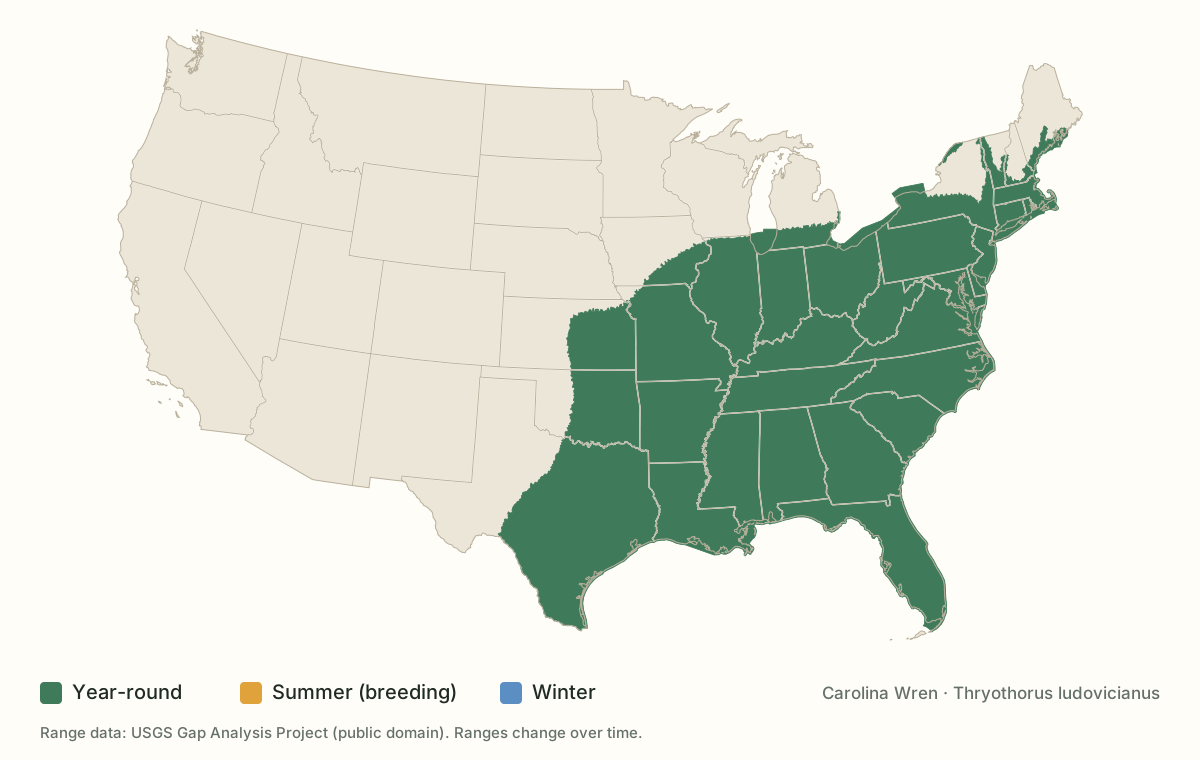
- Year-round across the Southeast
- Diet
- Insects and spiders
Range in the United States
Life history
Food
Eats insects and spiders gleaned from leaf litter, tangles and buildings; visits suet feeders.
Nesting
A domed nest in a cavity or nook: tree holes, mailboxes, boots, flowerpots or garage shelves.
- Clutch
- 3–7 eggs
- Incubation
- 12–16 days
- Young
- Fledge at about 10–16 days
- Broods
- 2–3 per year
Behavior
Pairs stay together year-round and sing duets. Only the male sings the loud song.
Conservation
Common; northern populations drop after hard winters and then recover.
Cool facts
- One male sang nearly 3,000 songs in a single day.
- It's the state bird of South Carolina.
- It's spread farther north as winters have grown milder.
Songs & calls
▶Bird sounds video coming soon
Watch the Carolina Wren
▶Video coming soon