Backyard & Woodland Songbirds
Cedar Waxwing
Bombycilla cedrorum
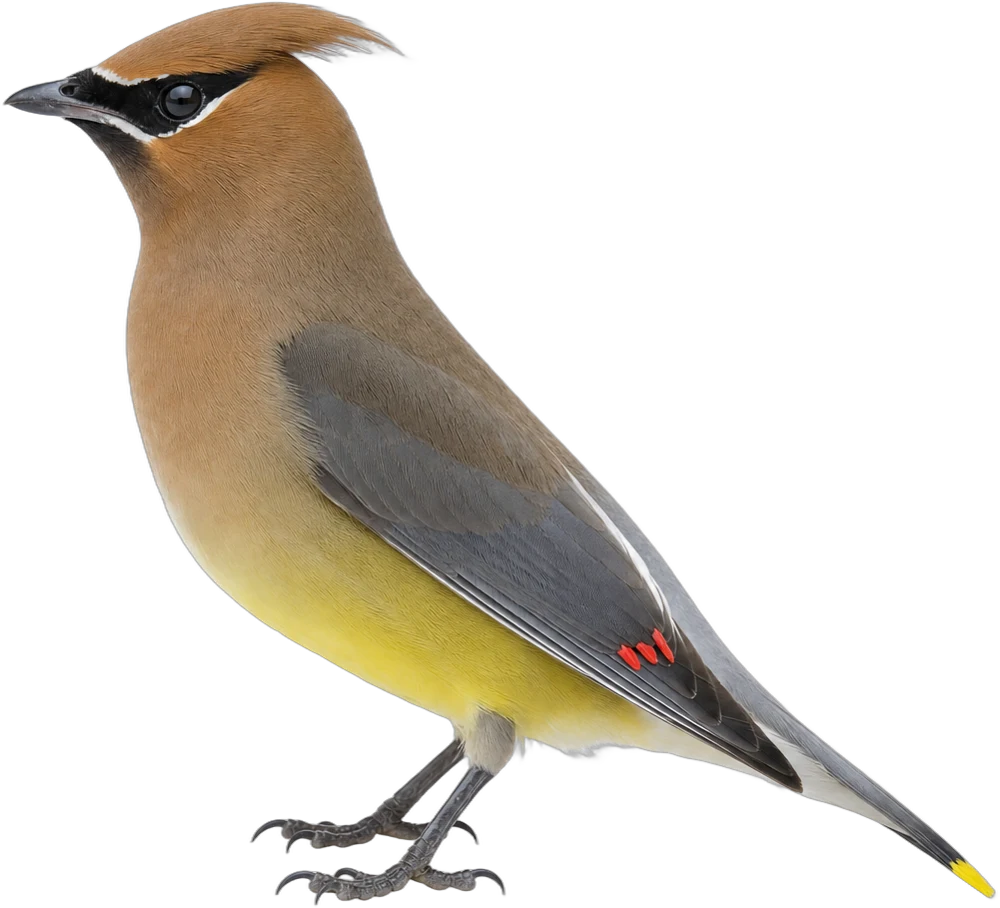
A sleek, crested bird that travels in flocks and gobbles berries. Its name comes from the red, waxy tips on some of its wing feathers.
How to identify it
- Silky brownish-gray body with a pale yellow belly
- Pointed crest and black mask edged in white
- Bright yellow tip on the tail
- Red, waxy tips on the wing feathers
- High, thin "seee" calls from flocks
SizeAbout the size of a Song Sparrow
Carolina Chickadee4 in
Song Sparrow6 in
Cedar Waxwing6 in
American Robin10 in
6 inAverage length, bill to tail
Details
- Size
- 5.5–6.5 in long; wingspan 9–12 in
- Weight
- 1–1.1 oz
- Habitat
- Open woodlands, orchards, parks and yards with fruiting trees
- When to see it
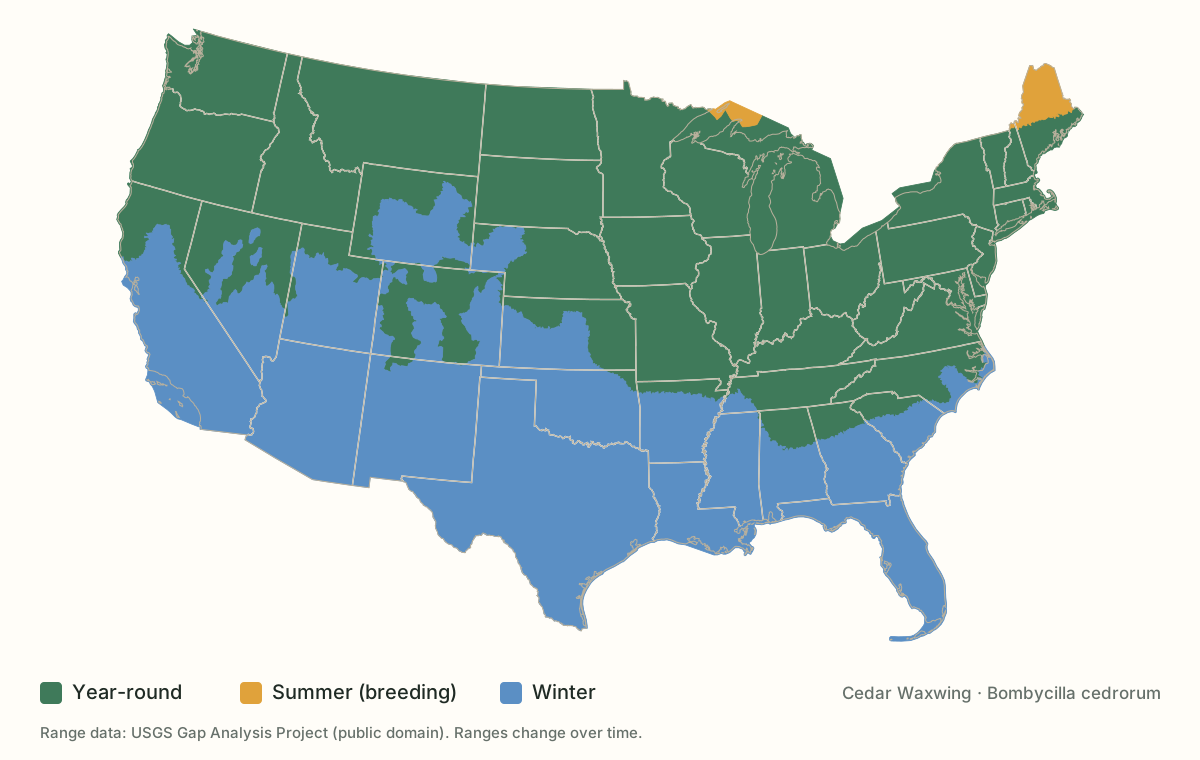
- Winter across the South, including the Carolinas; year-round or summer in the North
- Diet
- Berries and fruit; insects in summer
Range in the United States
Life history
Food
Eats berries and small fruits most of the year; catches insects in summer.
Nesting
A loose cup of twigs and grass in a tree, often near fruiting plants.
- Clutch
- 2–6 eggs
- Incubation
- 11–13 days
- Young
- Fledge at about 14–18 days
- Broods
- 1–2 per year
Behavior
Very social, traveling in flocks. Birds in a row sometimes pass a berry back and forth.
Conservation
Abundant and increasing.
Cool facts
- Waxwings that eat certain honeysuckle berries get orange tail tips instead of yellow.
- It nests late in summer to time chick-raising with ripe fruit.
- Waxwings can get drunk on fermented berries.
Songs & calls
▶Bird sounds video coming soon
Watch the Cedar Waxwing
▶Video coming soon