Wading Birds & Marsh Birds
Green Heron
Butorides virescens
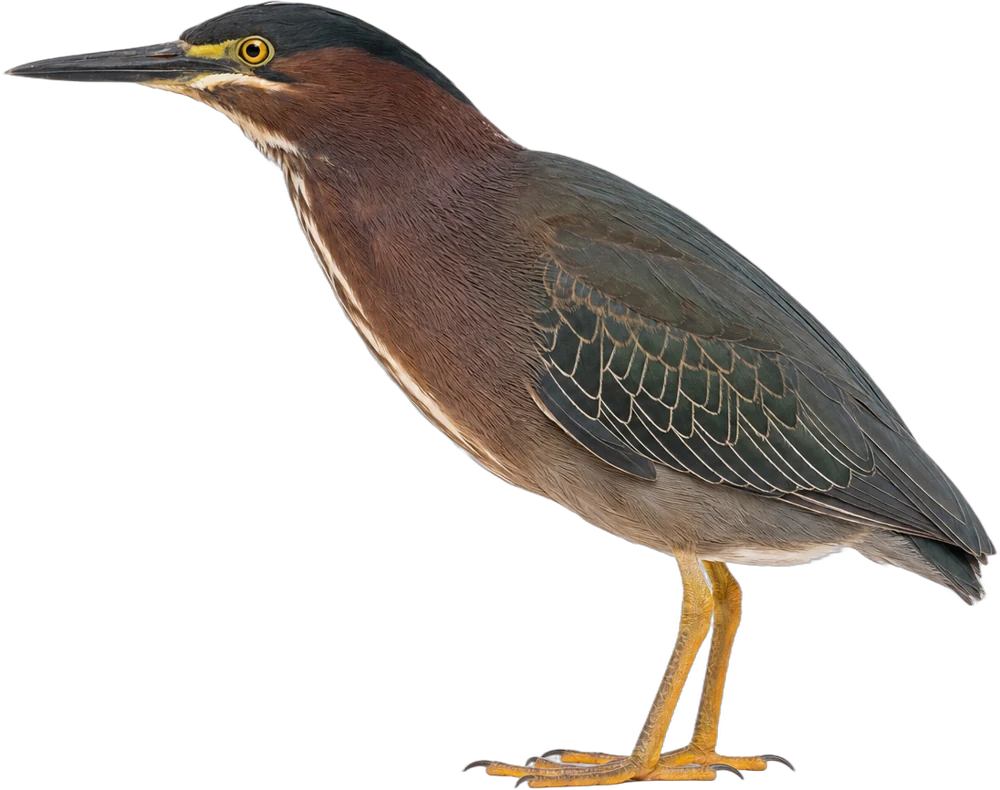
A small, stocky heron that crouches at the water's edge. It is one of the few birds known to use bait, dropping insects or bread on the water to attract fish.
How to identify it
- Dark glossy greenish back and cap
- Rich chestnut neck and breast
- Short yellow-orange legs
- Hunched posture; can stretch its neck surprisingly long
- Sharp "skeow!" call when flushed
SizeAbout the size of an American Crow
American Robin10 in
Green Heron17 in
American Crow19 in
Canada Goose37 in
6 inAverage length, bill to tail
Details
- Size
- 16–18 in long; wingspan 25–27 in
- Weight
- about 7–9 oz
- Habitat
- Wooded ponds, creeks, marshes and swamps
- When to see it
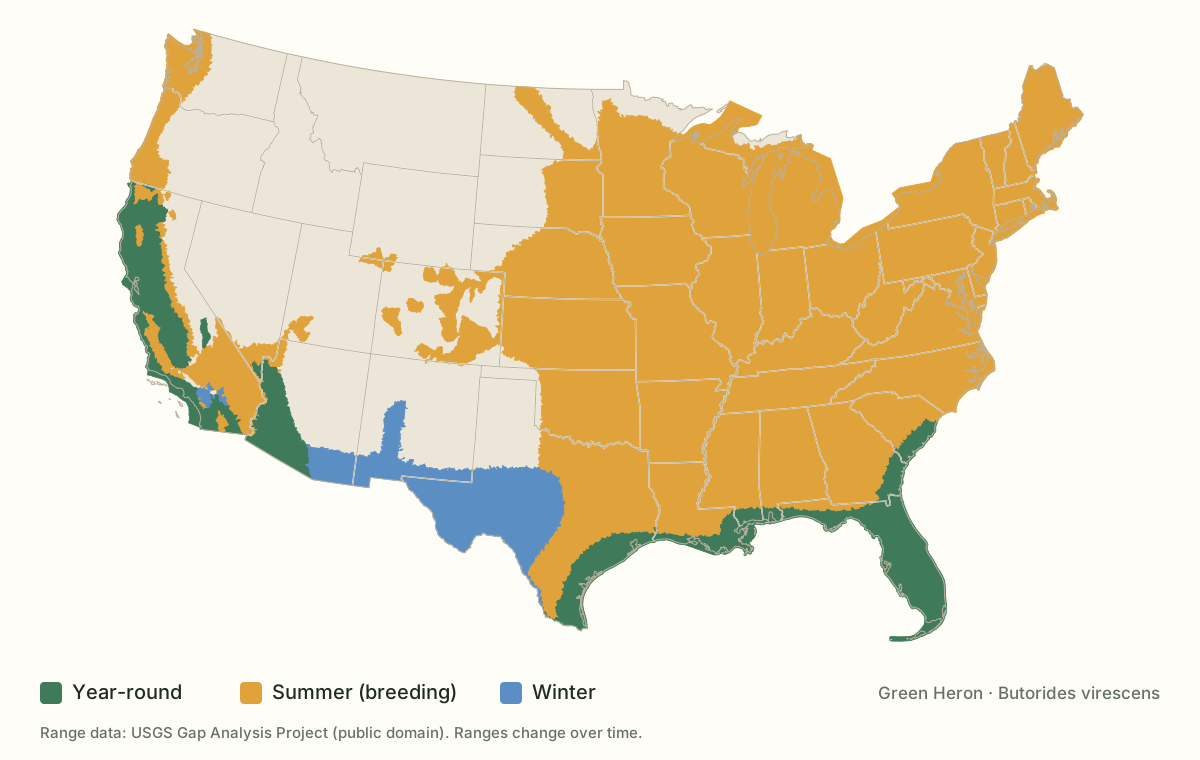
- Summer across the East and West; year-round along the southern coasts
- Diet
- Small fish, frogs, insects, crayfish
Range in the United States
Life history
Food
Crouches at the water's edge and lunges at small fish, frogs and insects; sometimes uses bait to lure fish.
Nesting
A flimsy platform of sticks in a tree or shrub, usually near water.
- Clutch
- 2–6 eggs
- Incubation
- 19–21 days
- Young
- Fledge at about 3 weeks
- Broods
- 1–2 per year
Behavior
Secretive and usually solitary. It can stretch its neck surprisingly far to strike.
Conservation
Common and widespread, though declining slightly in some areas.
Cool facts
- It is one of the few tool-using birds, dropping insects or bread to attract fish.
- When alarmed it raises its crest and flicks its tail.
- Young herons can climb out of the nest on branches before they can fly.
Songs & calls
▶Bird sounds video coming soon
Watch the Green Heron
▶Video coming soon