Wading Birds & Marsh Birds
Little Blue Heron
Egretta caerulea
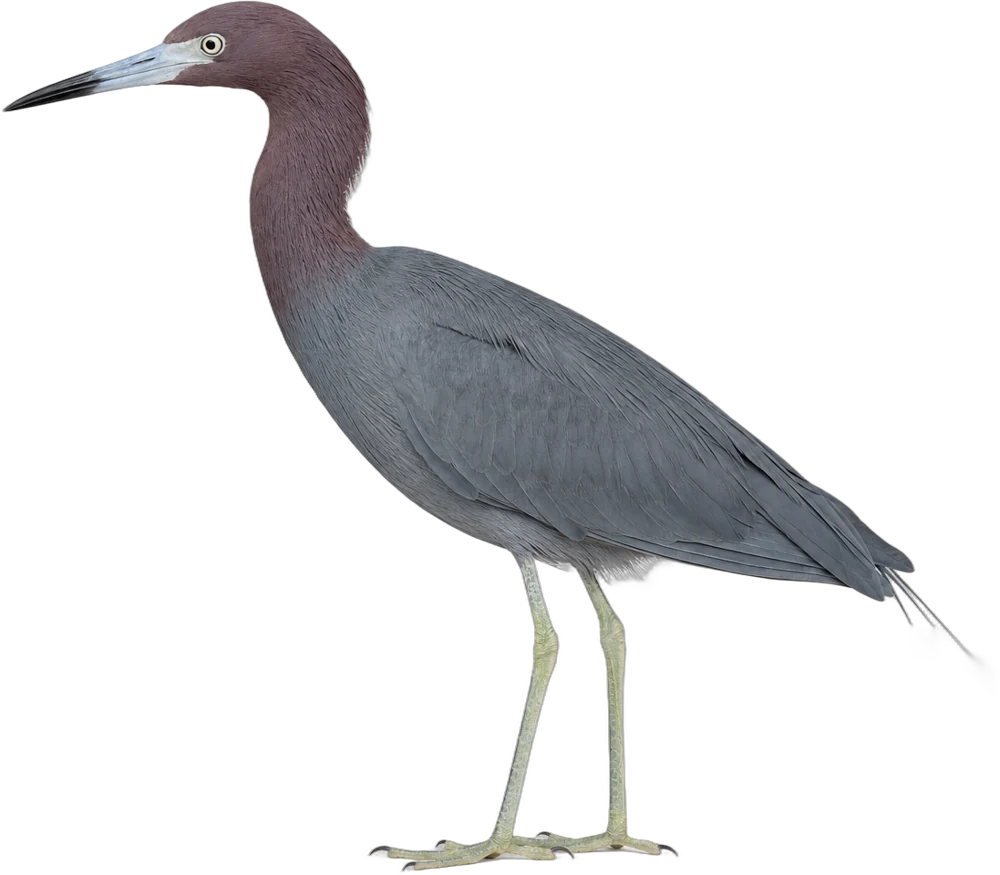
A medium-sized heron that changes completely as it ages: young birds are all white, then become patchy, and finally turn dark slate-blue.
How to identify it
- Adult: dark slate-blue body with a maroon-purple head and neck
- Two-toned bill: blue-gray at the base, black at the tip
- Juvenile: all white with greenish legs and a two-toned bill
- Slow, deliberate hunter
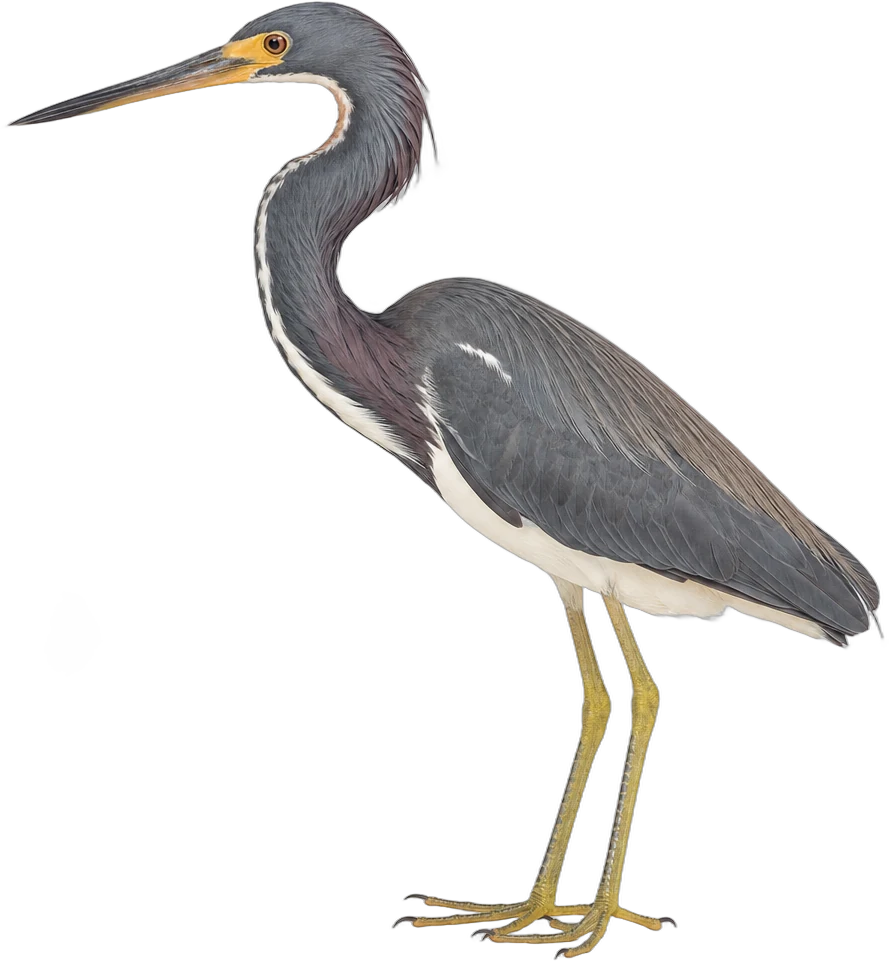
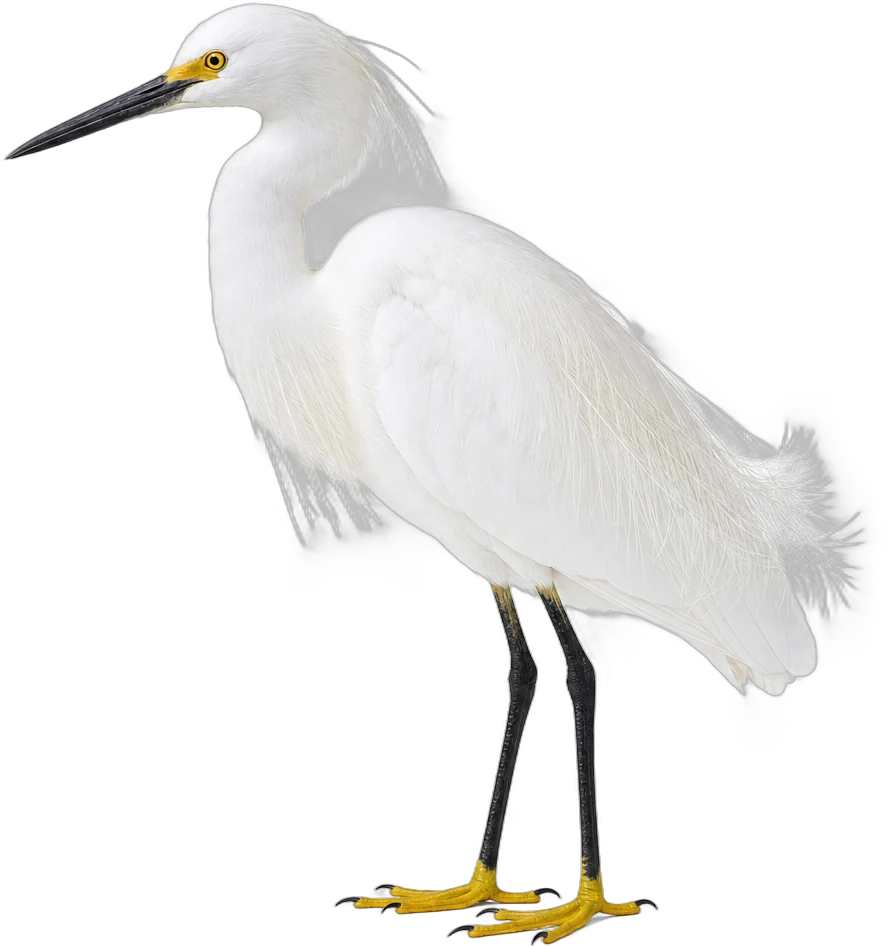
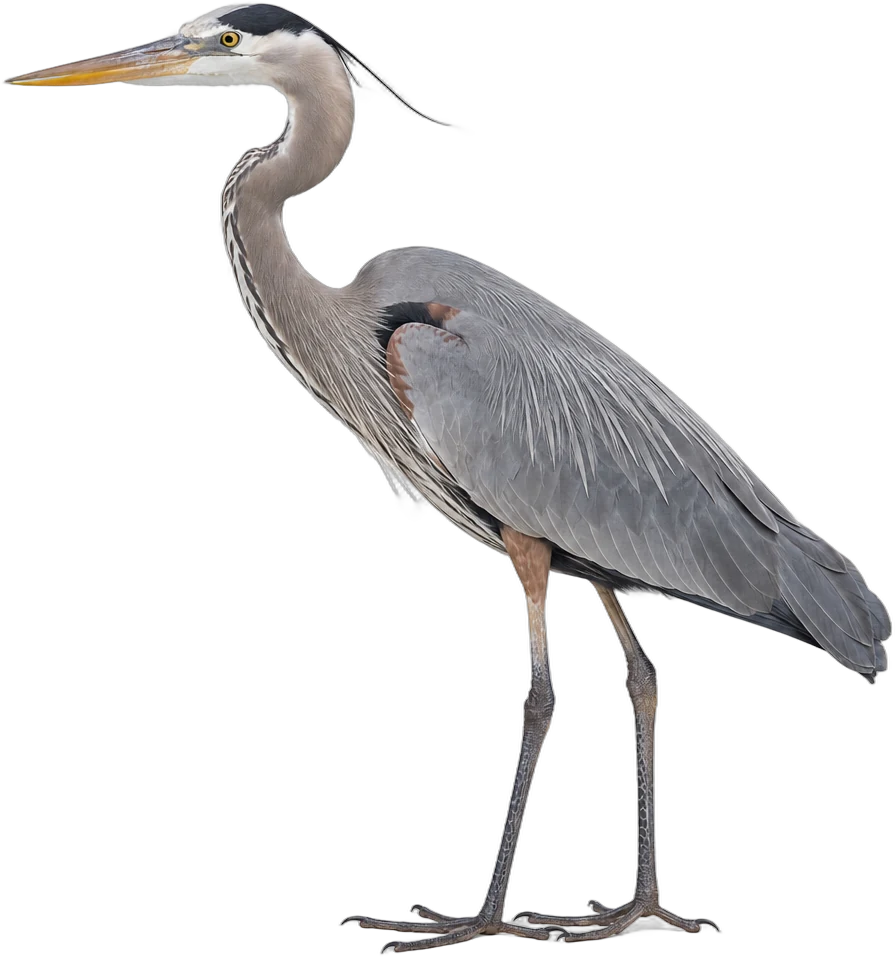
SizeBetween an American Crow and a Canada Goose
American Crow19 in
Little Blue Heron27 in
Canada Goose37 in
Great Blue Heron46 in
6 inAverage length, bill to tail
Details
- Size
- 24–29 in long; wingspan 39–41 in
- Weight
- about 11–14 oz
- Habitat
- Freshwater and saltwater marshes, swamps and pond edges
- When to see it
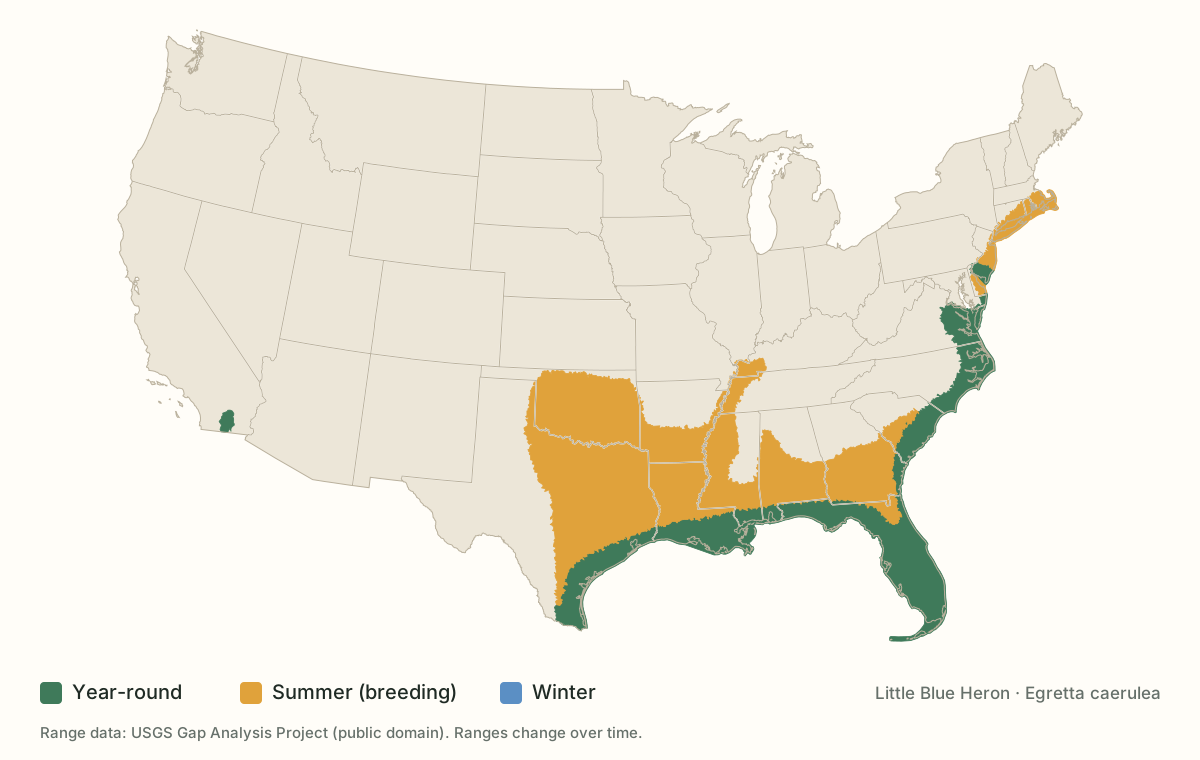
- Year-round across the coastal Southeast; summer farther inland
- Diet
- Small fish, crabs, crayfish, frogs, insects
Range in the United States
Life history
Food
Walks slowly through shallow water catching small fish, crabs, crayfish, frogs and insects.
Nesting
A platform of sticks in trees or shrubs, in colonies with other herons.
- Clutch
- 1–5 eggs
- Incubation
- 22–24 days
- Young
- Fledge at about 4–6 weeks
- Broods
- 1 per year
Behavior
Young white birds often feed among Snowy Egrets, which may help them avoid predators and find more food.
Conservation
Declining in some areas, though still common in southeastern wetlands.
Cool facts
- Young birds are white and look nothing like their dark parents.
- Birds turning from white to blue look blotchy, nicknamed "calico" herons.
- It eats more crustaceans and insects than most herons its size.
Songs & calls
▶Bird sounds video coming soon
Watch the Little Blue Heron
▶Video coming soon