Woodpeckers, Doves & Other Land Birds
Red-bellied Woodpecker
Melanerpes carolinus
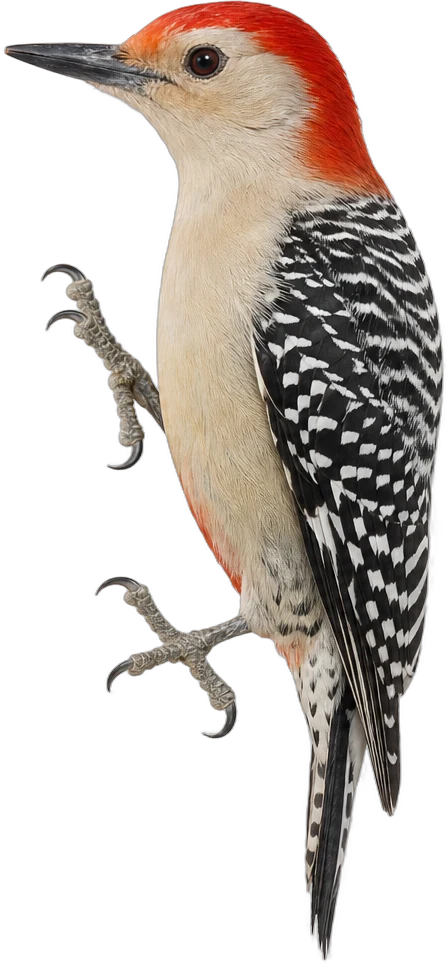
A common, noisy woodpecker of eastern woods and backyards. Despite its name, the red on its belly is usually hard to see; look for its red cap instead.
How to identify it
- Black-and-white "zebra" barred back
- Male: red from the bill to the back of the neck; female: red only on the nape
- Pale tan face and underparts with a faint reddish wash on the belly
- Rolling "kwirr" call
SizeAbout the size of an American Robin
Song Sparrow6 in
American Robin10 in
Red-bellied Woodpecker10 in
American Crow19 in
6 inAverage length, bill to tail
Details
- Size
- 9–10.5 in long; wingspan 13–16.5 in
- Weight
- 2–3.2 oz
- Habitat
- Woodlands, suburbs, parks and feeders
- When to see it
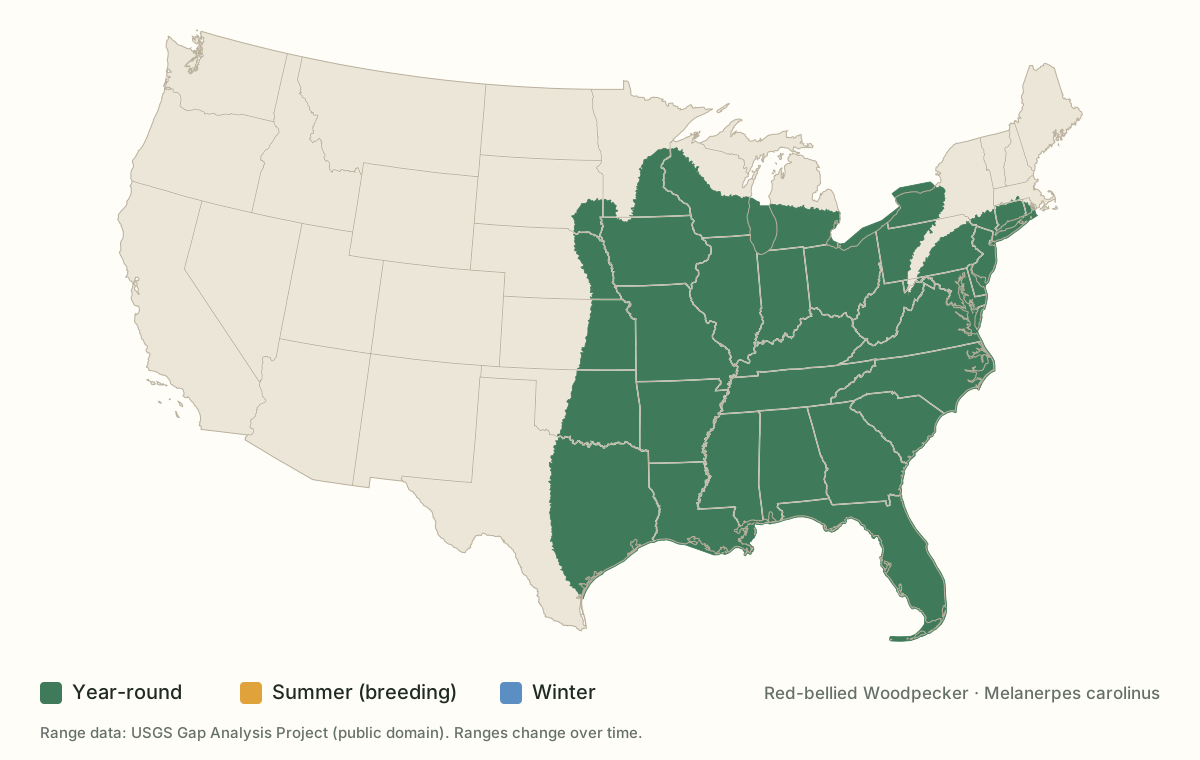
- Year-round across the East
- Diet
- Insects, nuts, seeds, fruit; suet at feeders
Range in the United States
Life history
Food
Eats insects, spiders, nuts, acorns, seeds and fruit; often visits suet and seed feeders.
Nesting
A cavity dug into a dead tree or branch.
- Clutch
- 2–6 eggs
- Incubation
- 12–14 days
- Young
- Fledge at about 3.5–4 weeks
- Broods
- 1–3 per year
Behavior
Wedges nuts into bark cracks and hammers them open. Often steals food from other birds.
Conservation
Common and expanding northward.
Cool facts
- Its tongue can stick out nearly 2 inches past the tip of its bill.
- European Starlings often steal its nest holes.
- The reddish belly patch that names it is rarely visible.
Songs & calls
▶Bird sounds video coming soon
Watch the Red-bellied Woodpecker
▶Video coming soon