Waterfowl & Diving Birds
Ruddy Duck
Oxyura jamaicensis
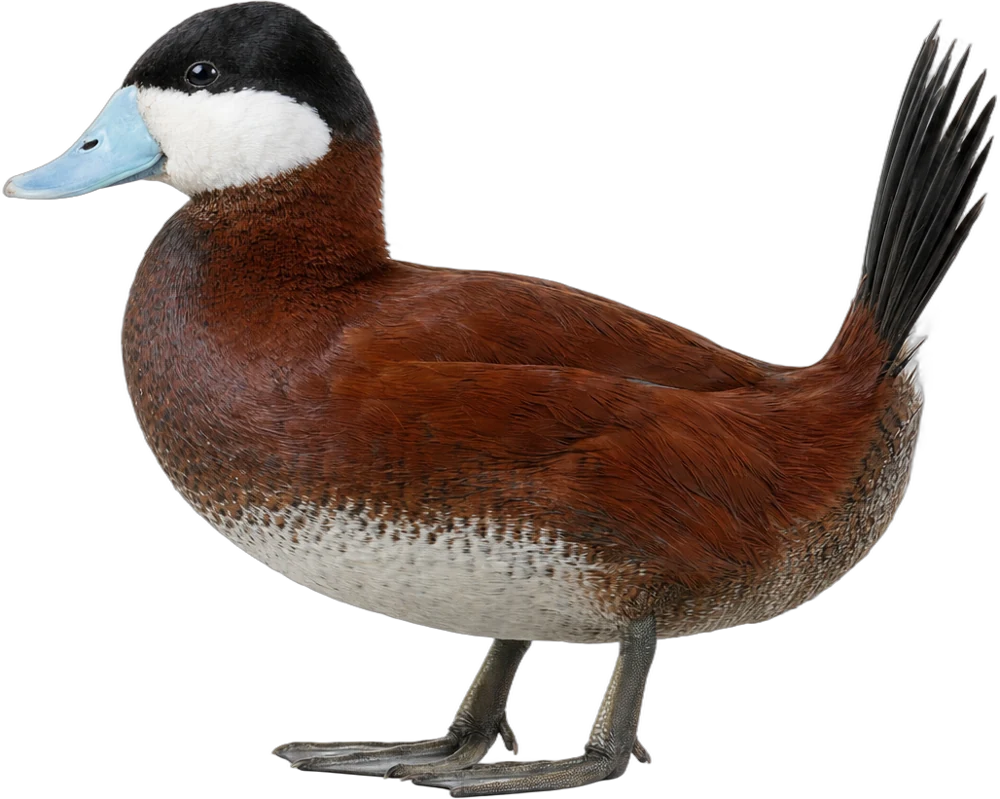
A compact diving duck with a stiff tail it often holds straight up. Breeding males sport a remarkable sky-blue bill.
How to identify it
- Stiff, spiky tail often cocked upward
- Breeding male: chestnut body, black cap, white cheek and bright blue bill
- Winter male and female: gray-brown with a pale cheek (female's has a dark line)
- Dives instead of taking flight when disturbed
SizeBetween an American Robin and an American Crow
American Robin10 in
Ruddy Duck16 in
American Crow19 in
Canada Goose37 in
6 inAverage length, bill to tail
Details
- Size
- 14–17 in long; wingspan 22–24 in
- Weight
- 11–30 oz
- Habitat
- Lakes, reservoirs, ponds and sheltered bays
- When to see it
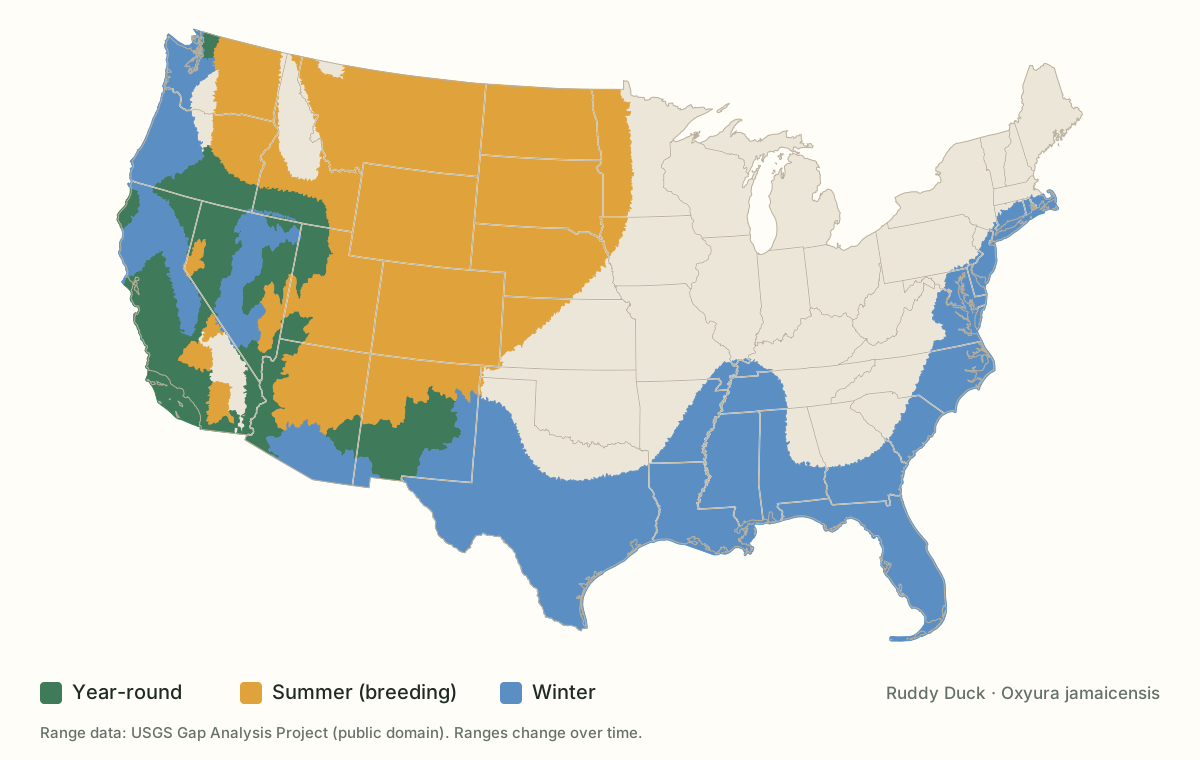
- Winter visitor across the South and along the coasts; breeds on northern prairies
- Diet
- Aquatic insect larvae, crustaceans and seeds of water plants
Range in the United States
Life history
Food
Dives for midge larvae and other aquatic insects, plus small crustaceans and seeds of pondweeds.
Nesting
A woven platform of plants built over water in dense marsh vegetation, sometimes with a canopy.
- Clutch
- 5–10 eggs
- Incubation
- 23–26 days
- Young
- Leave the nest within a day; fly at about 6–7 weeks
- Broods
- 1 per year
Behavior
Males court by beating their bills against their chests, making bubbles in the water. Prefers diving to flying when alarmed.
Conservation
Common and widespread; populations are stable.
Cool facts
- Ruddy Duck eggs are huge for the bird's size, about as big as a Mallard's.
- During courtship, the male makes a drumming sound and a trail of bubbles.
- It has trouble walking on land because its legs are set far back on its body.