Birds of Prey
Swallow-tailed Kite
Elanoides forficatus
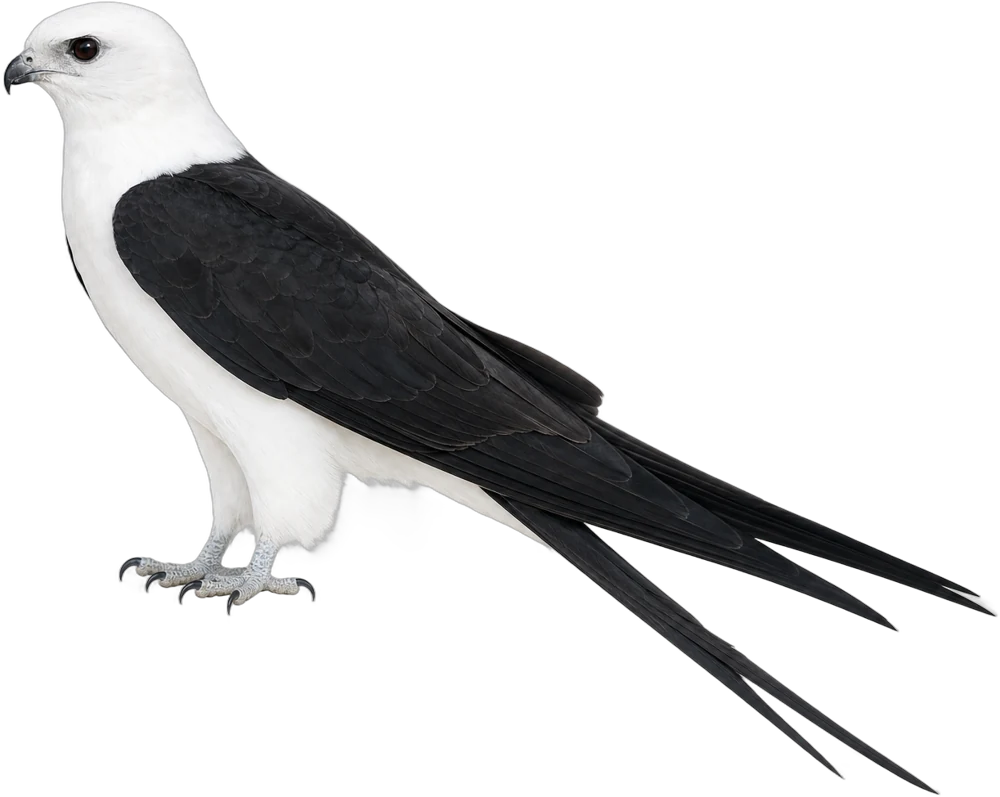
One of the most graceful birds in North America, gliding effortlessly with a deeply forked tail. It eats insects and even drinks while flying.
How to identify it
- Clean white head and underparts
- Black wings, back and tail
- Very long, deeply forked tail
- Long, pointed wings; rarely flaps
SizeBetween an American Crow and a Canada Goose
American Crow19 in
Swallow-tailed Kite23 in
Canada Goose37 in
Great Blue Heron46 in
6 inAverage length, bill to tail
Details
- Size
- 20–25 in long; wingspan about 48 in
- Weight
- 13–21 oz
- Habitat
- River swamps, pine forests and wetlands in the Southeast
- When to see it
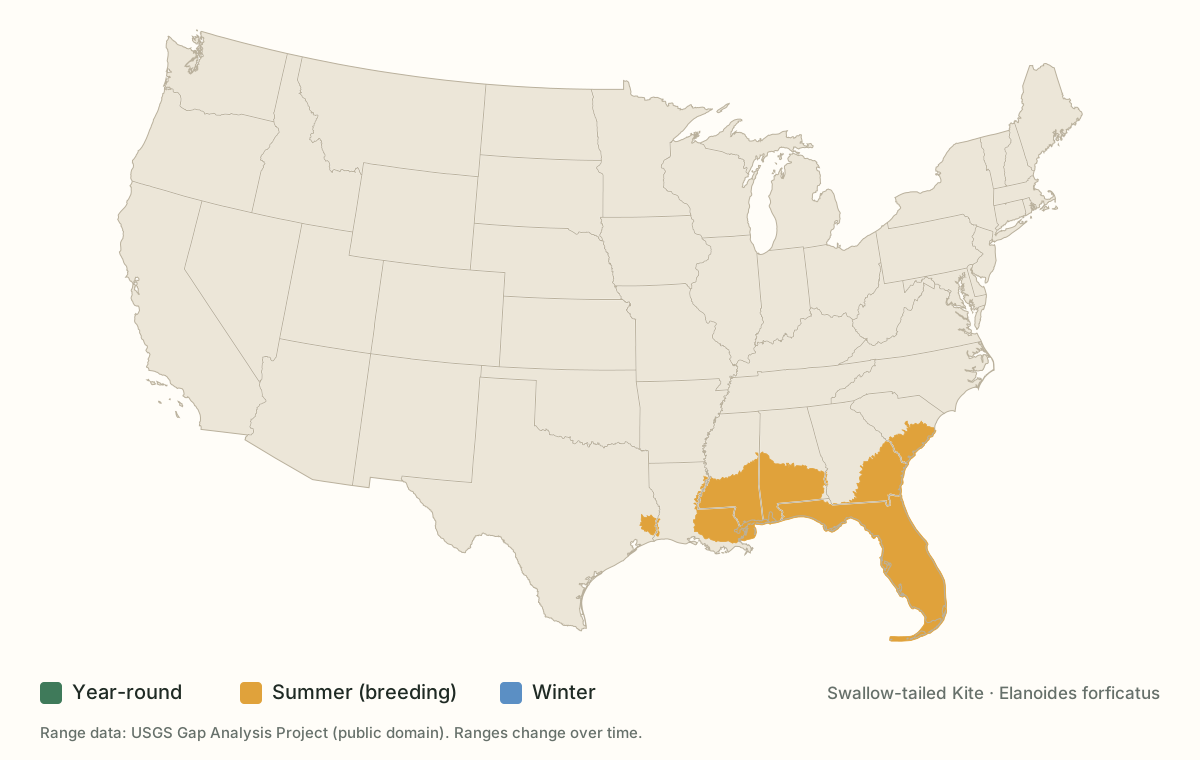
- Summer (March–August) in Florida and the coastal Southeast, including South Carolina; winters in South America
- Diet
- Large flying insects, lizards, frogs, small snakes
Range in the United States
Life history
Food
Catches flying insects, lizards, frogs and small snakes, often eating them in flight.
Nesting
A stick nest high in the top of a tall tree, often a pine, lined with Spanish moss.
- Clutch
- 2 eggs
- Incubation
- about 28 days
- Young
- Fledge at about 5–6 weeks
- Broods
- 1 per year
Behavior
Rarely flaps; glides and twists effortlessly. Small groups gather to roost before migration.
Conservation
Once nested across 21 states; now mostly limited to the Southeast and listed as a species of concern.
Cool facts
- It drinks by skimming water from the surface while flying.
- Its forked tail can be over a foot long.
- It migrates to South America, crossing the Gulf of Mexico.
Songs & calls
▶Bird sounds video coming soon
Watch the Swallow-tailed Kite
▶Video coming soon