Shorebirds & Seabirds
Willet
Tringa semipalmata
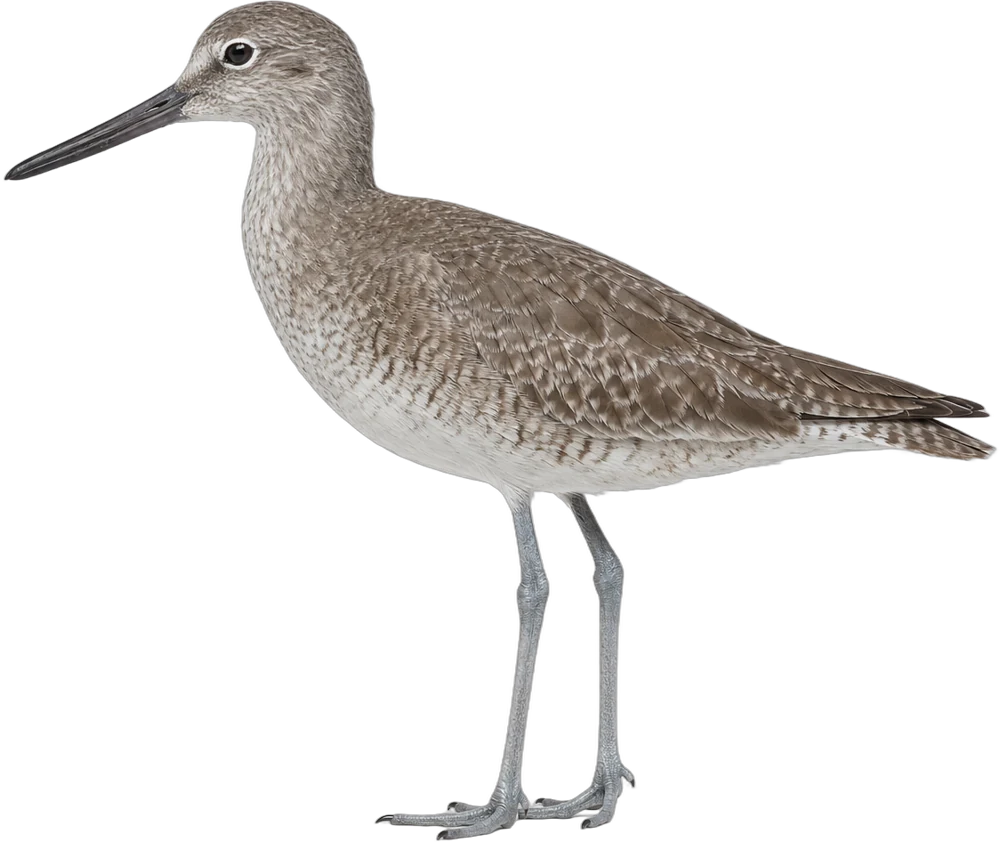
A large, plain gray shorebird that transforms in flight, showing a bold black-and-white wing pattern. Its loud call says its name.
How to identify it
- Plain gray-brown body with a sturdy, straight bill
- Gray legs
- Bold black-and-white wing stripes in flight
- Loud "pill-will-willet" call
SizeBetween an American Robin and an American Crow
American Robin10 in
Willet15 in
American Crow19 in
Canada Goose37 in
6 inAverage length, bill to tail
Details
- Size
- 13–16 in long; wingspan 22–26 in
- Weight
- 7–12 oz
- Habitat
- Salt marshes, beaches and mudflats
- When to see it
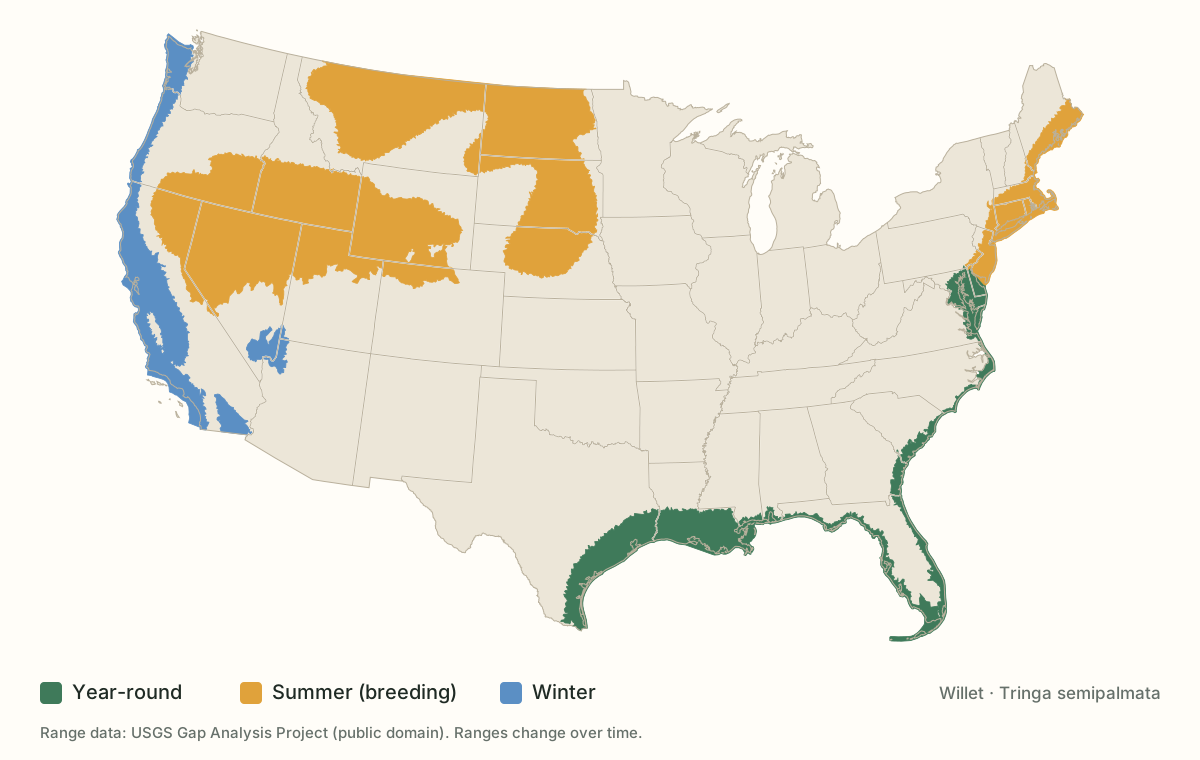
- Year-round along the southern Atlantic and Gulf coasts; summer farther north
- Diet
- Crabs, worms, small fish, insects
Range in the United States
Life history
Food
Probes and picks for crabs, worms, small clams and fish on mudflats and beaches.
Nesting
A grass-lined scrape hidden in marsh or dune vegetation.
- Clutch
- 4 eggs
- Incubation
- 22–29 days
- Young
- Leave the nest within a day; fly at about 4 weeks
- Broods
- 1 per year
Behavior
Noisy and conspicuous; perches on posts and calls loudly near its nest.
Conservation
Common; was hunted heavily in the 1800s before protection.
Cool facts
- Willets were once nearly wiped out on the East Coast by hunters taking their eggs and meat.
- Eastern and western Willets may be separate species.
- Its wing pattern is one of the boldest of any shorebird in flight.
Songs & calls
▶Bird sounds video coming soon
Watch the Willet
▶Video coming soon