Wading Birds & Marsh Birds
Wood Stork
Mycteria americana
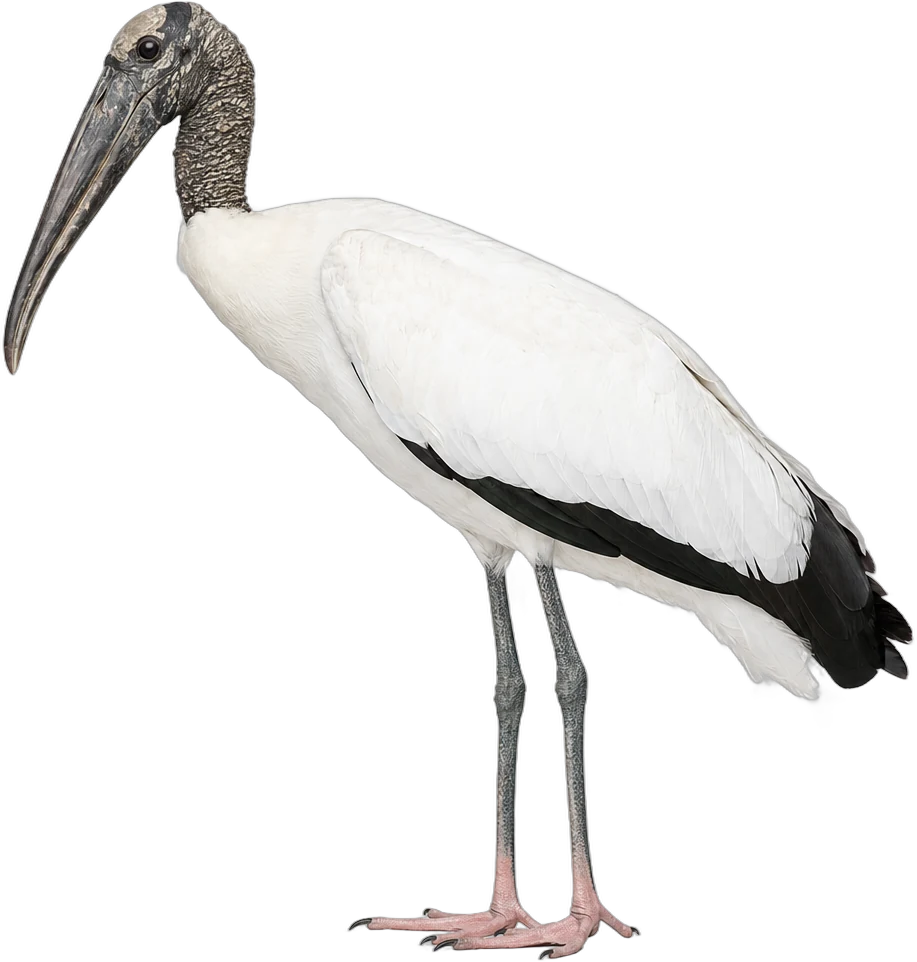
The only stork that breeds in the United States. It feeds by touch, snapping its bill shut on fish in muddy water in one of the fastest reflexes known in vertebrates.
How to identify it
- Large white body with black flight feathers and tail
- Bare, dark gray, scaly-looking head and neck
- Thick, slightly downcurved bill
- Soars on thermals with neck and legs outstretched
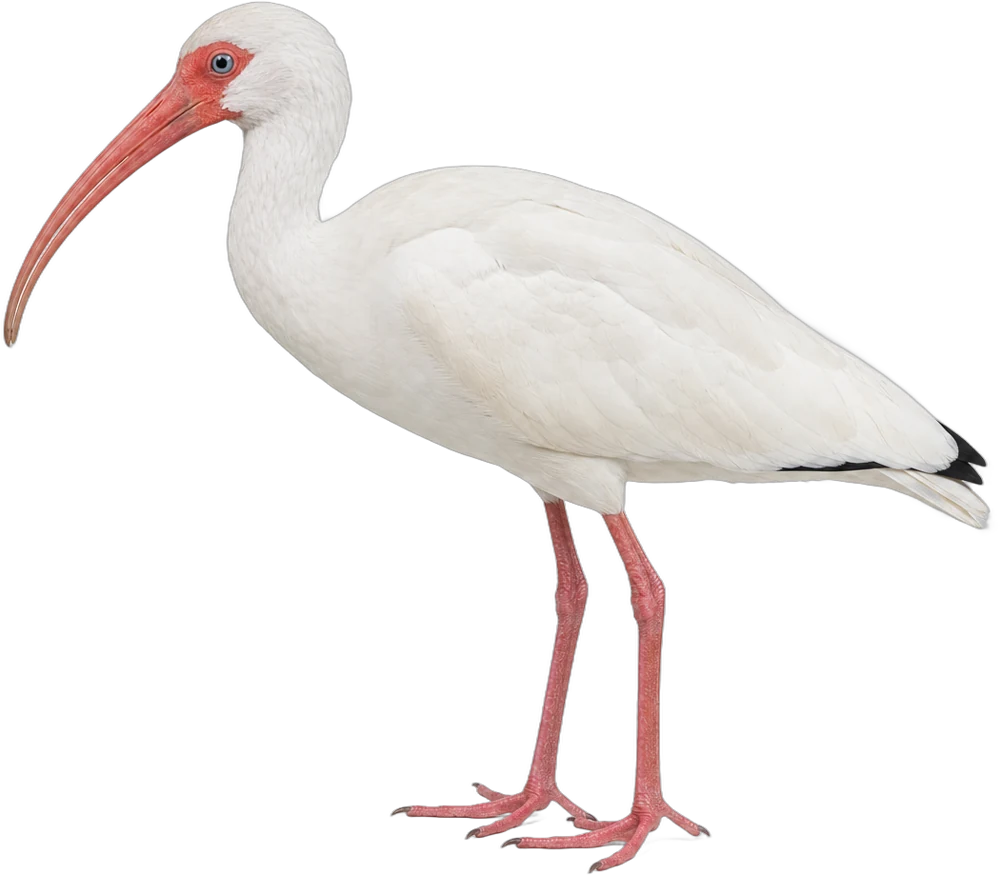
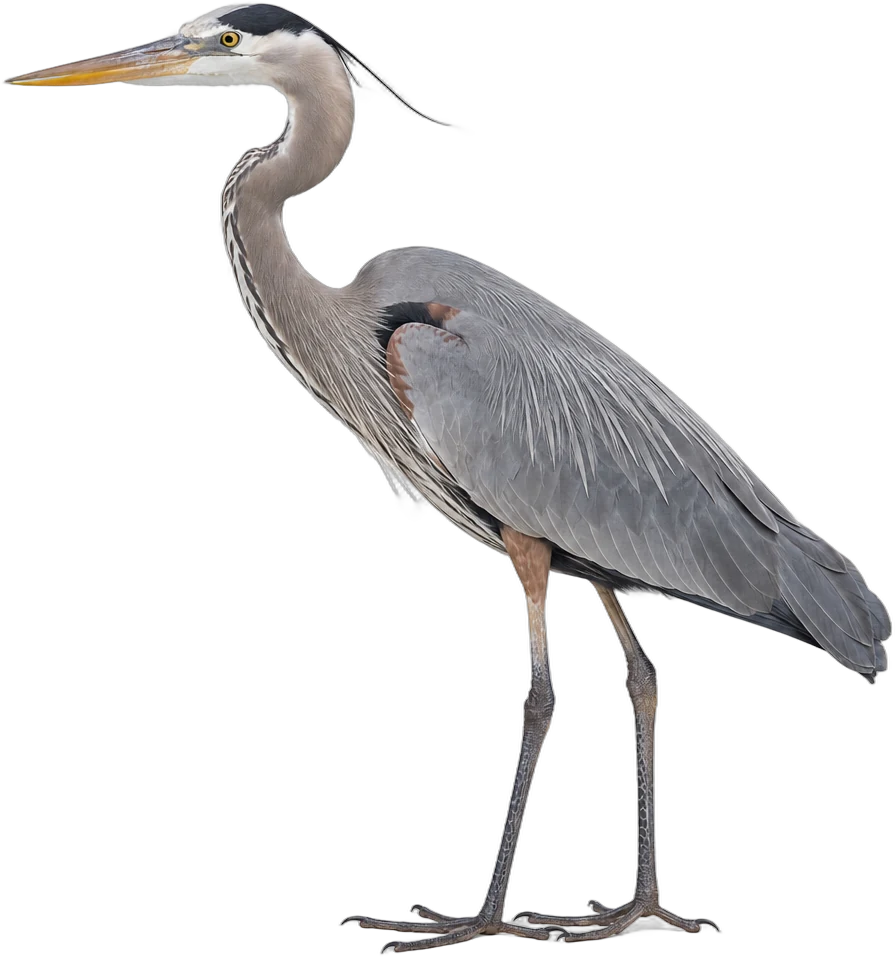
SizeAbout the size of a Canada Goose
American Crow19 in
Canada Goose37 in
Wood Stork39 in
Great Blue Heron46 in
6 inAverage length, bill to tail
Details
- Size
- 33–45 in long; wingspan 59–69 in
- Weight
- 4.4–5.9 lb
- Habitat
- Cypress swamps, marshes, ponds and coastal wetlands
- When to see it
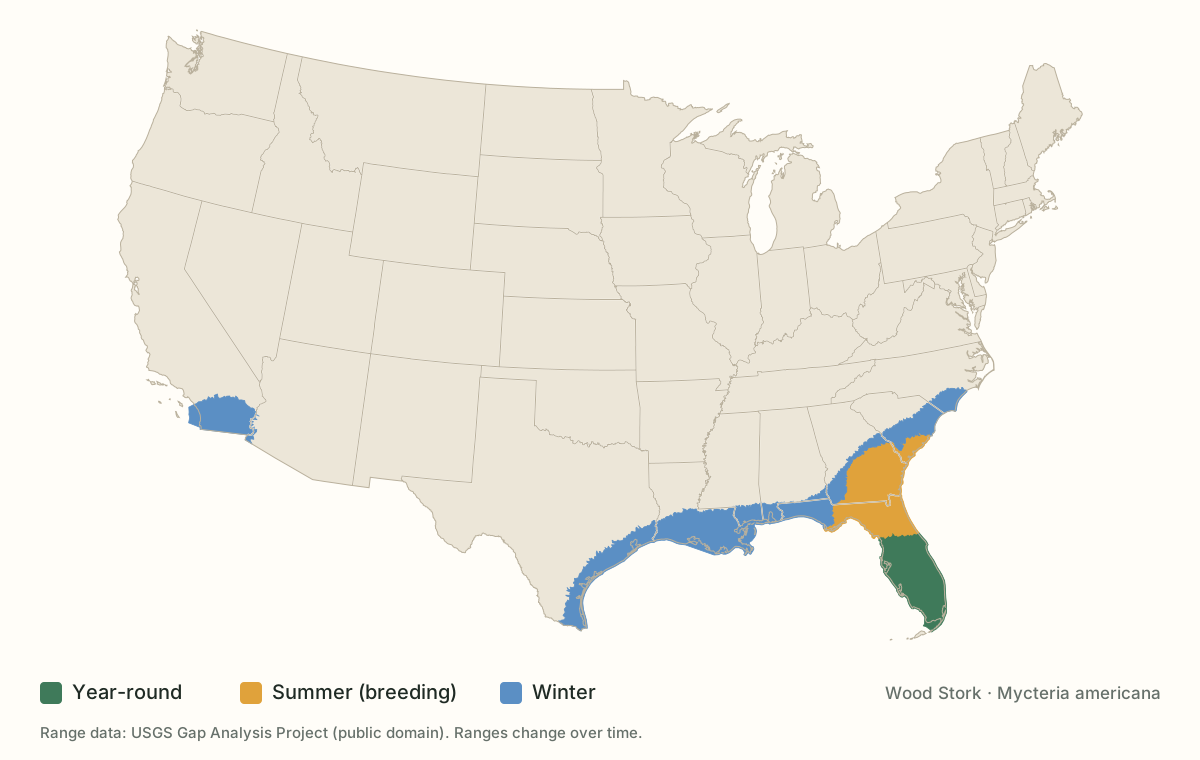
- Year-round in Florida and coastal Georgia and South Carolina; wanders north to North Carolina in summer
- Diet
- Fish, plus crayfish and frogs
Range in the United States
Life history
Food
Feels for fish in shallow muddy water with its bill partly open, snapping it shut in about 25 milliseconds.
Nesting
A platform of sticks high in cypress or mangrove trees, in colonies.
- Clutch
- 2–5 eggs
- Incubation
- 27–32 days
- Young
- Fledge at about 8 weeks
- Broods
- 1 per year
Behavior
Nesting is timed to falling water levels that concentrate fish. Parents cool chicks by dribbling water over them.
Conservation
Federally listed as threatened (upgraded from endangered in 2014); depends on healthy southern wetlands.
Cool facts
- Its bill-snap reflex is one of the fastest known in any vertebrate.
- A pair of storks and their chicks may need about 440 pounds of fish in a nesting season.
- It is the only stork that breeds in the United States.
Songs & calls
▶Bird sounds video coming soon
Watch the Wood Stork
▶Video coming soon