Warblers, Sparrows, Finches & Blackbirds
Yellow-rumped Warbler
Setophaga coronata
One of the most abundant warblers in North America. It can digest waxy bayberry fruit, which lets it spend the winter much farther north than most warblers.
How to identify it
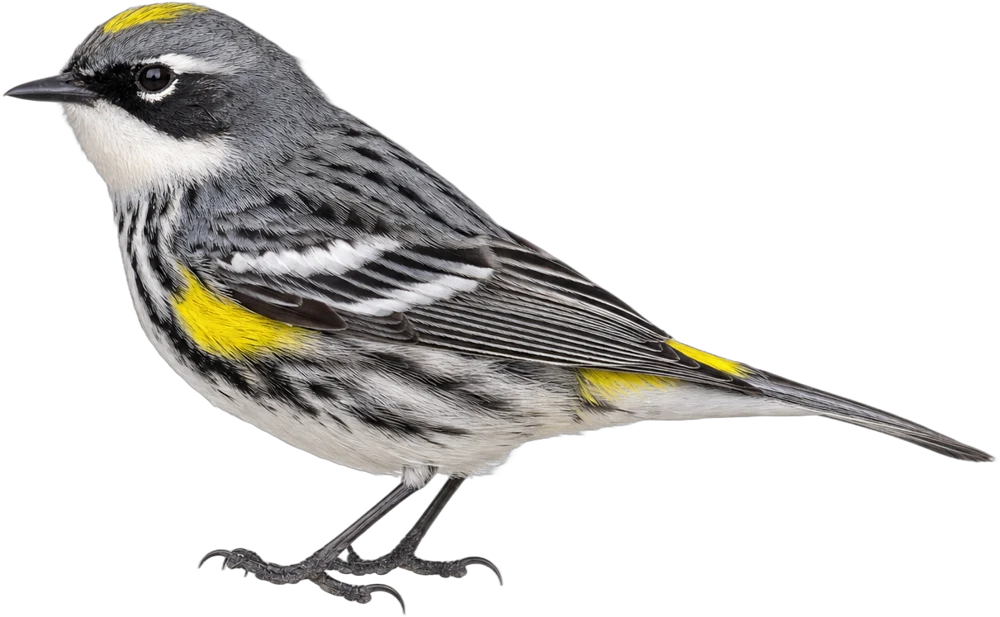
- Bright yellow rump patch
- Yellow patches on the sides
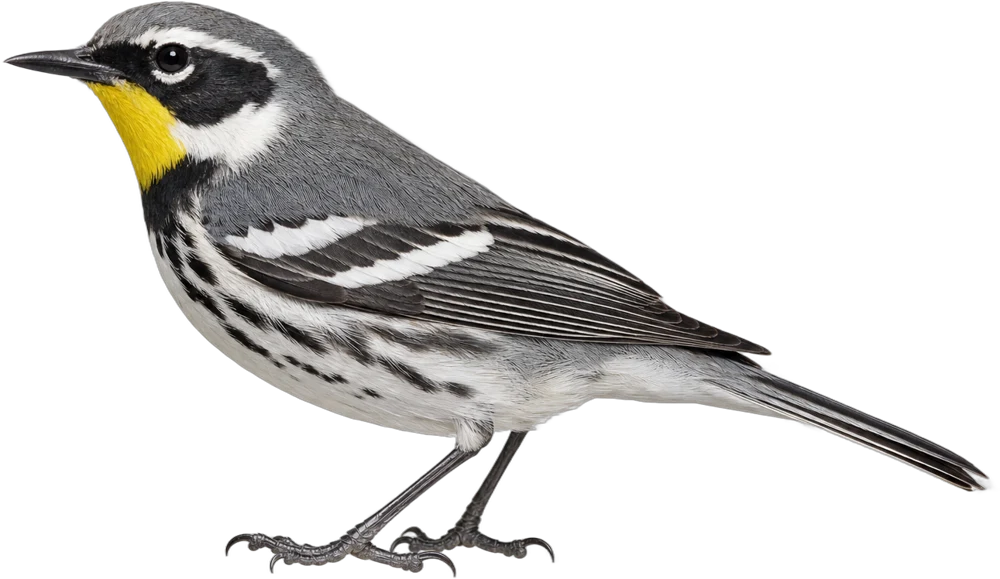
- Breeding male: gray with black streaks and a white throat
- Winter birds: brownish and streaky
- Sharp "check" call
SizeAbout the size of a Song Sparrow
Carolina Chickadee4 in
Yellow-rumped Warbler5 in
Song Sparrow6 in
American Robin10 in
6 inAverage length, bill to tail
Details
- Size
- 4.5–5.5 in long; wingspan 7.5–9 in
- Weight
- 0.4–0.5 oz
- Habitat
- Woodlands, thickets and coastal wax-myrtle shrubs in winter; conifer forests in summer
- When to see it
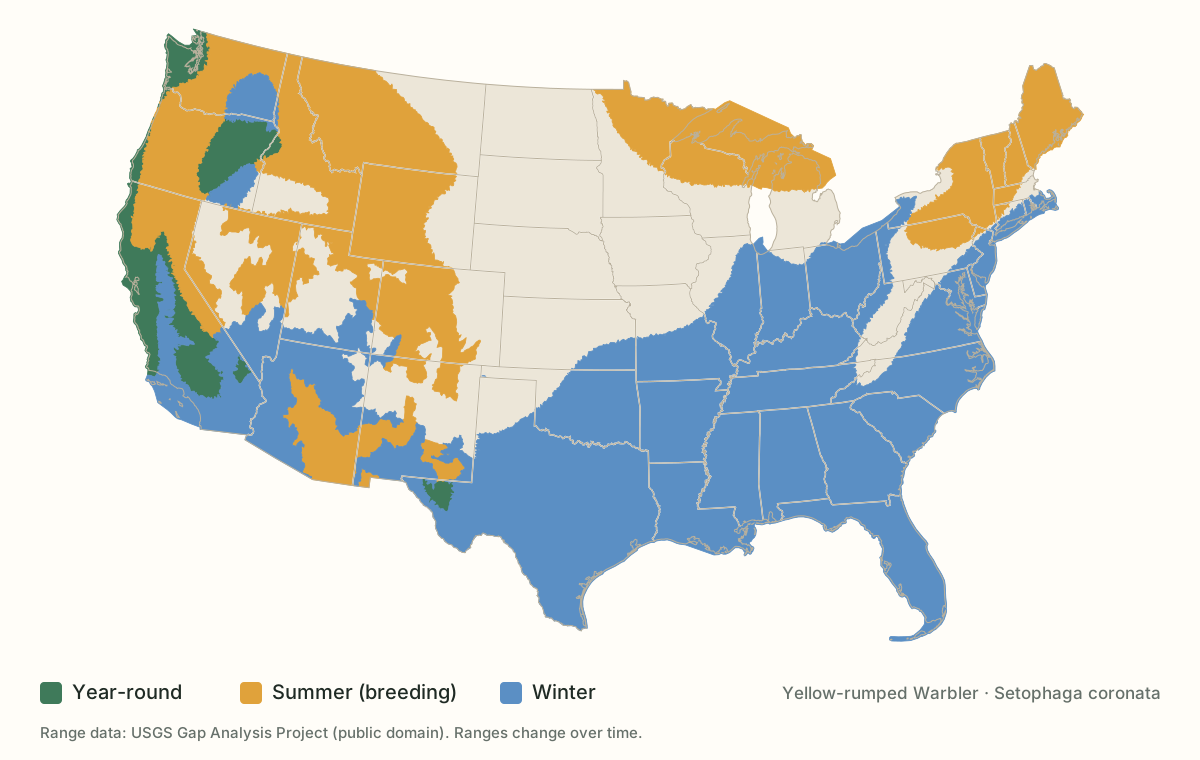
- Abundant winter visitor across the South, including the Carolinas; breeds in the North and West
- Diet
- Insects, bayberry and wax-myrtle berries
Range in the United States
Life history
Food
Eats insects in summer; in winter it eats bayberries, wax myrtle berries and other fruits.
Nesting
A cup of twigs and grass in a conifer, lined with feathers.
- Clutch
- 4–5 eggs
- Incubation
- 12–13 days
- Young
- Fledge at about 10–14 days
- Broods
- 1–2 per year
Behavior
Very adaptable: flycatches, gleans leaves and feeds on the ground.
Conservation
Abundant and stable.
Cool facts
- Its ability to digest waxy bayberries lets it winter as far north as New England.
- Birders call it "butter-butt."
- The eastern and western forms were once considered separate species.
Songs & calls
▶Bird sounds video coming soon
Watch the Yellow-rumped Warbler
▶Video coming soon