Backyard & Woodland Songbirds
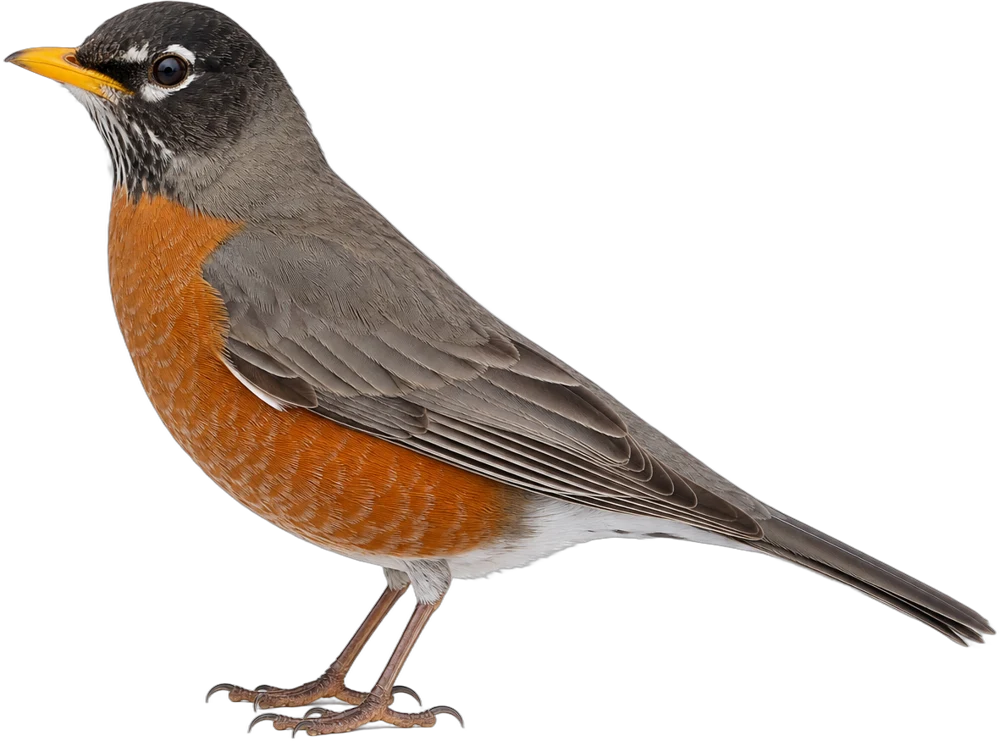
American Robin
Turdus migratorius
One of the most familiar birds in North America, often seen running across lawns and tugging up earthworms. Its cheerful song is a classic sound of spring.
How to identify it
- Gray-brown back
- Warm orange breast
- Dark head with a broken white eye-ring
- Yellow bill
- Caroling "cheerily, cheer up, cheerio" song
SizeBetween a Song Sparrow and an American Crow
Carolina Chickadee4 in
Song Sparrow6 in
American Robin10 in
American Crow19 in
6 inAverage length, bill to tail
Details
- Size
- 8–11 in long; wingspan 12–16 in
- Weight
- 2.7–3 oz
- Habitat
- Lawns, parks, fields, woodlands
- When to see it
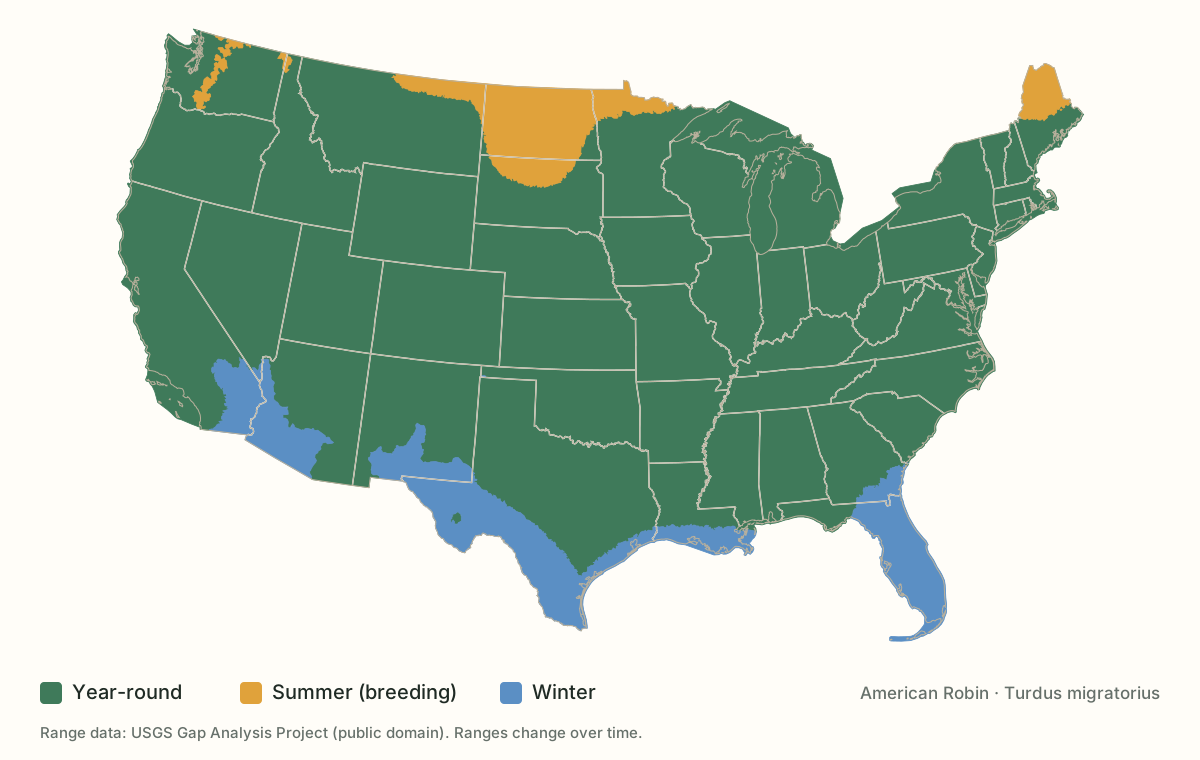
- Year-round across most of the US; big winter flocks in the South
- Diet
- Earthworms, insects, berries
Range in the United States
Life history
Food
Eats earthworms and insects in spring and summer, and fruit and berries in fall and winter.
Nesting
A cup of grass and twigs plastered with mud, in a tree, shrub or on a ledge.
- Clutch
- 3–5 eggs
- Incubation
- 12–14 days
- Young
- Fledge at about 13 days
- Broods
- 2–3 per year
Behavior
Finds worms by sight, tilting its head to look. Gathers in large flocks in winter.
Conservation
Abundant; one of the most widespread birds in North America.
Cool facts
- Its eggs are the classic "robin's-egg blue."
- Only about 40% of nests produce young.
- Robins can get tipsy from eating fermented berries.
Songs & calls
▶Bird sounds video coming soon
Watch the American Robin
▶Video coming soon