Backyard & Woodland Songbirds
Eastern Bluebird
Sialia sialis
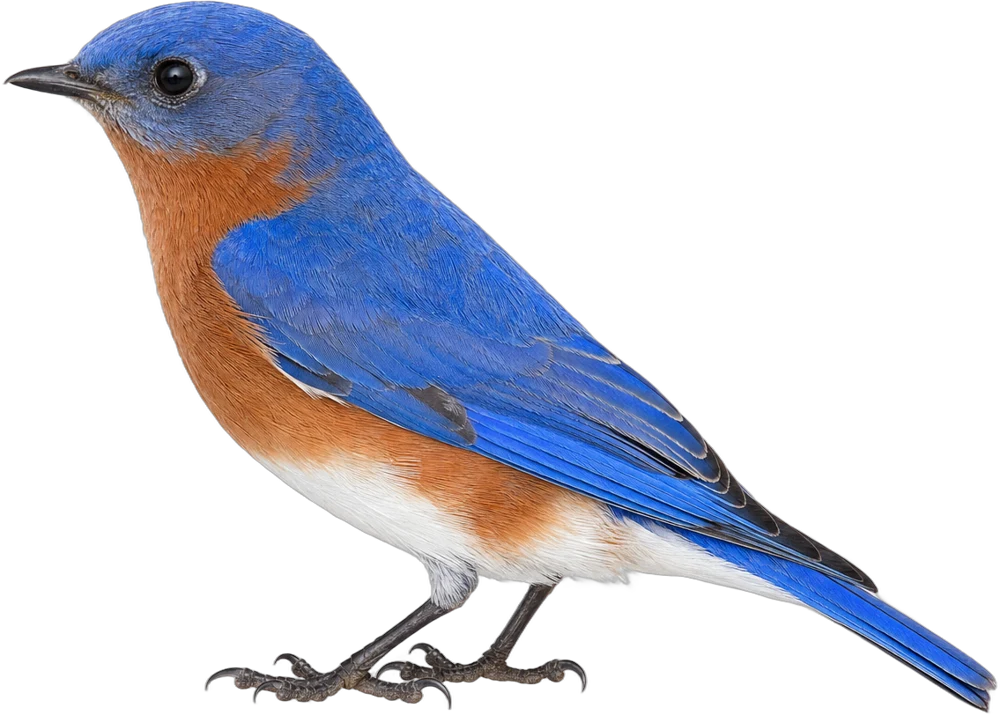
A small thrush with brilliant blue upperparts and a warm orange breast. Nest-box programs helped it recover after big declines in the 1900s.
How to identify it
- Male: vivid blue head, back and wings
- Rusty-orange throat and breast, white belly
- Female: grayer with blue in the wings and tail
- Perches upright on fences and wires
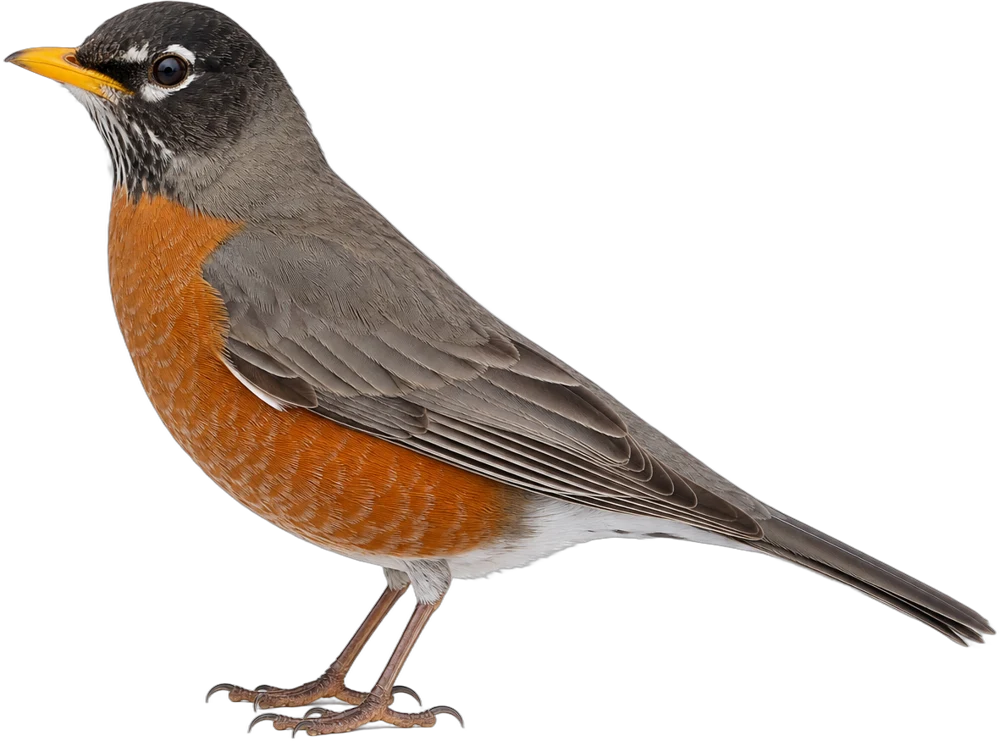
SizeBetween a Song Sparrow and an American Robin
Carolina Chickadee4 in
Song Sparrow6 in
Eastern Bluebird7 in
American Robin10 in
6 inAverage length, bill to tail
Details
- Size
- 6.5–8 in long; wingspan 10–12.5 in
- Weight
- 1–1.1 oz
- Habitat
- Open fields, pastures, golf courses and orchards with scattered trees
- When to see it
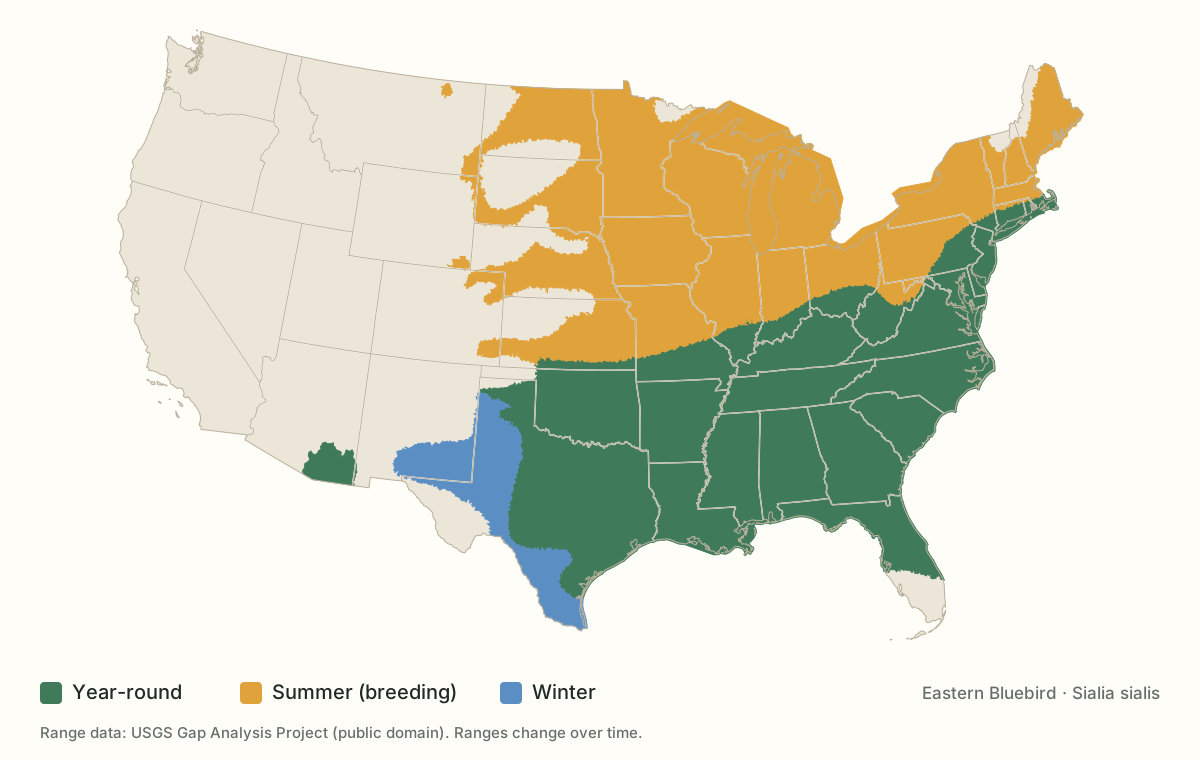
- Year-round across much of the East; summer in the North
- Diet
- Insects, berries in winter
Range in the United States
Life history
Food
Drops from a low perch to catch insects on the ground; eats berries in fall and winter.
Nesting
In a tree cavity, old woodpecker hole or nest box, made of grass or pine needles.
- Clutch
- 2–7 eggs
- Incubation
- 11–19 days
- Young
- Fledge at about 18–19 days
- Broods
- 2–3 per year
Behavior
Perches on wires and fence posts watching for insects. Young from early broods may help feed later broods.
Conservation
Recovered after major declines, helped by nest-box trails across the country.
Cool facts
- It can spot insects on the ground from about 60 feet away.
- Nest-box programs are one of conservation's big success stories.
- It's the state bird of New York and Missouri.
Songs & calls
▶Bird sounds video coming soon
Watch the Eastern Bluebird
▶Video coming soon