Backyard & Woodland Songbirds
Blue Jay
Cyanocitta cristata
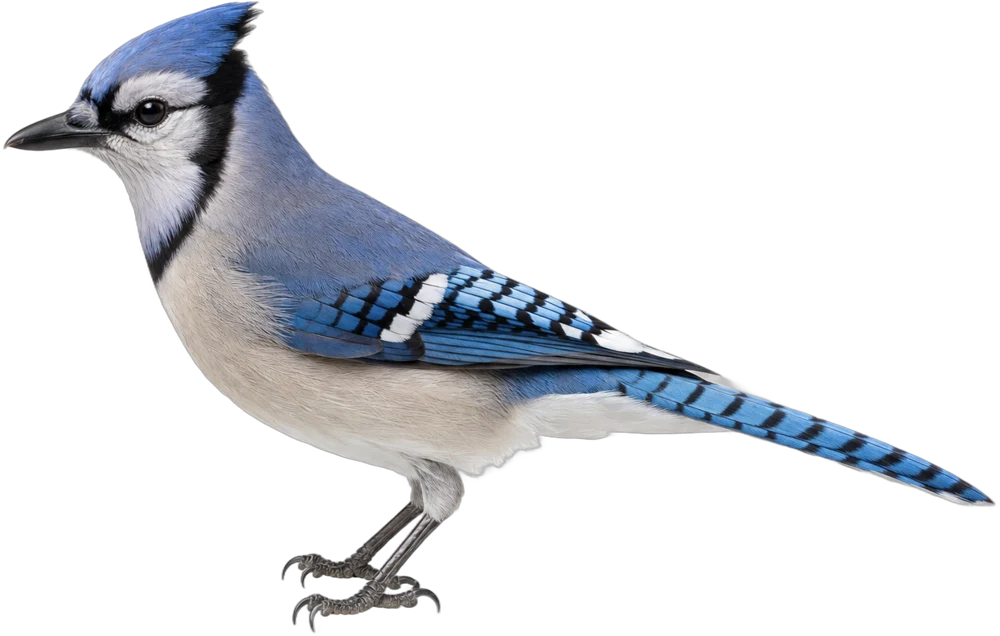
A loud, intelligent backyard bird that buries thousands of acorns each fall, helping to plant oak forests. It often imitates the calls of hawks.
How to identify it
- Bright blue crest, back, wings and tail
- White face and underparts with a black necklace
- White wing bars and white tail corners
- Loud "jay! jay!" call
SizeBetween an American Robin and an American Crow
Song Sparrow6 in
American Robin10 in
Blue Jay11 in
American Crow19 in
6 inAverage length, bill to tail
Details
- Size
- 10–12 in long; wingspan 13–17 in
- Weight
- 2.5–3.5 oz
- Habitat
- Forests, especially with oaks; parks, suburbs and feeders
- When to see it
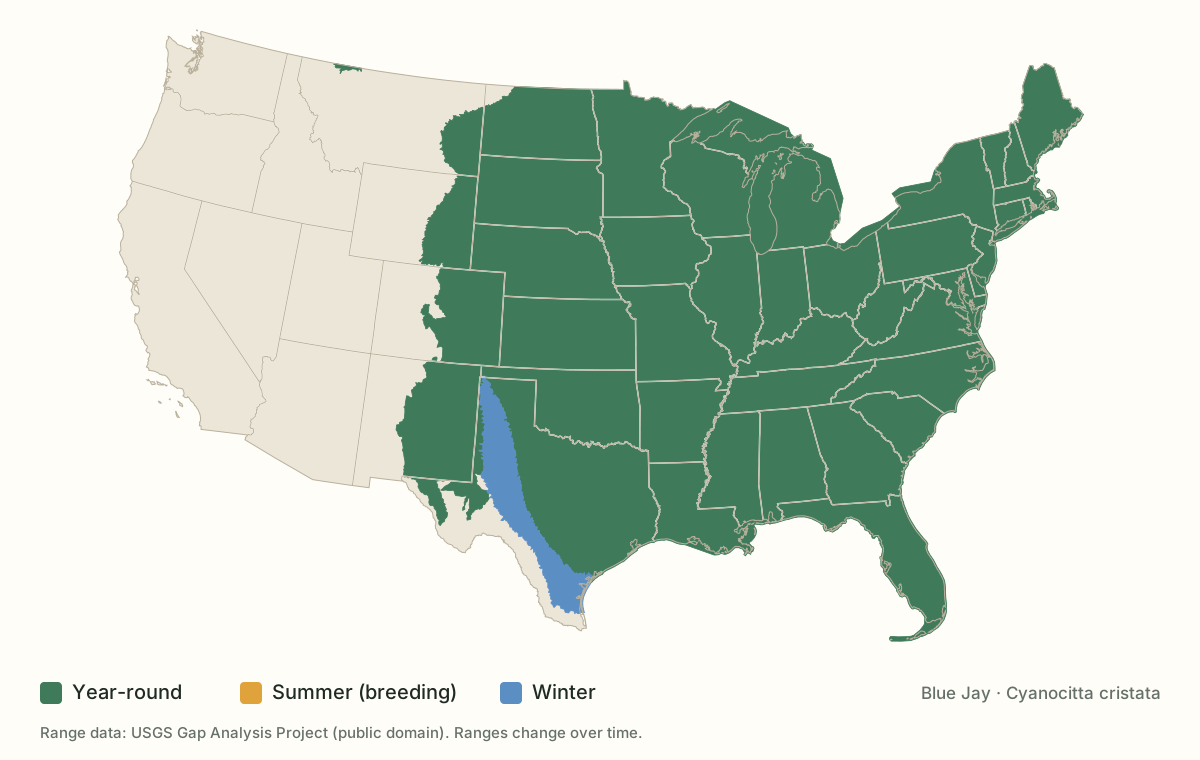
- Year-round across the East
- Diet
- Acorns, nuts, seeds, insects
Range in the United States
Life history
Food
Eats acorns, nuts, seeds, insects and sometimes eggs or nestlings.
Nesting
A cup of twigs and grass, sometimes held with mud, in a tree.
- Clutch
- 2–7 eggs
- Incubation
- 16–18 days
- Young
- Fledge at about 17–21 days
- Broods
- 1–2 per year
Behavior
Noisy and intelligent; mobs owls and hawks. Pairs are believed to mate for life.
Conservation
Common, though numbers have dropped slightly.
Cool facts
- A single jay may bury thousands of acorns in a fall.
- Blue Jays aren't really blue: light scattering in the feathers makes them look blue.
- They often imitate Red-shouldered Hawk calls.
Songs & calls
▶Bird sounds video coming soon
Watch the Blue Jay
▶Video coming soon