Backyard & Woodland Songbirds
American Crow
Corvus brachyrhynchos
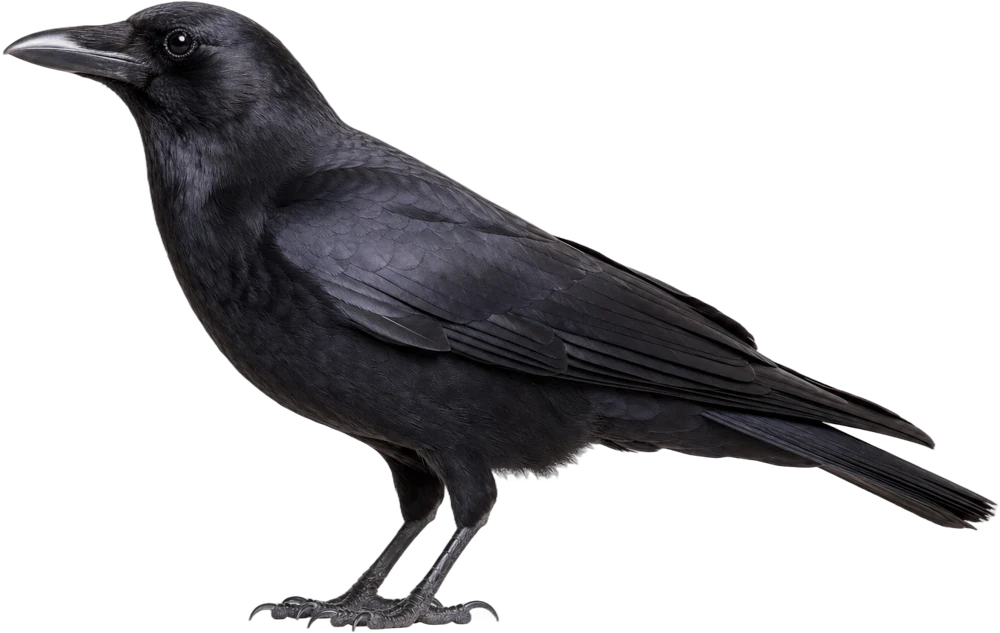
A large, all-black bird known for its intelligence and family groups. Crows recognize individual people and gather in huge roosts in winter.
How to identify it
- Entirely glossy black, including bill and legs
- Fan-shaped tail in flight
- Steady, rowing wingbeats
- Familiar "caw-caw" call
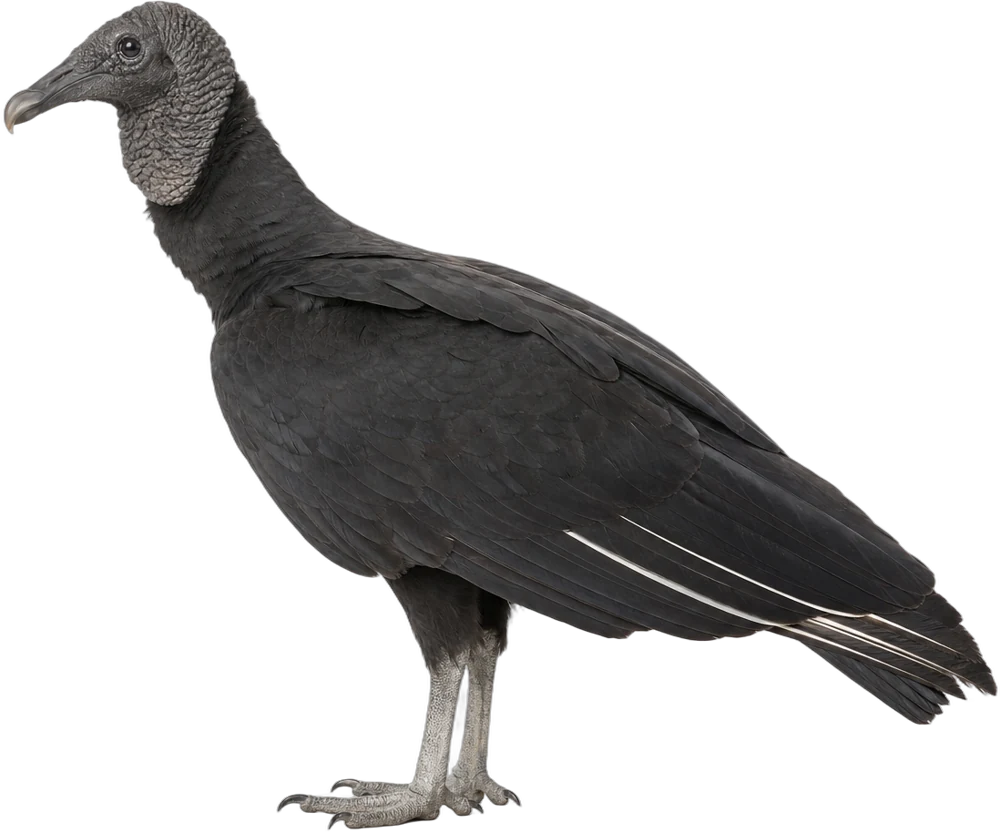
SizeBetween an American Robin and a Canada Goose
American Robin10 in
American Crow19 in
Canada Goose37 in
Great Blue Heron46 in
6 inAverage length, bill to tail
Details
- Size
- 16–21 in long; wingspan 33–39 in
- Weight
- 11–22 oz
- Habitat
- Fields, woodlands, towns, beaches, nearly everywhere
- When to see it
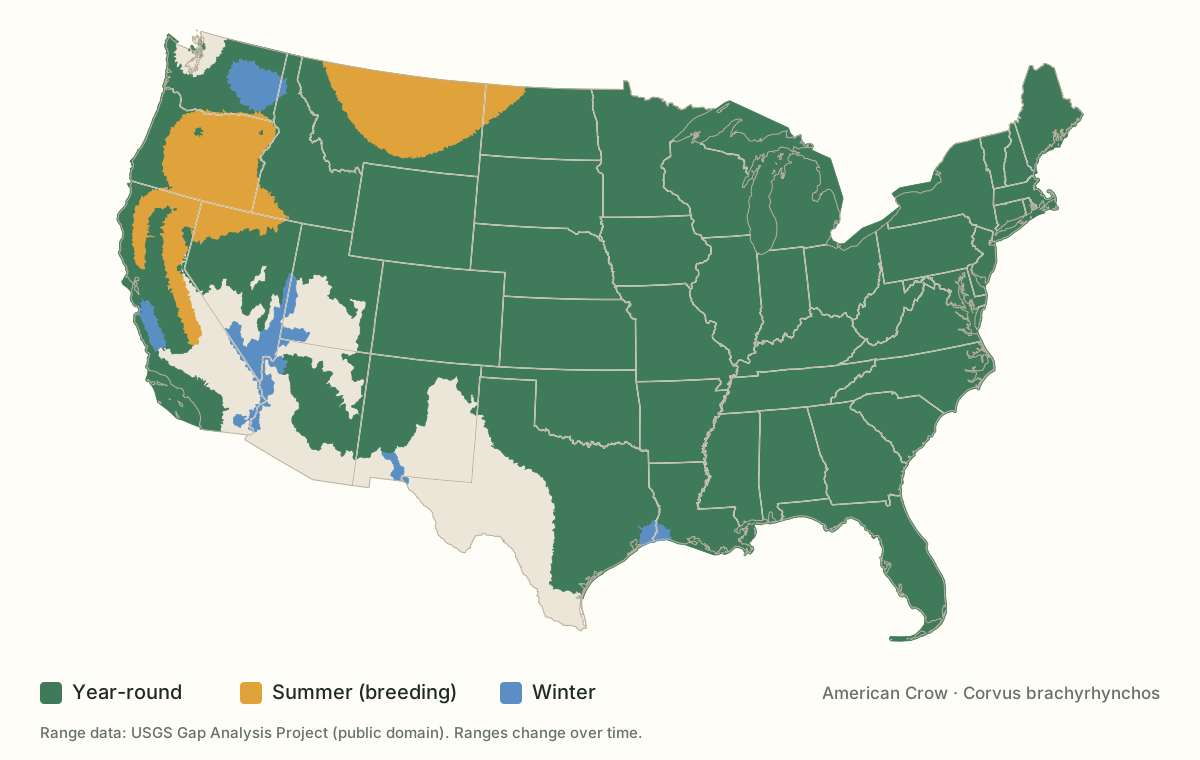
- Year-round across most of the US
- Diet
- Almost anything: insects, seeds, fruit, eggs, carrion, garbage
Range in the United States
Life history
Food
Eats almost anything: insects, worms, seeds, fruit, eggs, small animals, carrion and garbage.
Nesting
A bulky cup of sticks high in a tree.
- Clutch
- 3–9 eggs
- Incubation
- about 18 days
- Young
- Fledge at about 4–5 weeks
- Broods
- 1 per year
Behavior
Lives in family groups where older offspring help raise young. Huge winter roosts can number in the thousands.
Conservation
Common, though hit hard by West Nile virus in the early 2000s.
Cool facts
- Crows can recognize and remember individual human faces.
- Young crows may stay with their parents for several years.
- They have been seen using tools and dropping nuts on roads for cars to crack.
Songs & calls
▶Bird sounds video coming soon
Watch the American Crow
▶Video coming soon