Backyard & Woodland Songbirds
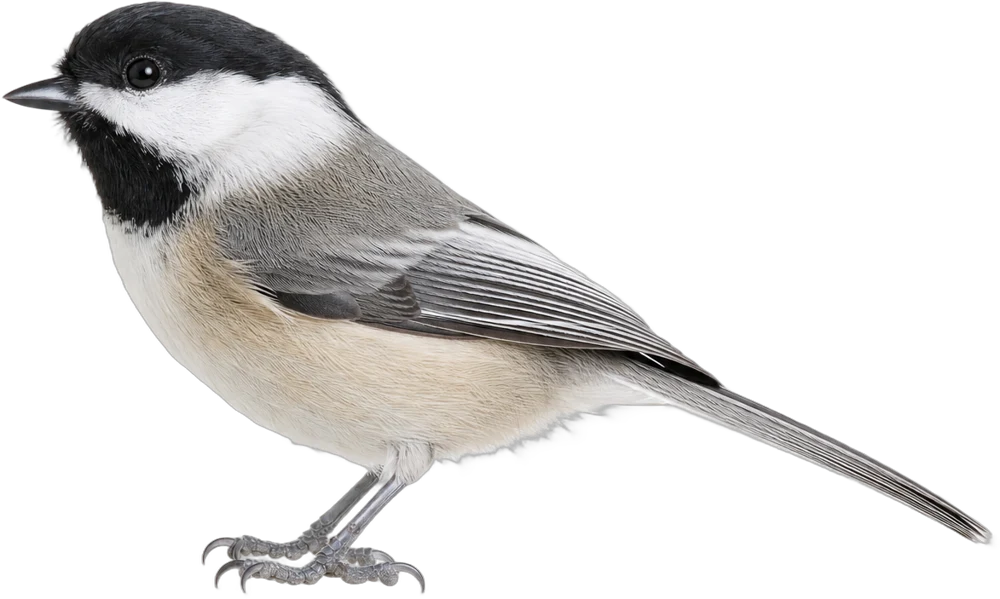
Carolina Chickadee
Poecile carolinensis
A tiny, curious, black-capped bird of southern woods and feeders. Other small birds often follow chickadee flocks and heed their alarm calls.
How to identify it
- Black cap and black bib
- White cheeks
- Soft gray back and wings
- "chick-a-dee-dee-dee" call; whistled "fee-bee-fee-bay" song
SizeSmaller than a Song Sparrow
Carolina Chickadee4 in
Song Sparrow6 in
American Robin10 in
American Crow19 in
6 inAverage length, bill to tail
Details
- Size
- 4–4.5 in long; wingspan 6–8 in
- Weight
- 0.3–0.4 oz
- Habitat
- Woodlands, parks and yards
- When to see it
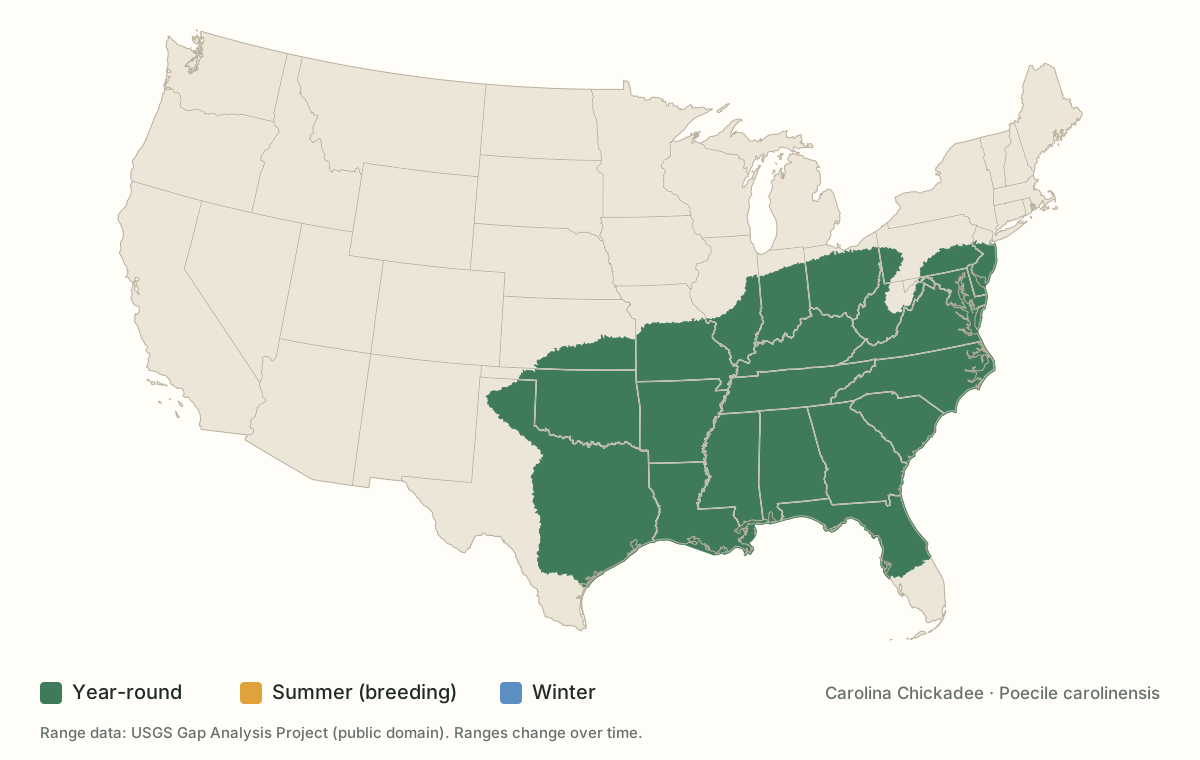
- Year-round across the Southeast
- Diet
- Insects, spiders, seeds; sunflower seeds and suet at feeders
Range in the United States
Life history
Food
Eats insects and spiders in summer, and seeds and berries in winter; visits feeders.
Nesting
In a tree cavity, often one it digs itself in soft rotting wood, or a nest box.
- Clutch
- 3–10 eggs
- Incubation
- 11–14 days
- Young
- Fledge at about 16–19 days
- Broods
- 1 per year
Behavior
Leads mixed flocks in winter. Stores seeds in bark crevices to eat later.
Conservation
Common and stable.
Cool facts
- More "dee" notes in its call can mean a bigger threat nearby.
- It lowers its body temperature on cold nights to save energy.
- It often hybridizes with the Black-capped Chickadee where their ranges meet.
Songs & calls
▶Bird sounds video coming soon
Watch the Carolina Chickadee
▶Video coming soon