Backyard & Woodland Songbirds
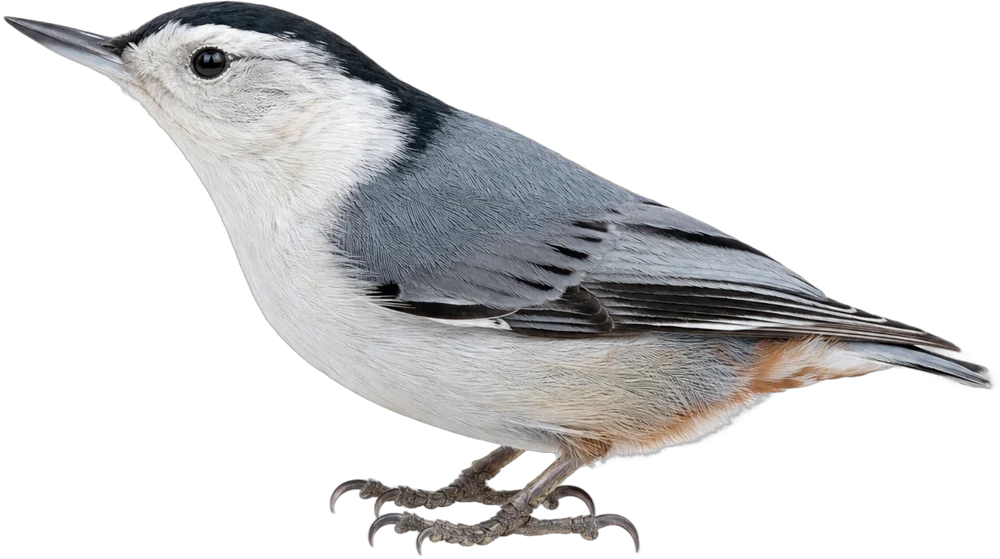
White-breasted Nuthatch
Sitta carolinensis
A compact bird that creeps headfirst down tree trunks, finding insects that woodpeckers climbing upward might miss.
How to identify it
- Blue-gray back
- White face and breast
- Black cap (gray in some females)
- Rusty patch under the tail
- Nasal "yank-yank" call
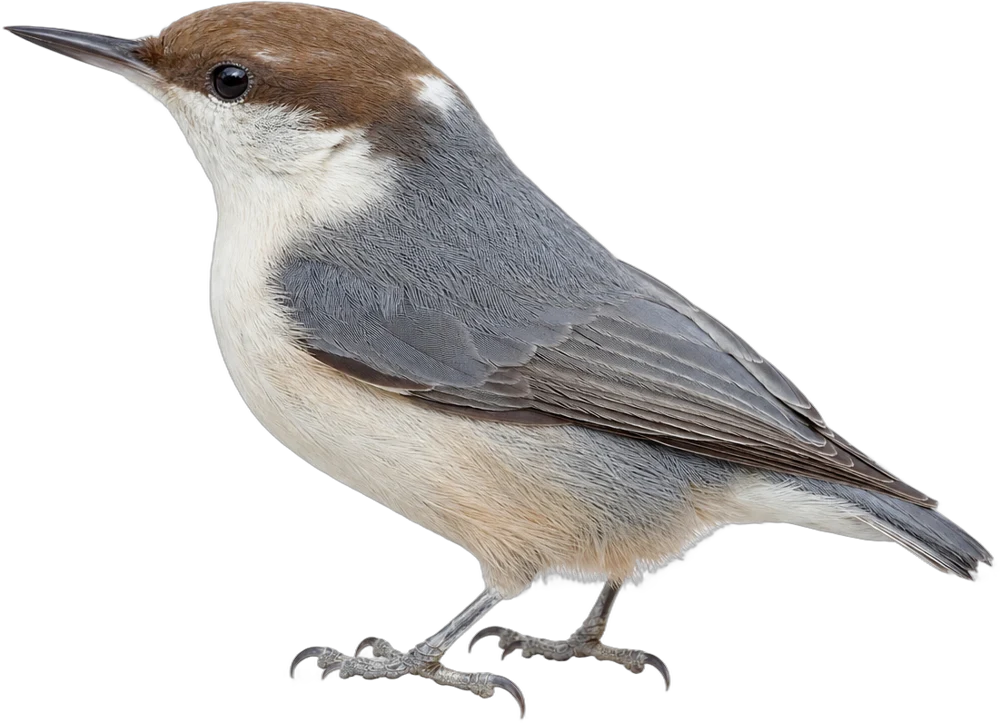
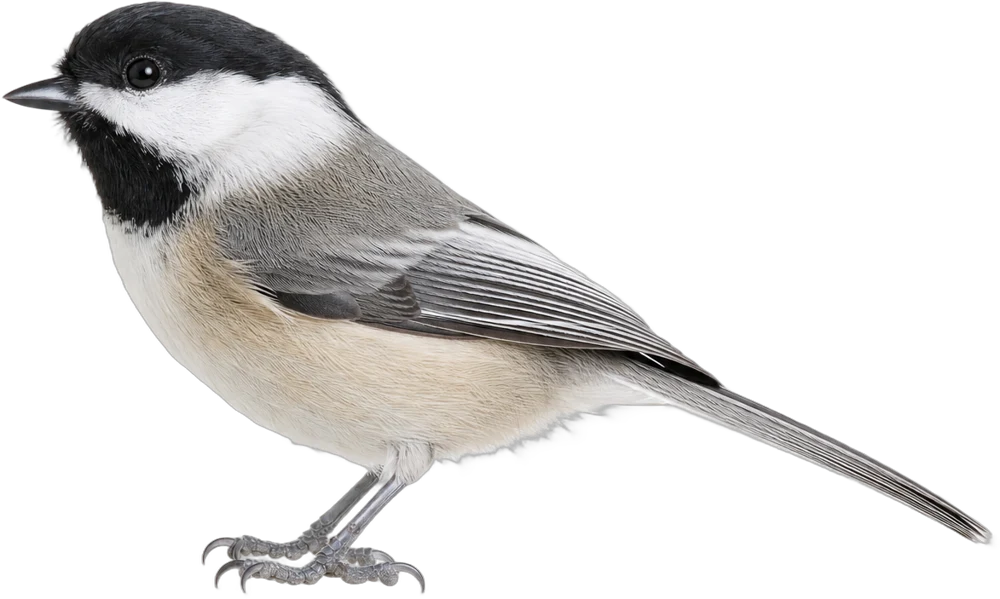
SizeAbout the size of a Song Sparrow
Carolina Chickadee4 in
White-breasted Nuthatch5 in
Song Sparrow6 in
American Robin10 in
6 inAverage length, bill to tail
Details
- Size
- 5–5.5 in long; wingspan 8–10.5 in
- Weight
- 0.6–1.1 oz
- Habitat
- Mature deciduous and mixed woods, parks and yards
- When to see it
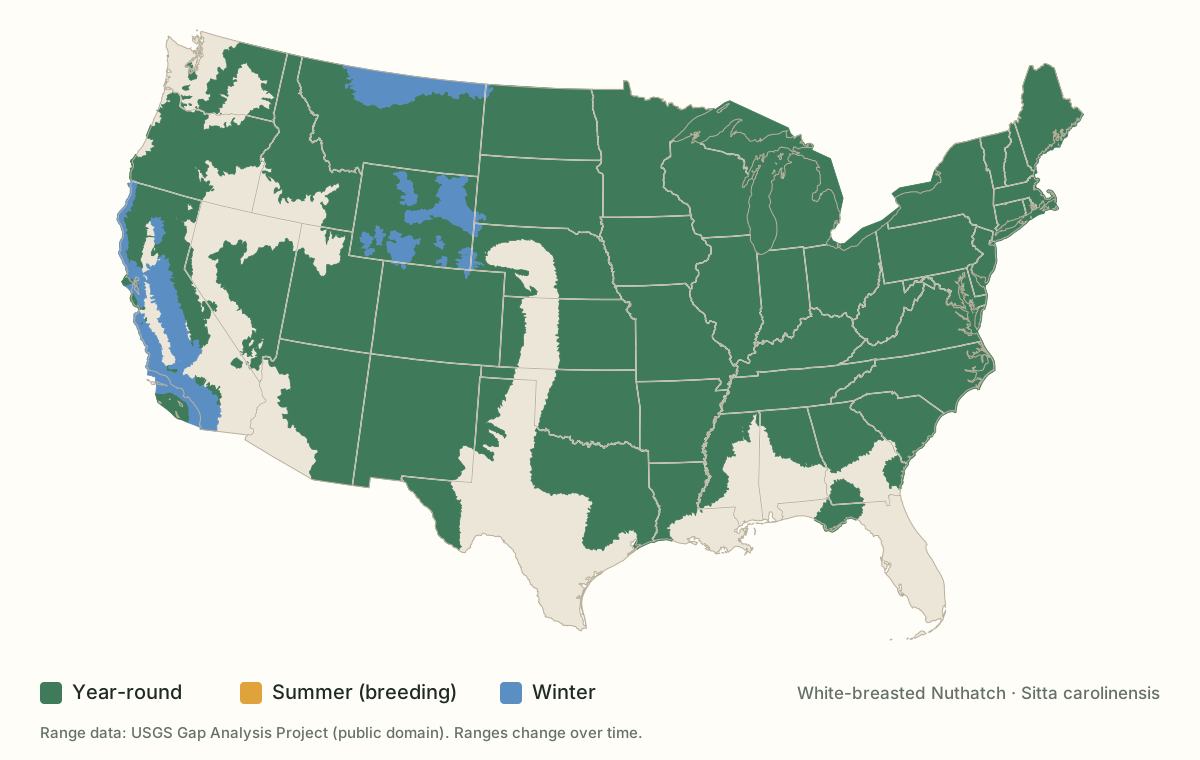
- Year-round across most of the US
- Diet
- Insects, acorns, seeds; suet and sunflower seeds at feeders
Range in the United States
Life history
Food
Eats insects, spiders, acorns, seeds and nuts, wedging large seeds into bark and hammering them open.
Nesting
In a natural tree cavity or old woodpecker hole.
- Clutch
- 5–9 eggs
- Incubation
- 13–14 days
- Young
- Fledge at about 26 days
- Broods
- 1 per year
Behavior
Creeps headfirst down trunks. Pairs stay together on their territory year-round.
Conservation
Common and stable.
Cool facts
- It may smear crushed insects around its nest hole, possibly to repel squirrels.
- Its name comes from "nut hack," how it opens seeds.
- It caches seeds in bark, one seed per spot.
Songs & calls
▶Bird sounds video coming soon
Watch the White-breasted Nuthatch
▶Video coming soon