Shorebirds & Seabirds
Brown Pelican
Pelecanus occidentalis
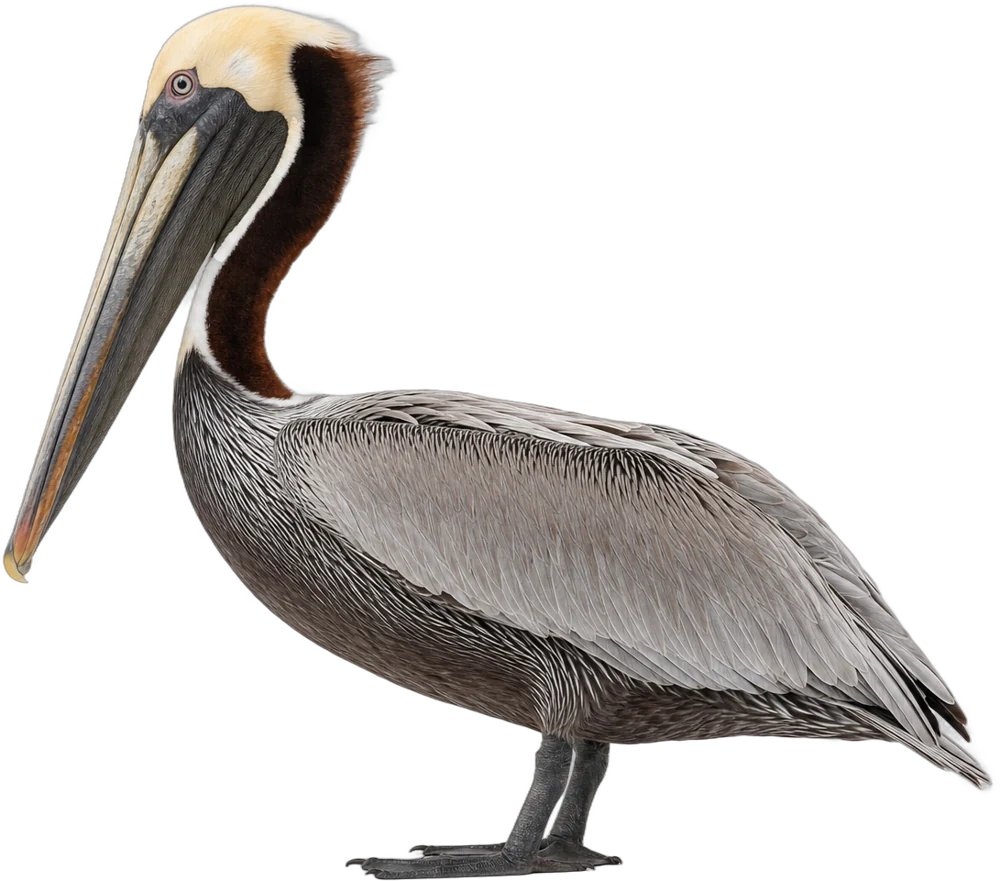
A large coastal bird that dives head-first from the air to scoop fish into its throat pouch. Once endangered by pesticides, it has made a remarkable recovery.
How to identify it
- Large gray-brown body with a huge bill and throat pouch
- Adult: white or yellowish head; dark chestnut back of the neck when breeding
- Juvenile: brown above with a whitish belly
- Flies in lines low over the waves; plunge-dives for fish
SizeAbout the size of a Great Blue Heron
American Crow19 in
Canada Goose37 in
Great Blue Heron46 in
Brown Pelican47 in
6 inAverage length, bill to tail
Details
- Size
- 39–54 in long; wingspan 79–90 in
- Weight
- 4.4–11 lb
- Habitat
- Ocean coasts, bays, beaches and piers
- When to see it
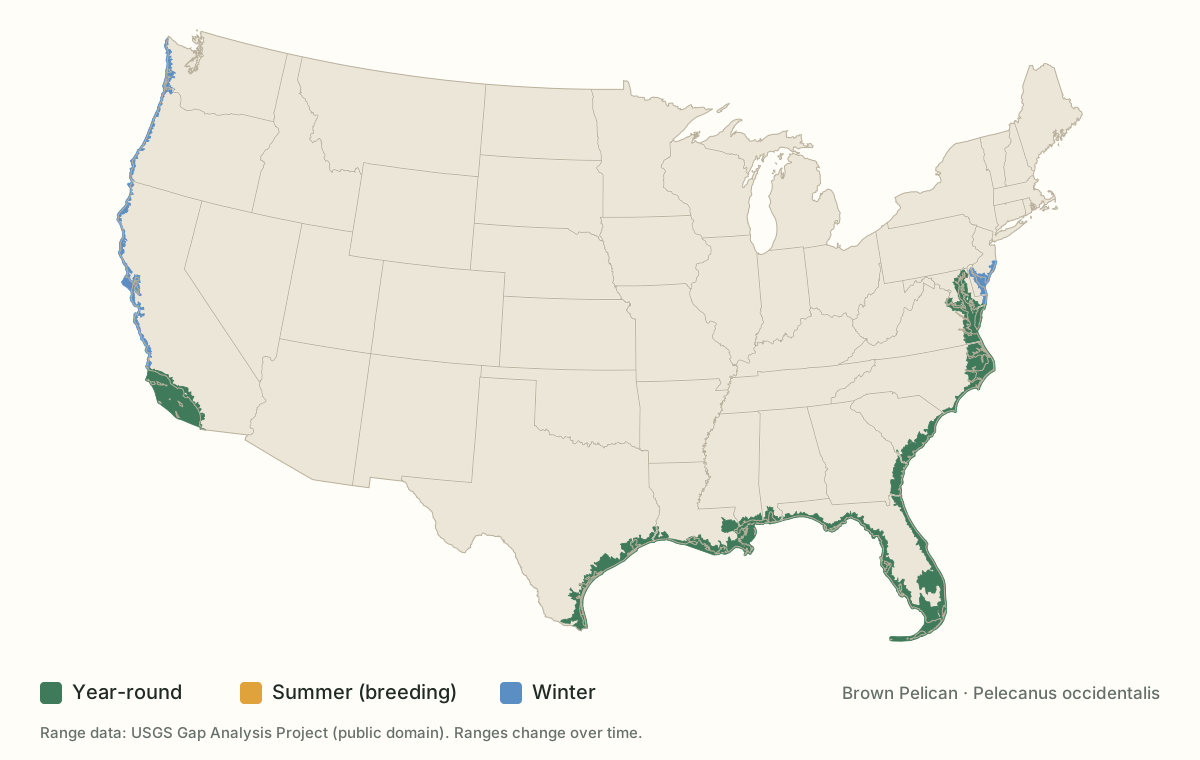
- Year-round along the Atlantic, Gulf and Pacific coasts
- Diet
- Fish such as menhaden and anchovies
Range in the United States
Life history
Food
Spots fish from the air, then dives and scoops them up with its pouch, draining the water before swallowing.
Nesting
On the ground on islands or in low trees and shrubs, in colonies.
- Clutch
- 2–4 eggs
- Incubation
- 28–30 days
- Young
- Fledge at about 10–12 weeks
- Broods
- 1 per year
Behavior
Flies in lines low over the waves. Gulls sometimes steal fish from its pouch.
Conservation
Endangered by DDT in the 1960s–70s; recovered after the pesticide was banned and was removed from the endangered list in 2009.
Cool facts
- The pouch can hold up to 3 gallons of water.
- Air sacs under its skin cushion the impact of its dives.
- It warms its eggs with its feet.
Songs & calls
▶Bird sounds video coming soon
Watch the Brown Pelican
▶Video coming soon