Shorebirds & Seabirds
Double-crested Cormorant
Nannopterum auritum
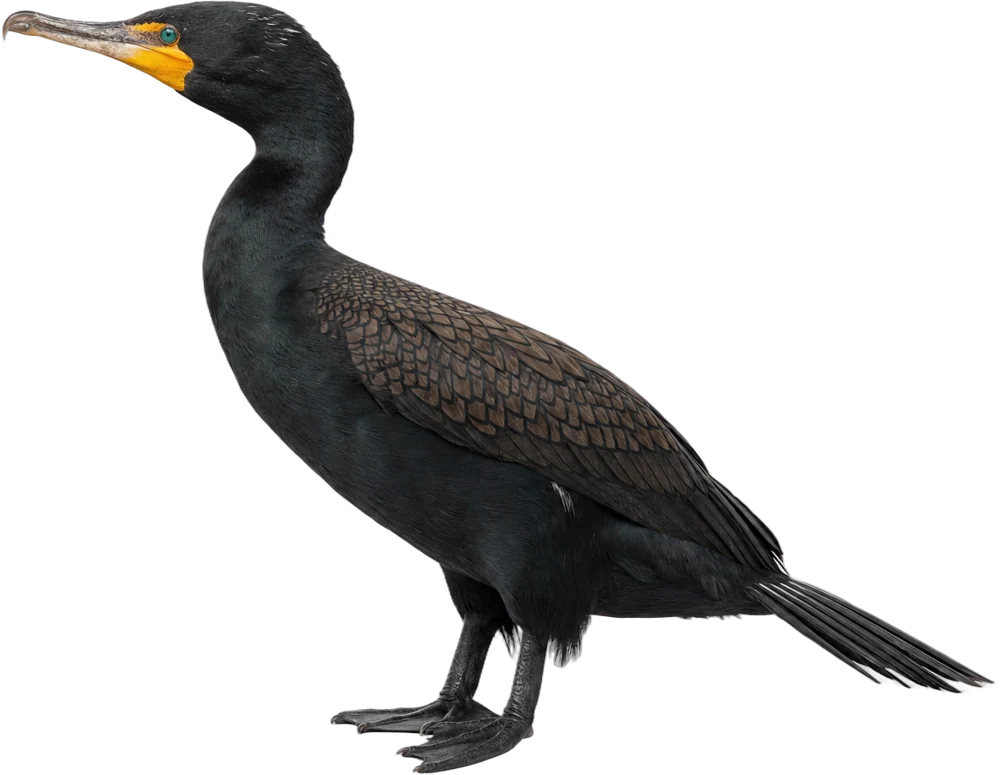
A dark diving bird often seen standing with its wings spread to dry. It swims low in the water and dives to chase fish.
How to identify it
- Black body with a long neck and hooked bill
- Bare orange-yellow skin on the throat
- Thin tufts on the head in breeding season
- Swims low with bill tilted up; perches with wings spread
SizeBetween an American Crow and a Canada Goose
American Crow19 in
Double-crested Cormorant32 in
Canada Goose37 in
Great Blue Heron46 in
6 inAverage length, bill to tail
Details
- Size
- 28–35 in long; wingspan 45–48 in
- Weight
- 2.6–5.5 lb
- Habitat
- Lakes, rivers, reservoirs, coasts and bays
- When to see it
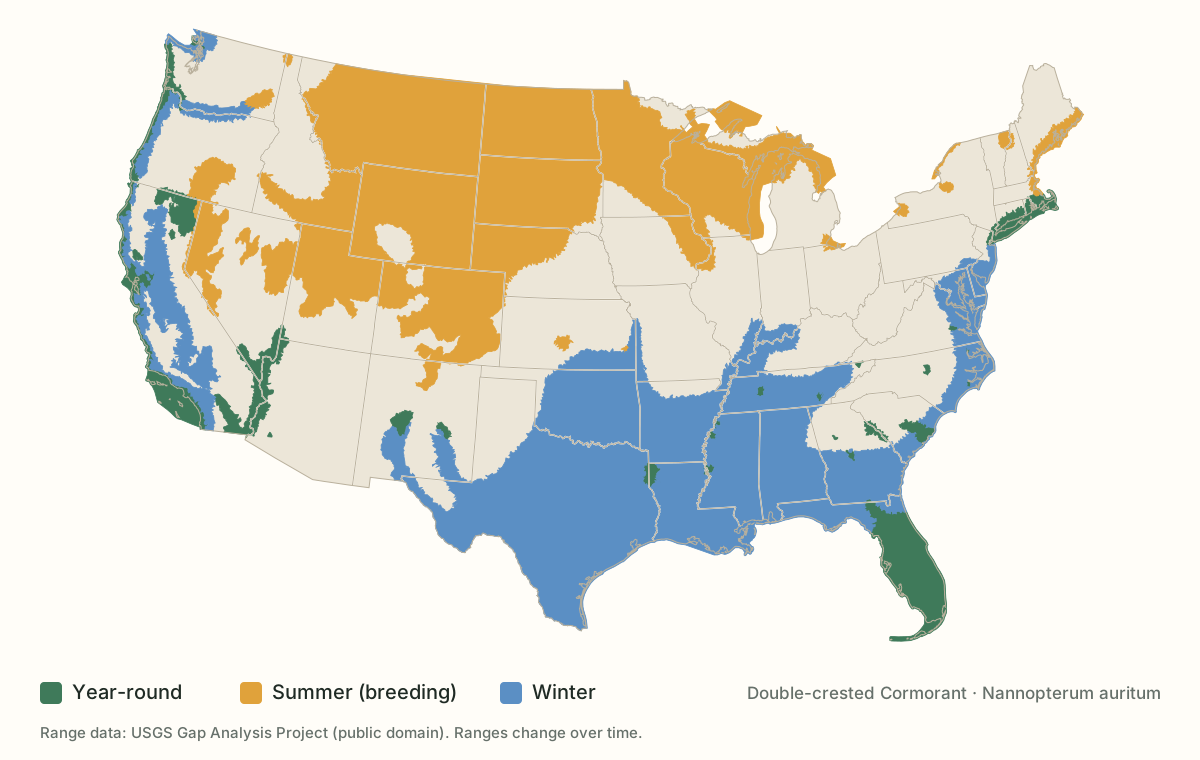
- Year-round in the South and along the coasts; summer across the northern interior
- Diet
- Fish
Range in the United States
Life history
Food
Dives from the surface and chases fish underwater with its feet; also eats crayfish and amphibians.
Nesting
A platform of sticks in trees or on the ground on islands, in colonies.
- Clutch
- 1–7 eggs
- Incubation
- 25–33 days
- Young
- Fledge at about 6–7 weeks
- Broods
- 1 per year
Behavior
Spreads its wings to dry because its feathers soak up water, helping it dive. Often flies in V-shaped flocks.
Conservation
Recovered strongly after DDT was banned; numbers are now high in many areas.
Cool facts
- Its wettable feathers make it a better diver but force it to dry out in the sun.
- The "double crests" appear only briefly in breeding season.
- Its eyes are a striking emerald green.
Songs & calls
▶Bird sounds video coming soon
Watch the Double-crested Cormorant
▶Video coming soon