Shorebirds & Seabirds
Herring Gull
Larus argentatus
A large, classic "seagull" of coastal beaches and harbors. Young birds stay mottled brown for about four years before reaching adult plumage.
How to identify it
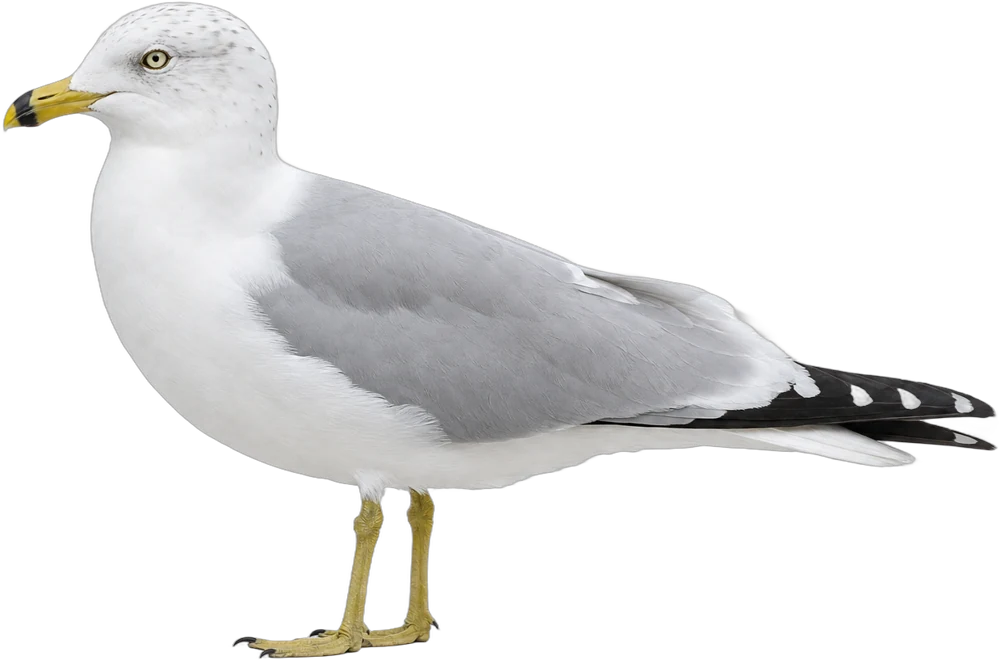
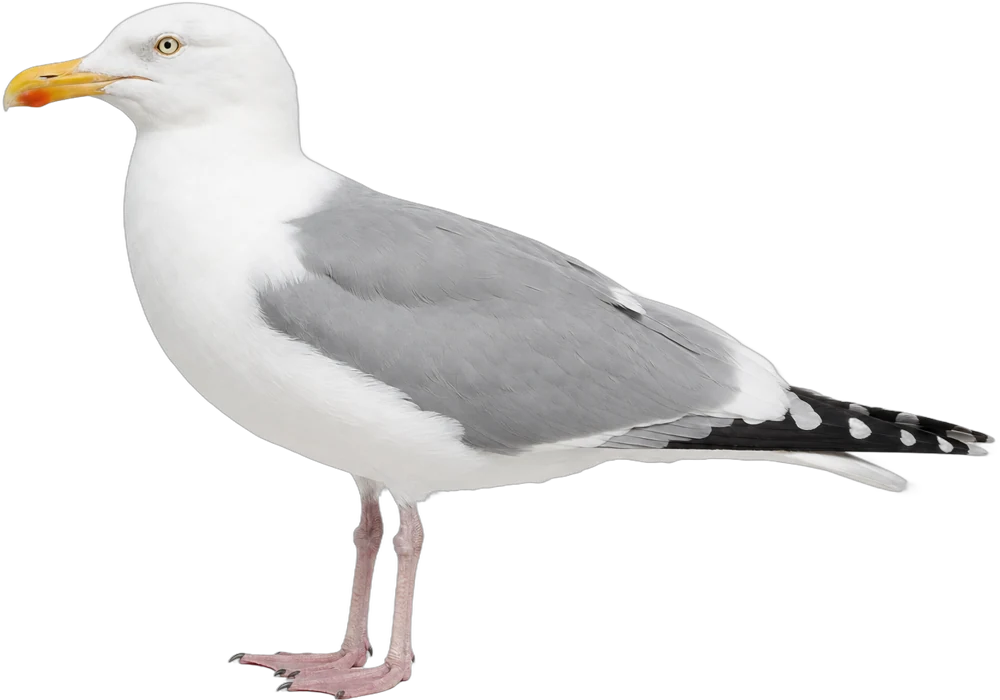
- Large gull with a pale gray back
- Pink legs
- Heavy yellow bill with a red spot near the tip
- Black wingtips with white spots
- Juveniles: dark, mottled brown with a black bill
SizeBetween an American Crow and a Canada Goose
American Crow19 in
Herring Gull24 in
Canada Goose37 in
Great Blue Heron46 in
6 inAverage length, bill to tail
Details
- Size
- 22–26 in long; wingspan 54–58 in
- Weight
- 1.8–3.5 lb
- Habitat
- Beaches, harbors, bays, landfills and large lakes
- When to see it
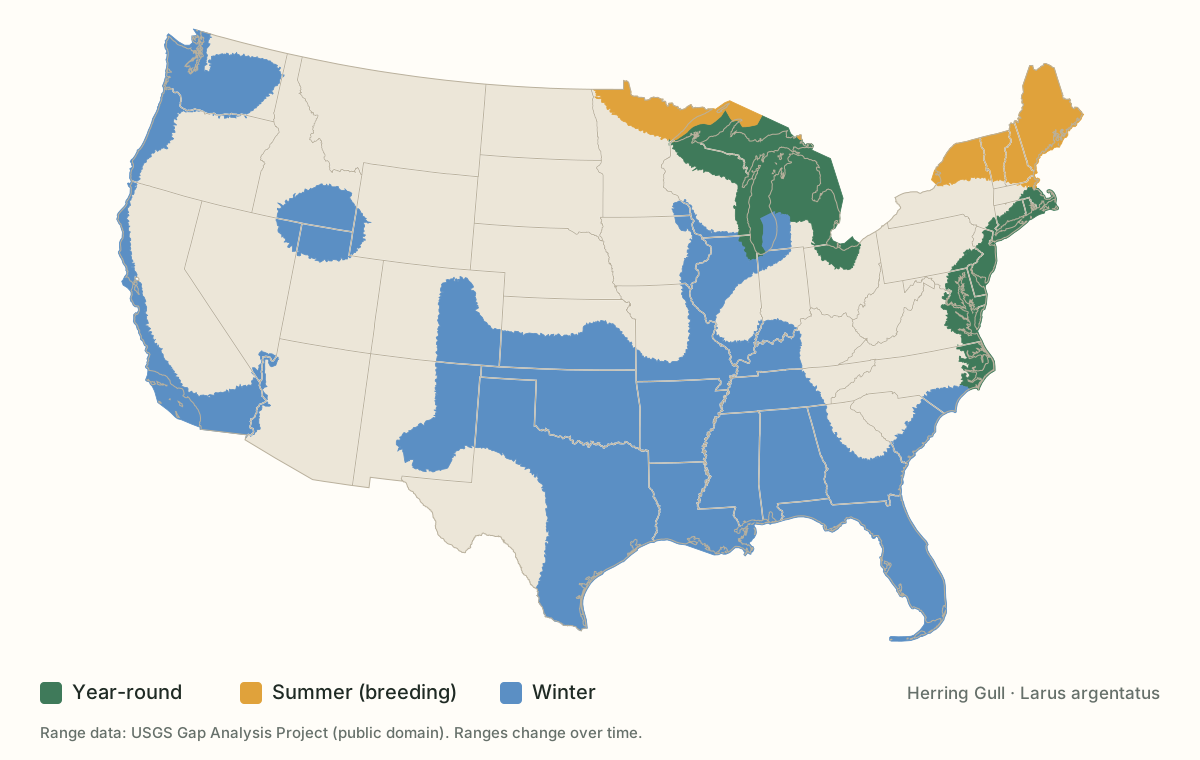
- Year-round along the northern Atlantic coast and Great Lakes; winter across much of the rest of the US
- Diet
- Fish, crabs, clams, garbage, eggs
Range in the United States
Life history
Food
Eats fish, crabs, clams, eggs and garbage; drops shellfish onto rocks or pavement to break them.
Nesting
A shallow scrape lined with grass, on islands, cliffs or rooftops, in colonies.
- Clutch
- 2–4 eggs
- Incubation
- 28–30 days
- Young
- Fledge at about 6–7 weeks
- Broods
- 1 per year
Behavior
Chicks peck the red spot on the parent's bill to ask for food.
Conservation
Common, though numbers have declined in some areas since the 1990s.
Cool facts
- The red bill spot is a target for hungry chicks.
- It takes four years to reach adult plumage.
- Herring Gulls drop clams from the air to crack them open.
Songs & calls
▶Bird sounds video coming soon
Watch the Herring Gull
▶Video coming soon