Shorebirds & Seabirds
Ring-billed Gull
Larus delawarensis
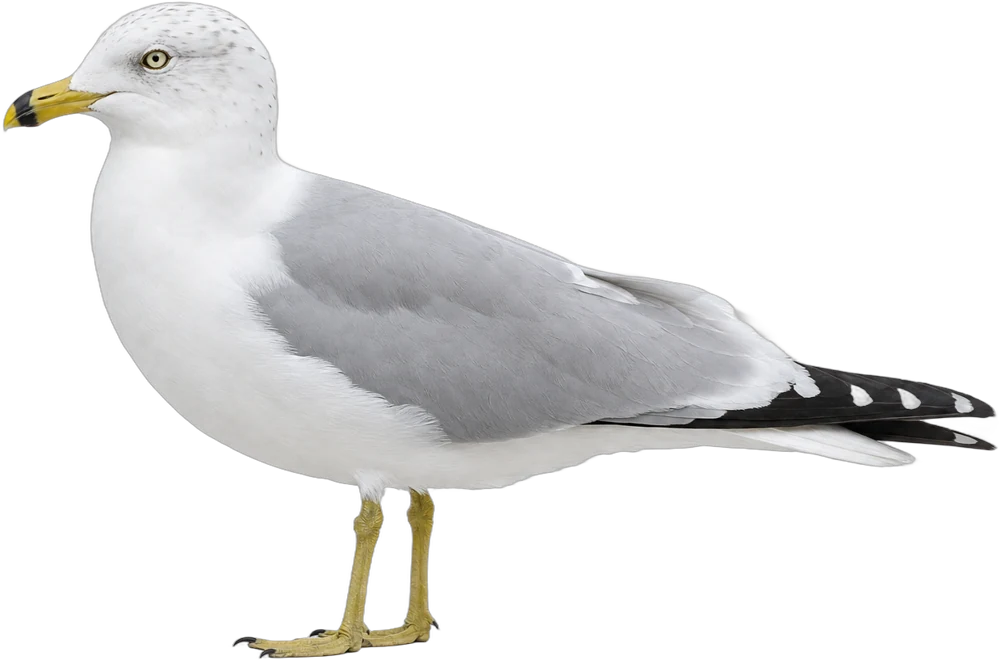
The familiar "parking-lot gull" found far inland as well as on the coast. Its yellow bill has a neat black ring near the tip.
How to identify it
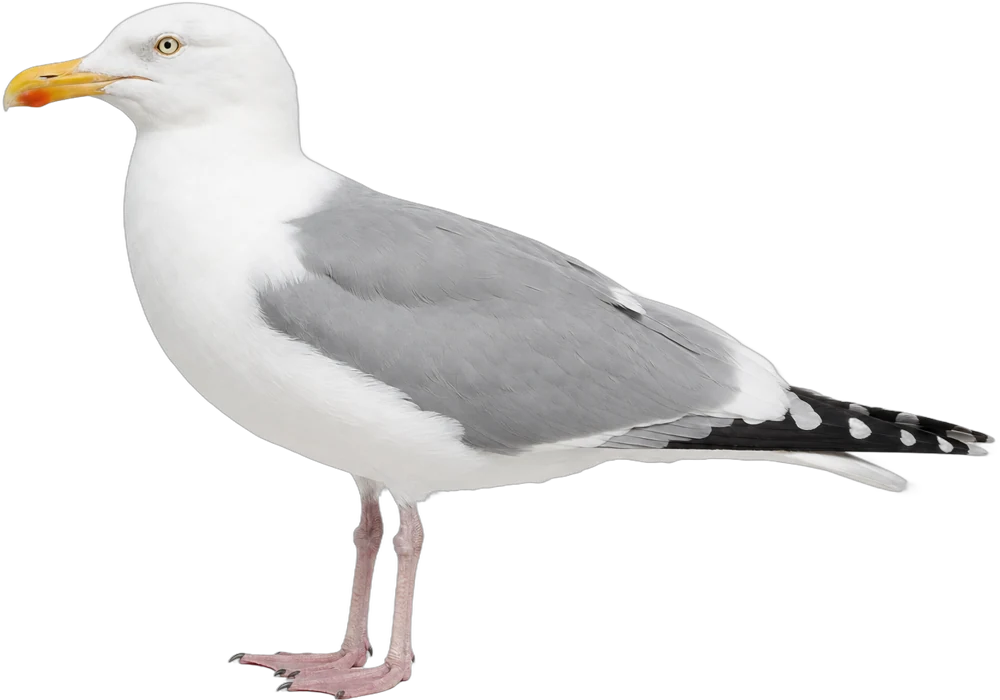
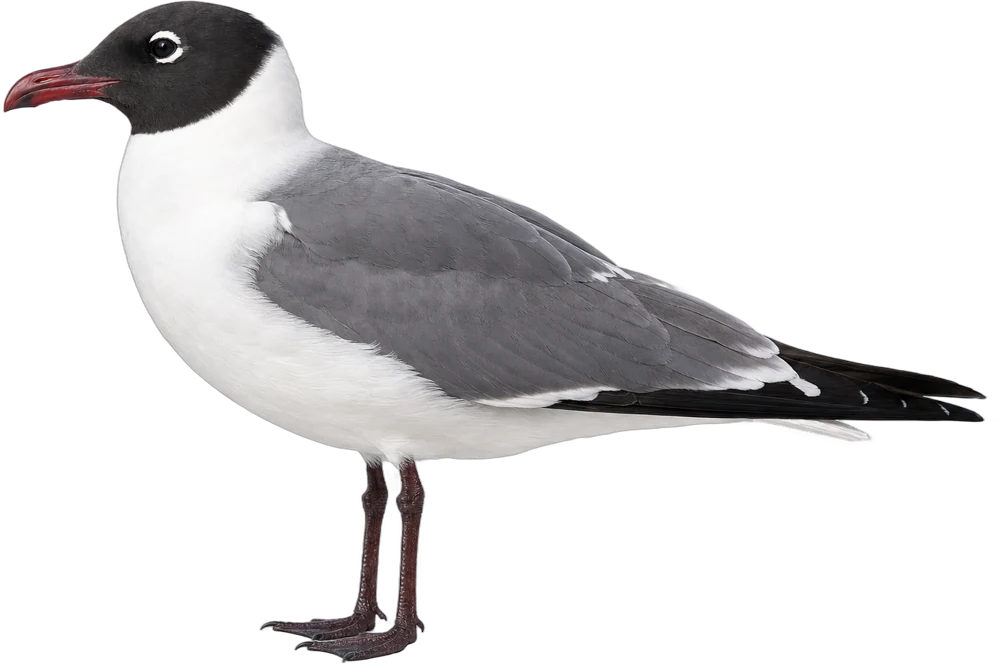
- Pale gray back and white head
- Yellow bill with a black ring near the tip
- Yellow legs
- Black wingtips with white spots
- Young birds are mottled brown and gray
SizeAbout the size of an American Crow
American Robin10 in
American Crow19 in
Ring-billed Gull19 in
Canada Goose37 in
6 inAverage length, bill to tail
Details
- Size
- 17–21 in long; wingspan 41–46 in
- Weight
- 11–25 oz
- Habitat
- Lakes, rivers, beaches, parking lots, landfills, farm fields
- When to see it
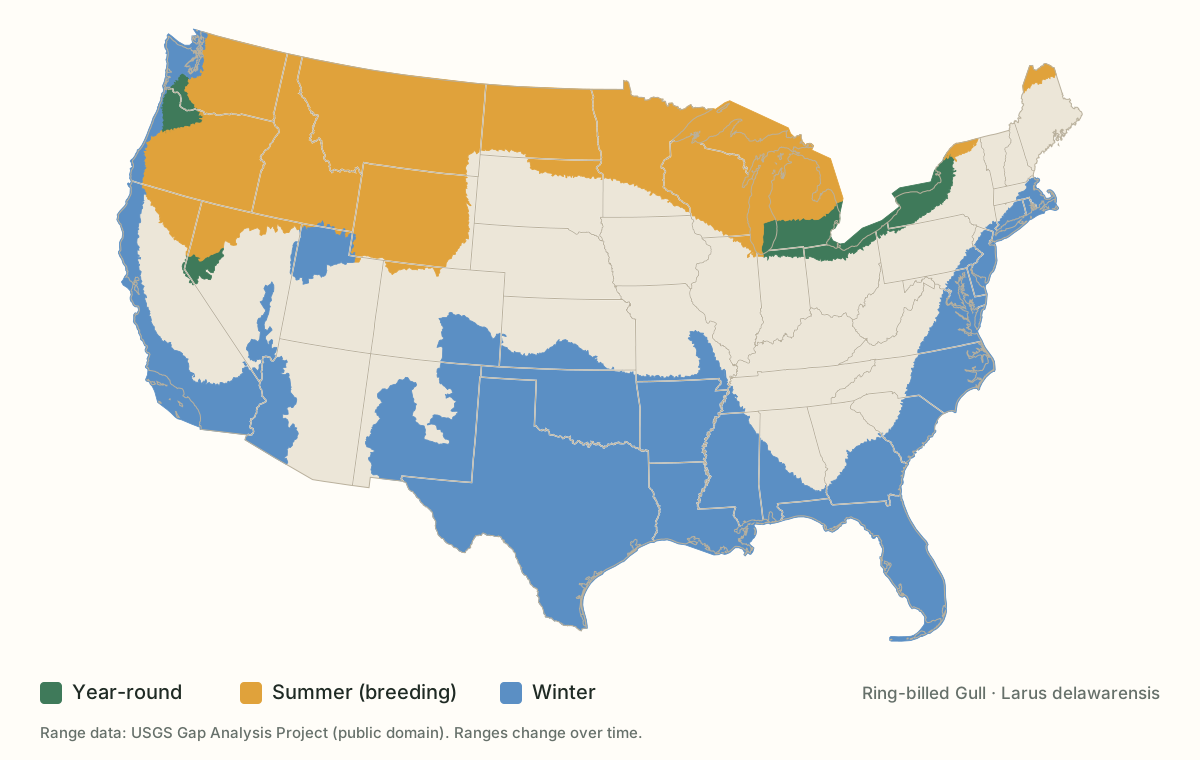
- Winter across most of the US; breeds around the northern Great Lakes and Canada
- Diet
- Fish, insects, worms, grain, scraps
Range in the United States
Life history
Food
Eats fish, insects, earthworms, rodents, grain and a lot of human food scraps.
Nesting
A shallow cup on the ground on islands, in large colonies.
- Clutch
- 2–4 eggs
- Incubation
- 20–31 days
- Young
- Fledge at about 5 weeks
- Broods
- 1 per year
Behavior
Adaptable and bold; common in parking lots, landfills and plowed fields far from the sea.
Conservation
Abundant; numbers grew greatly in the 1900s.
Cool facts
- Many people who think they've seen a "seagull" inland have seen this species.
- Birds often return to the colony where they hatched.
- It takes three years to get the adult's clean gray-and-white look.
Songs & calls
▶Bird sounds video coming soon
Watch the Ring-billed Gull
▶Video coming soon