Waterfowl & Diving Birds
Tundra Swan
Cygnus columbianus
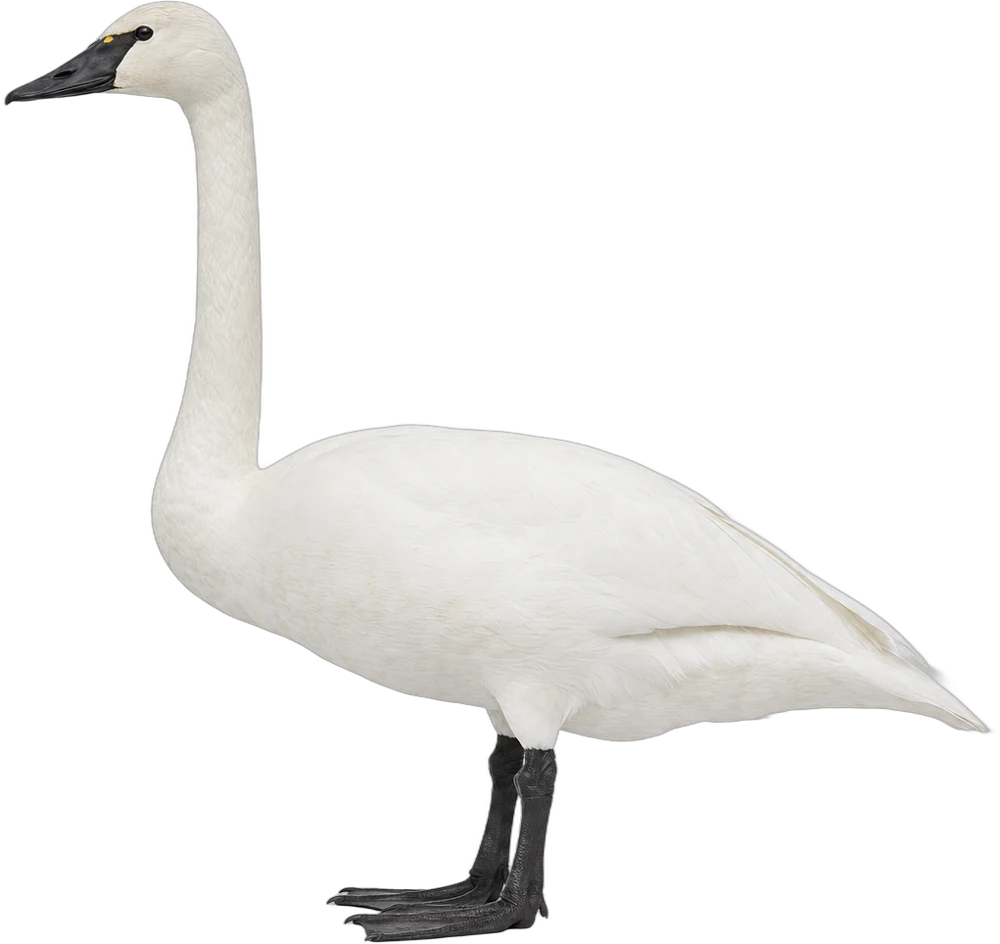
A big, all-white swan that nests in the Arctic and spends the winter in large flocks on coastal lakes and farm fields. Eastern North Carolina hosts one of the largest winter gatherings in the country.
How to identify it
- Entirely white body with a long, straight neck
- Black bill, often with a small yellow spot in front of the eye
- Black legs and feet
- High, musical whooping calls from flocks
Details
- Size
- 47–58 in long; wingspan about 66 in
- Weight
- 8–23 lb
- Habitat
- Large lakes, sounds, marshes and harvested grain fields
- When to see it
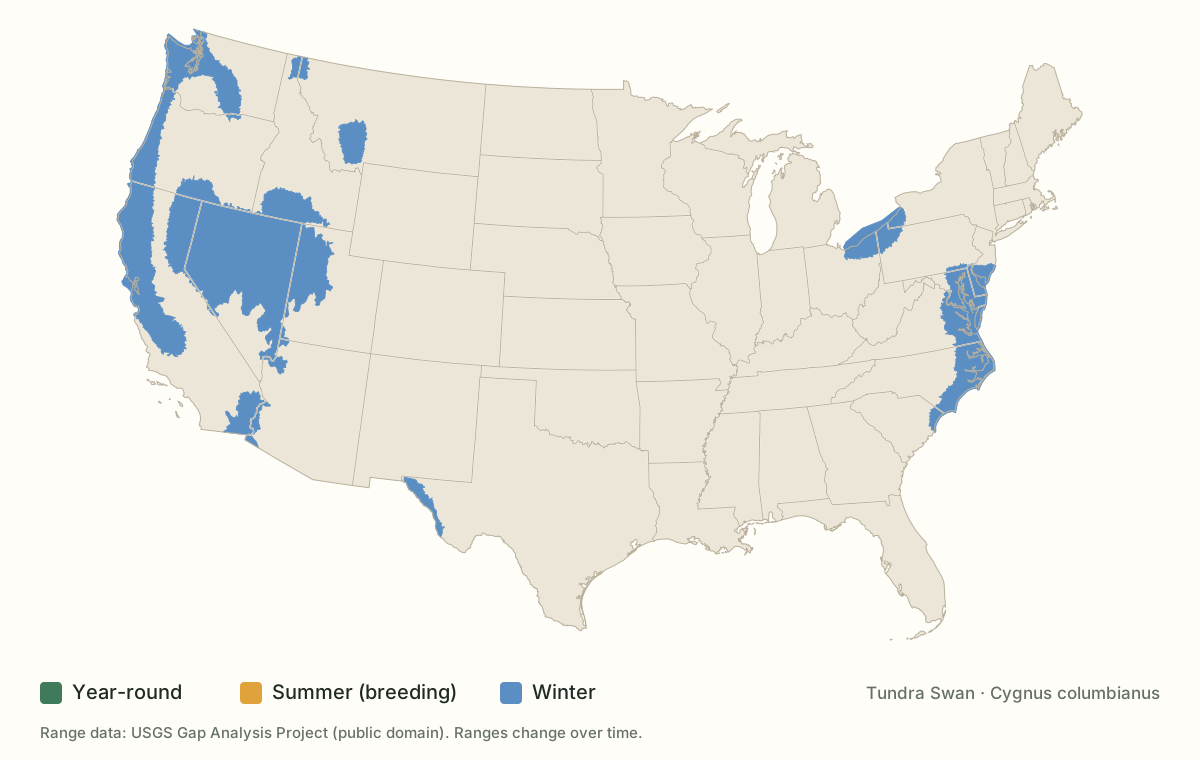
- Winter visitor (November–March), mainly along the Atlantic coast and in the West
- Diet
- Aquatic plants, roots and tubers, waste corn and other grains
Range in the United States
Life history
Food
Feeds on roots, stems and tubers of underwater plants, reaching down with its long neck. In winter it also gleans waste corn, soybeans and other grain from fields.
Nesting
A large mound of grasses, sedges and moss on raised ground near Arctic tundra lakes.
- Clutch
- 3–5 eggs
- Incubation
- 31–40 days
- Young
- Leave the nest within a day; fly at 60–75 days
- Broods
- 1 per year
Behavior
Highly social in winter, gathering by the thousands. Pairs and their young migrate together, and family groups are easy to pick out within big flocks.
Conservation
Populations are stable. Eastern birds depend on a small number of wintering sites, especially in coastal North Carolina and the Chesapeake Bay.
Cool facts
- Eastern Tundra Swans fly about 4,000 miles each way between Alaska or northern Canada and the Atlantic coast.
- It was once called the Whistling Swan, after the sound of its wings and voice.
- Young swans (cygnets) stay gray-brown through their first winter.