Waterfowl & Diving Birds
Wood Duck
Aix sponsa
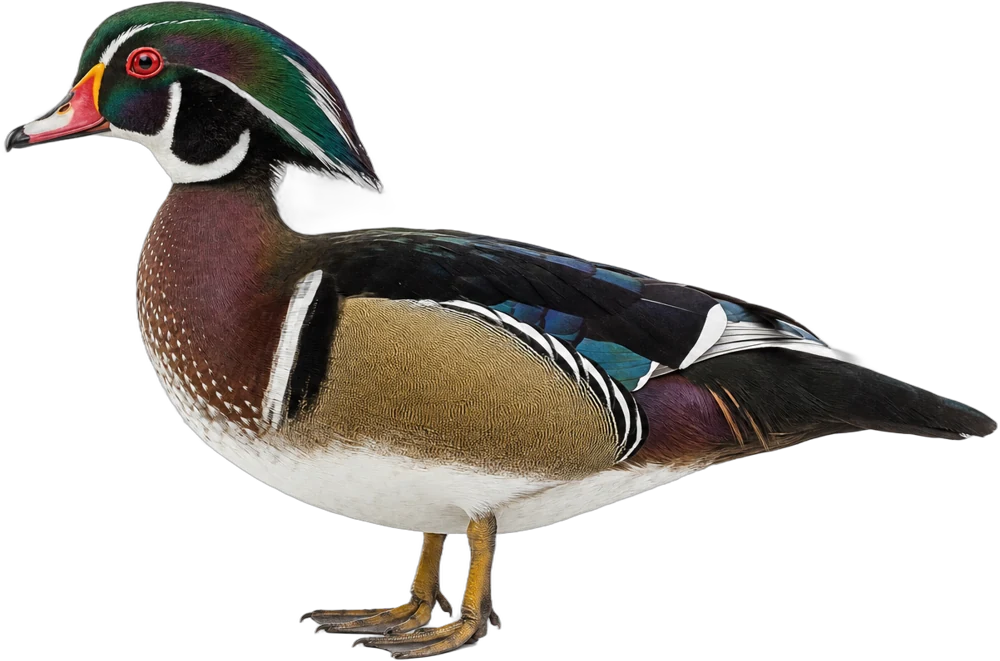
Often called the most beautiful duck in North America. Wood Ducks nest in tree holes and nest boxes near wooded water, and the ducklings jump from the nest to the ground the day after hatching.
How to identify it
- Male: glossy green crested head with white stripes, red eye and chestnut breast
- Female: gray-brown with a white teardrop-shaped ring around the eye
- Swept-back crest on both sexes
- Squealing "oo-eek" call when flushed
SizeAbout the size of an American Crow
American Robin10 in
American Crow19 in
Wood Duck20 in
Canada Goose37 in
6 inAverage length, bill to tail
Details
- Size
- 18.5–21 in long; wingspan 26–29 in
- Weight
- 1–1.5 lb
- Habitat
- Wooded swamps, beaver ponds, slow rivers and lakes with trees along the shore
- When to see it
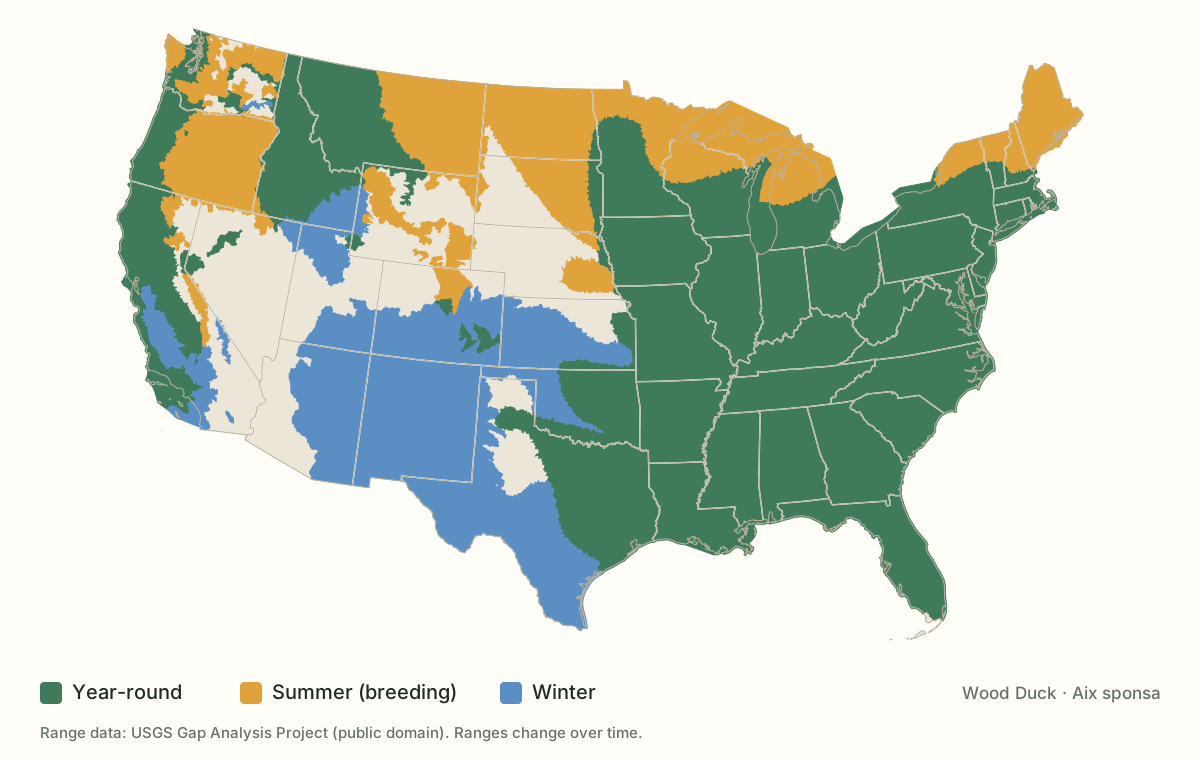
- Year-round in the Southeast; summer in the North
- Diet
- Acorns, seeds, aquatic plants and insects
Range in the United States
Life history
Food
Eats seeds, acorns and other nuts, fruits and aquatic plants, plus insects and snails. Ducklings eat mostly insects at first.
Nesting
In a tree cavity or nest box, often over or near water, sometimes high above the ground. The female lines it with down.
- Clutch
- 6–16 eggs
- Incubation
- 25–35 days
- Young
- Jump from the nest a day after hatching; fly at 8–10 weeks
- Broods
- 1–2 per year
Behavior
Perches easily in trees thanks to strong claws. Females sometimes lay eggs in other Wood Ducks' nests, creating huge clutches.
Conservation
Nearly wiped out by hunting and habitat loss around 1900; it recovered thanks to hunting laws and millions of nest boxes.
Cool facts
- Day-old ducklings leap from nests as high as 50 feet without getting hurt.
- Wood Ducks are one of the few North American ducks that regularly raise two broods in one year.
- The male's bold colors last most of the year; he molts into a duller look only briefly in summer.