Waterfowl & Diving Birds
Hooded Merganser
Lophodytes cucullatus
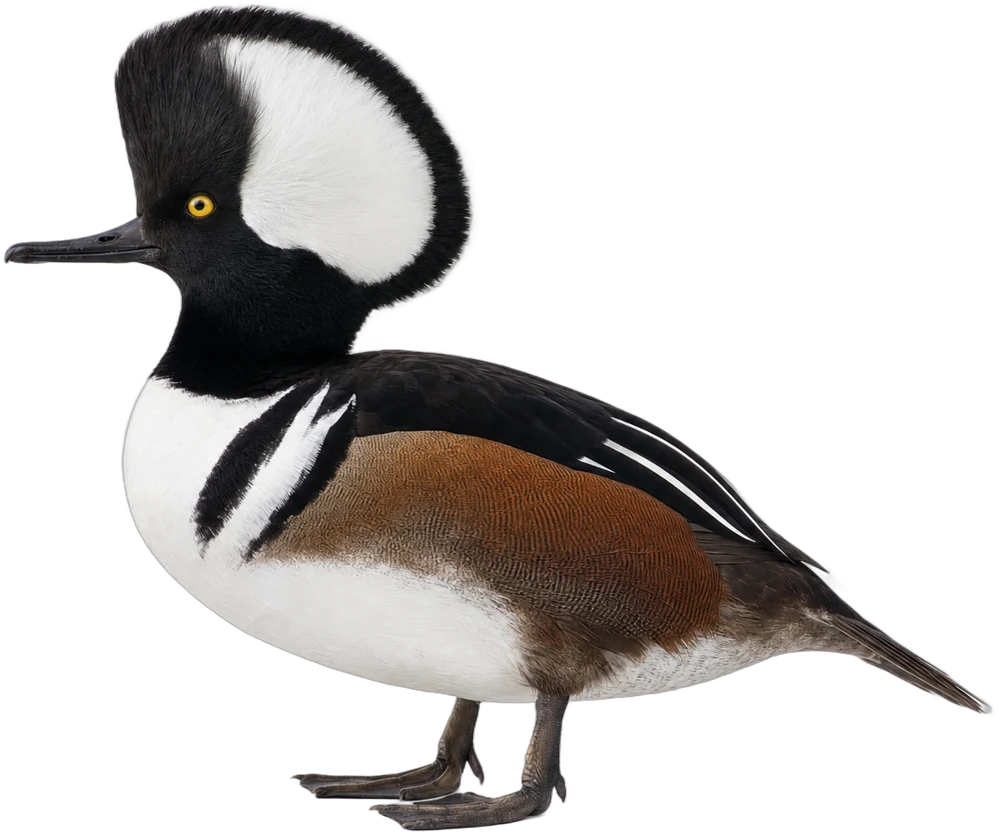
A small diving duck with a crest it can raise into a striking fan. It nests in tree cavities and hunts fish and crayfish underwater by sight.
How to identify it
- Male: black head with a large white fan-shaped crest
- Male: black back, white breast with black bars, rusty sides
- Female: gray-brown with a cinnamon, shaggy crest
- Thin, toothed bill built for catching fish
SizeAbout the size of an American Crow
American Robin10 in
Hooded Merganser18 in
American Crow19 in
Canada Goose37 in
6 inAverage length, bill to tail
Details
- Size
- 16–19 in long; wingspan about 24 in
- Weight
- 16–31 oz
- Habitat
- Wooded ponds, rivers, swamps and small lakes
- When to see it
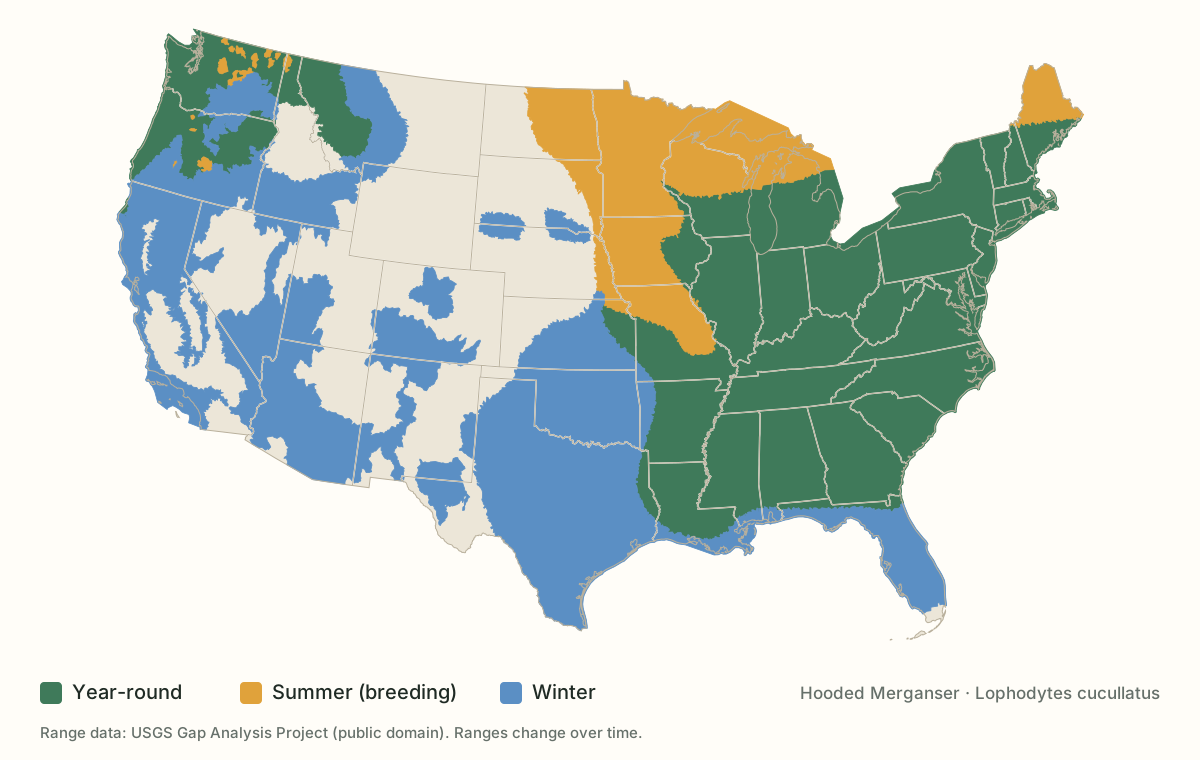
- Winter visitor across much of the South; breeds in the North; some year-round in the Southeast
- Diet
- Small fish, crayfish, aquatic insects
Range in the United States
Life history
Food
Dives and hunts by sight for small fish, crayfish and aquatic insects. It can change how its eyes focus to see better underwater.
Nesting
In a tree cavity or nest box near water, lined with wood chips and down.
- Clutch
- 7–13 eggs
- Incubation
- 26–41 days
- Young
- Leave the nest a day after hatching; fly at about 10 weeks
- Broods
- 1 per year
Behavior
Males court females by raising their crests and throwing their heads back. Usually seen in pairs or small groups.
Conservation
Increasing in many areas, helped by beaver ponds and nest boxes.
Cool facts
- It is the smallest merganser in North America.
- The crest can be raised into a fan or flattened into a thin wedge in a split second.
- Like Wood Ducks, the ducklings tumble out of tree nests to the ground.