Shorebirds & Seabirds
Killdeer
Charadrius vociferus
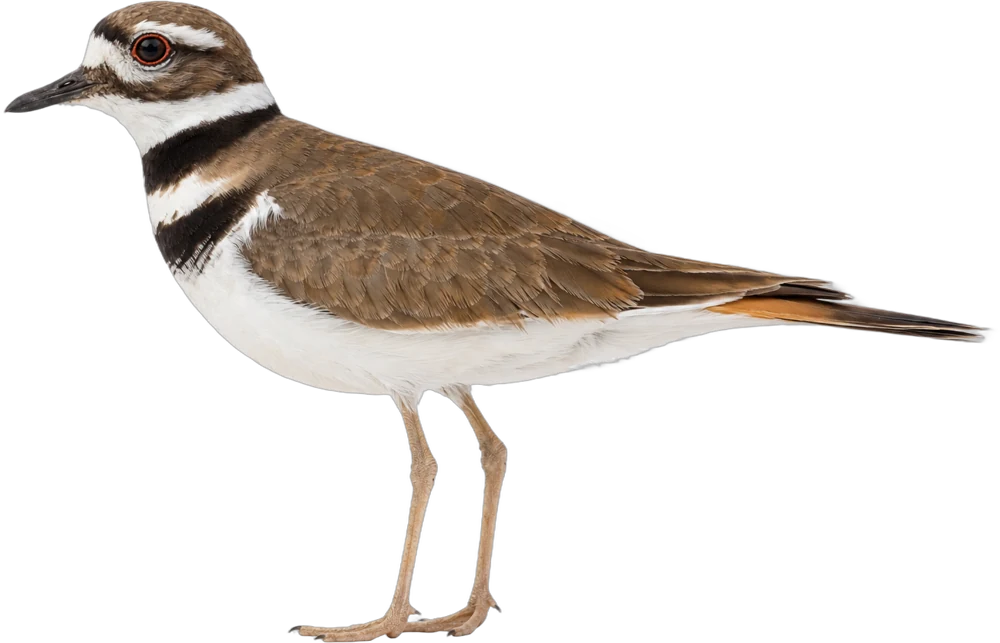
A loud plover that is just as at home in parking lots and ball fields as on shorelines. It pretends to have a broken wing to lure danger away from its nest.
How to identify it
- Two black bands across a white breast
- Brown back and wings
- Bright orange-red rump and tail visible in flight
- Loud "kill-deer" call
- Runs, stops, and runs again across open ground
SizeAbout the size of an American Robin
Song Sparrow6 in
Killdeer10 in
American Robin10 in
American Crow19 in
6 inAverage length, bill to tail
Details
- Size
- 8–11 in long; wingspan 18–19 in
- Weight
- 2.6–4.5 oz
- Habitat
- Fields, lawns, pastures, gravel lots, mudflats
- When to see it
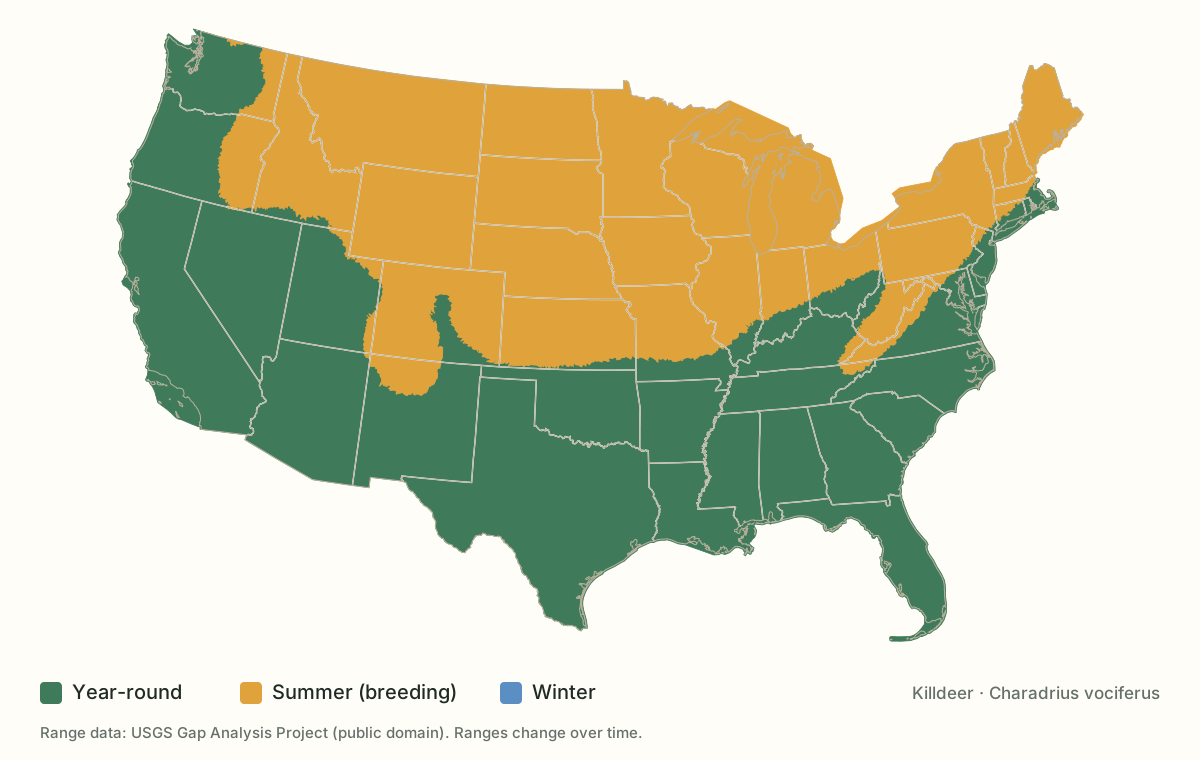
- Year-round across most of the US; summer in the far North
- Diet
- Insects, worms, snails
Range in the United States
Life history
Food
Runs and stops on open ground, picking up insects such as beetles and grasshoppers, plus worms and snails.
Nesting
A bare scrape on open ground or gravel, sometimes on flat gravel rooftops, decorated with pebbles.
- Clutch
- 4–6 eggs
- Incubation
- 22–28 days
- Young
- Leave the nest within a day; fly at about 25 days
- Broods
- 1–2 per year
Behavior
Lures predators away with a broken-wing act, and may charge large animals that could step on the nest.
Conservation
Common but declining in some regions.
Cool facts
- Its eggs blend perfectly with gravel, so nests in driveways often go unnoticed.
- Chicks can run and feed themselves within hours of hatching.
- Despite being a shorebird, it often lives far from water.
Songs & calls
▶Bird sounds video coming soon
Watch the Killdeer
▶Video coming soon