Shorebirds & Seabirds
Piping Plover
Charadrius melodus
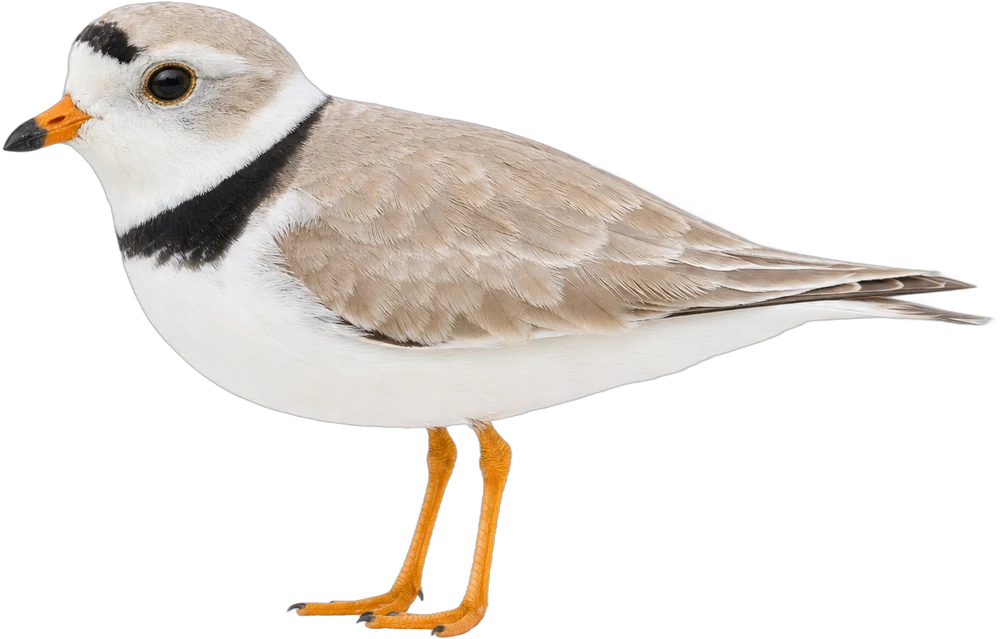
A small, sand-colored plover of open beaches. It is federally protected, and many beaches fence off its nesting areas in spring and summer.
How to identify it
- Pale sandy-gray back that blends with dry sand
- Single black neck band (may be incomplete) in breeding season
- Short orange bill with a black tip in breeding season
- Orange legs
SizeBetween a Song Sparrow and an American Robin
Carolina Chickadee4 in
Song Sparrow6 in
Piping Plover7 in
American Robin10 in
6 inAverage length, bill to tail
Details
- Size
- 6.5–7 in long; wingspan about 15 in
- Weight
- 1.5–2.3 oz
- Habitat
- Open sandy beaches, sandbars and inlets
- When to see it
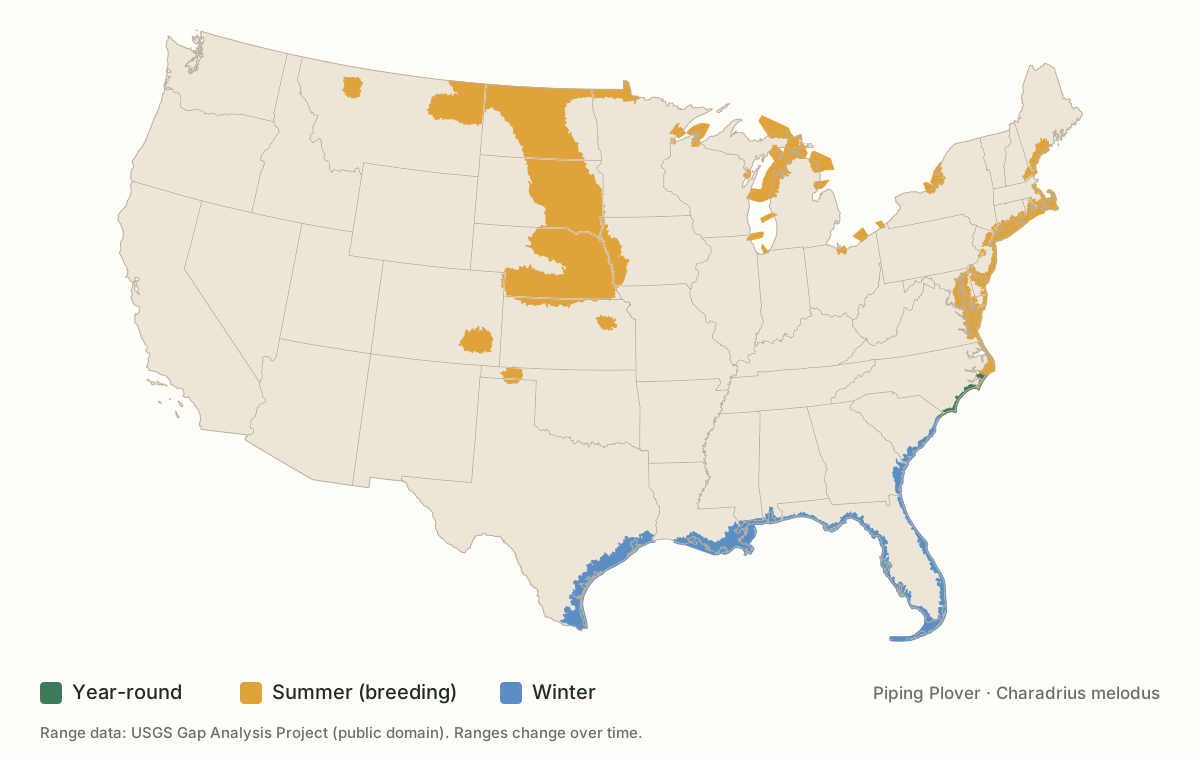
- Breeds on Atlantic beaches north of the Carolinas and on the northern Great Plains; winters along the southern Atlantic and Gulf coasts
- Diet
- Marine worms, insects, small crustaceans
Range in the United States
Life history
Food
Runs and pauses on the beach, pecking marine worms, insects and small crustaceans from the sand.
Nesting
A shallow scrape on open sand above the high-tide line, often lined with shell fragments.
- Clutch
- 3–4 eggs
- Incubation
- 25–31 days
- Young
- Leave the nest within hours; fly at about 25–35 days
- Broods
- 1 per year
Behavior
Chicks feed themselves from birth and freeze in place when danger comes near, relying on camouflage.
Conservation
Federally listed as threatened (endangered in the Great Lakes); beach closures around nests have helped it recover.
Cool facts
- It is so pale it almost disappears on dry sand.
- Some beaches limit driving and dogs in summer to protect its nests.
- The Great Lakes population fell to fewer than 20 pairs before recovering.
Songs & calls
▶Bird sounds video coming soon
Watch the Piping Plover
▶Video coming soon