Shorebirds & Seabirds
Wilson's Plover
Anarhynchus wilsonia
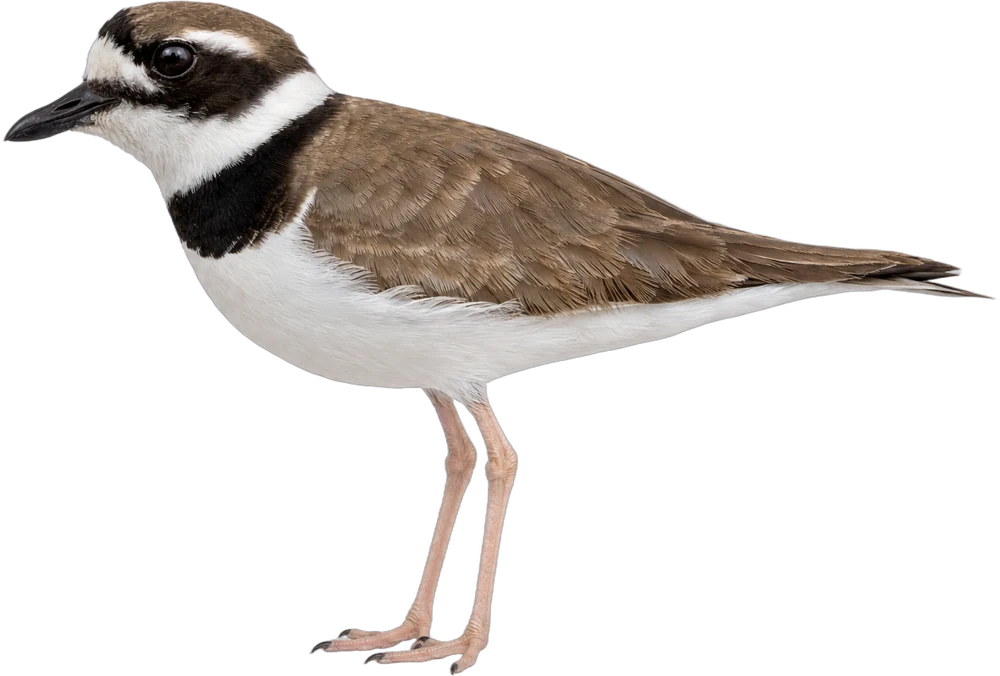
A beach plover with a noticeably thick, heavy black bill, perfect for catching fiddler crabs on southern mudflats.
How to identify it
- Thick, heavy black bill
- Single wide breast band: black on males, brown on females
- Brown back and white underparts
- Pinkish legs
SizeBetween a Song Sparrow and an American Robin
Carolina Chickadee4 in
Song Sparrow6 in
Wilson's Plover7 in
American Robin10 in
6 inAverage length, bill to tail
Details
- Size
- 6.5–8 in long; wingspan about 15 in
- Weight
- about 2 oz
- Habitat
- Sandy beaches, dunes, sandbars and mudflats
- When to see it
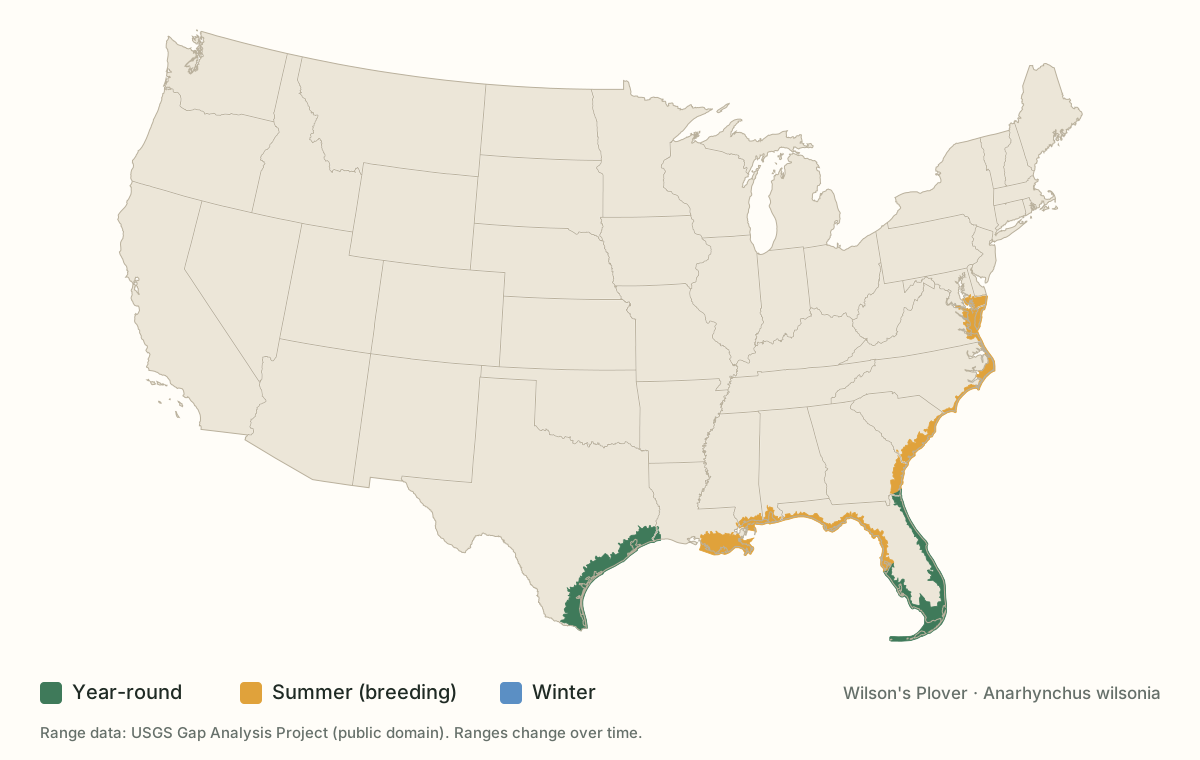
- Summer along the southern Atlantic coast; year-round in Florida and along the Gulf
- Diet
- Fiddler crabs, other crustaceans, insects
Range in the United States
Life history
Food
Hunts mostly fiddler crabs on mudflats, plus other crustaceans and insects.
Nesting
A scrape on open sand above the tide line, often near a bit of driftwood or plant.
- Clutch
- 2–3 eggs
- Incubation
- 23–25 days
- Young
- Leave the nest within a day; fly at about 3 weeks
- Broods
- 1 per year
Behavior
Tends to run in short bursts and rests in the shade of dunes. Parents perform distraction displays near the nest.
Conservation
Uncommon and declining in places due to beach development and disturbance.
Cool facts
- It is named after Alexander Wilson, often called the father of American ornithology.
- Its heavy bill can crush crab shells.
- It nests on many of the same beaches as Piping Plovers.
Songs & calls
▶Bird sounds video coming soon
Watch the Wilson's Plover
▶Video coming soon